
Gas and Propane Forklifts
Internal combustion lift trucks for Chicago warehouses, docks, and yards
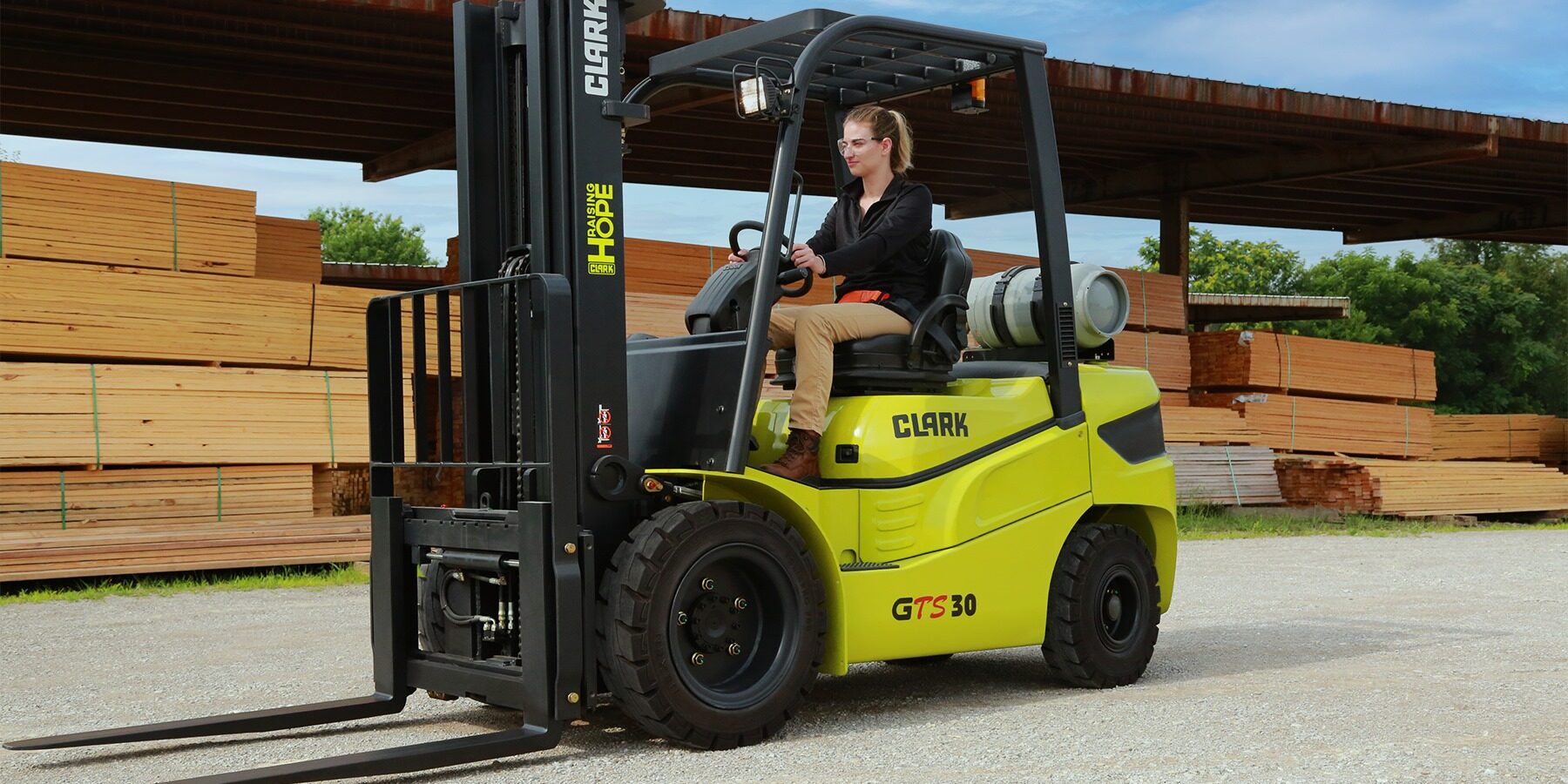
Gas forklifts use internal combustion (IC) engines powered by propane, gasoline, or other fuels rather than batteries. In warehouse and material handling applications, “gas forklift” most commonly refers to propane-powered equipment. These trucks are available in a range of capacities and configurations for indoor, outdoor, and mixed-use applications.
Apex Companies helps Chicago-area businesses choose gas and propane forklifts for:
Beyond new and pre-owned sales, Apex provides forklift rentals, leasing, parts, maintenance, and operator training throughout the Greater Chicago Area.
Load capacity and tire type
Two important considerations when selecting a gas forklift are load capacity and tire type:
Rated capacity
Rated capacity depends on load center, mast configuration, and lift height. Always check the truck’s capacity plate for its specific configuration.
Cushion tire
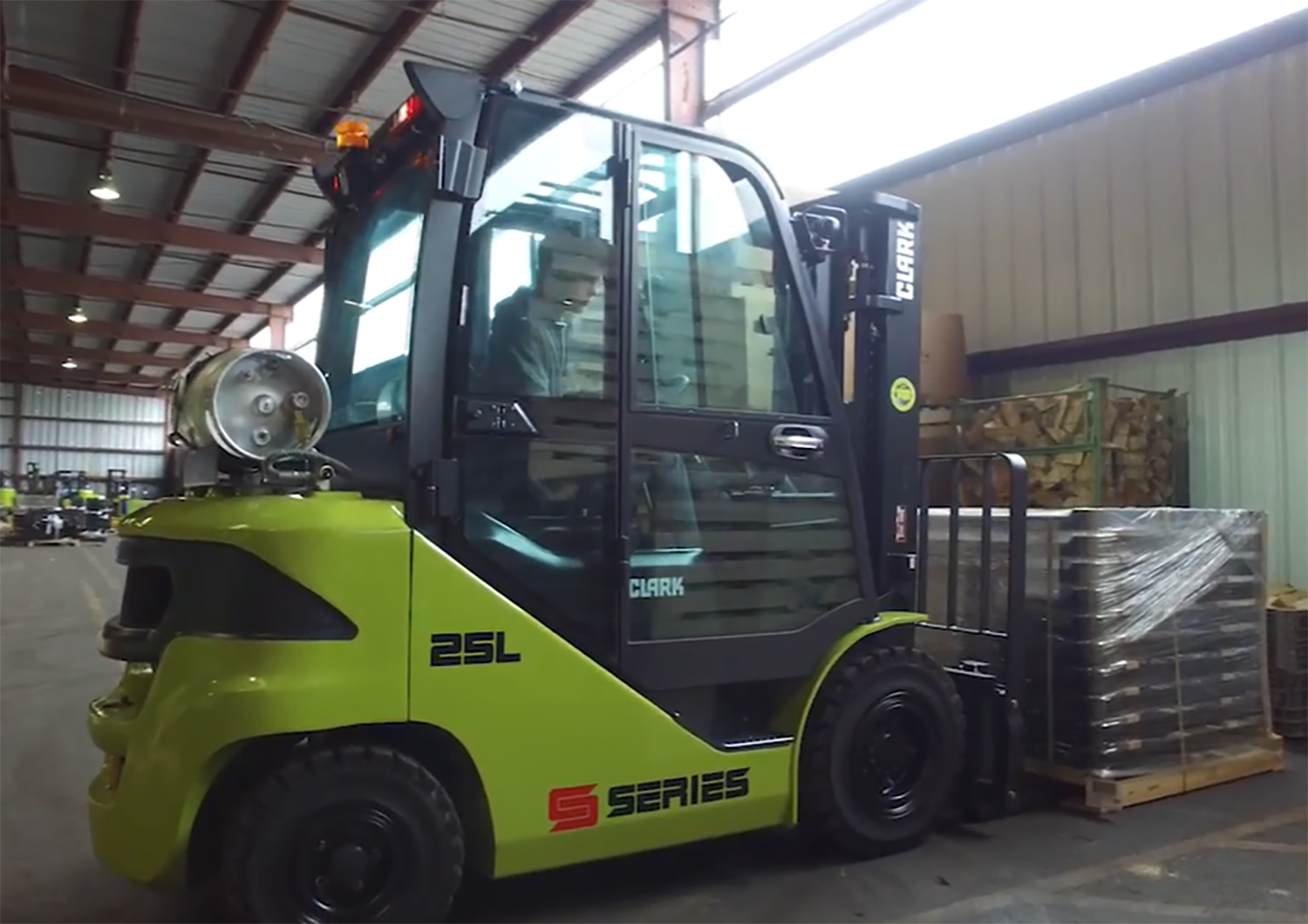
Solid rubber, smaller footprint, built for smooth level indoor floors.
Pneumatic tire
Air-filled or solid pneumatic, larger footprint, built for outdoor and uneven surfaces.
Propane and gasoline: how the fuel types differ
Propane (LPG)
Propane forklifts, also called LPG forklifts, use removable fuel tanks that can be exchanged quickly to minimize refueling downtime. Propane generally produces fewer certain exhaust pollutants than gasoline, although adequate ventilation remains essential for indoor operation.
Gasoline
Gasoline forklifts refuel from a fuel storage or dispensing system and are generally better suited to outdoor applications where gasoline fueling infrastructure is available.
Fuel consumption and runtime vary based on equipment size, load weight, operating conditions, and duty cycle. These factors should guide fuel supply and refueling plans.
How gas forklifts perform in warehouse and yard operations
Quick refueling
Propane forklifts use replaceable fuel tanks, allowing operators to refuel quickly without taking equipment out of service for extended periods. This can be particularly useful in multi-shift operations where equipment availability is a priority.
Sustained power under load
Gas forklifts deliver consistent power for demanding applications involving heavy loads, ramps, and frequent travel. Performance remains steady throughout the fuel tank’s operating range, provided the truck is properly maintained and suited to the application.
Mixed indoor-outdoor use
Pneumatic tires handle broken asphalt, dock aprons, gravel yards, and Chicago freeze-thaw damage. Depending on the truck configuration and facility conditions, the same forklift can serve both indoor and outdoor staging areas.
Weather exposure
IC trucks tolerate cold outdoor work better than most battery equipment, whose usable capacity drops in low temperatures. Cold starting and fuel system condition still need seasonal attention.
The tradeoff: engine maintenance
Oil, filters, spark plugs, fuel systems, and emissions components add scheduled service that electric equipment does not need. Plan it into the maintenance budget.
Where gas forklifts fit best
Gas forklifts earn their place in specific kinds of operations. These are the Chicago-area environments where IC equipment usually makes sense.
A strong fit for
When another solution may be a better fit
Gas forklifts are well suited to many material handling applications, but facility conditions and operational requirements may make electric equipment a better choice. The following situations are worth evaluating before selecting a forklift.
Cold storage interiors
Cold storage facilities, particularly those handling food products, often favor electric forklifts to avoid exhaust emissions in enclosed, temperature-controlled environments.
Pharmaceutical, clean room, and food processing interiors
Where emissions tolerance is near zero, electric equipment is the practical answer.
High-bay very narrow aisle work
High-bay, very narrow aisle storage typically requires specialized electric reach or turret trucks designed for tight aisle clearances and elevated load handling.
Enclosed facilities with limited ventilation
Internal combustion forklifts produce exhaust emissions, making ventilation and indoor air quality important considerations. Facilities with limited ventilation may be better suited to electric equipment.
Apex helps Chicago-area businesses compare gas and electric counterbalance forklifts based on facility layout, load requirements, and operating conditions.
Planning a forklift purchase or fleet upgrade?
Call (630) 957-4020 to discuss your equipment requirements with an Apex specialist.
Choosing the right gas forklift for your Chicago facility
Before selecting a gas forklift, Chicago-area businesses should evaluate six key factors that influence equipment fit, safety, and long-term operating costs.
Lift capacity
Check your heaviest load, load center distance, and required lift height. Rated capacity drops as the load moves forward of the load center or as lift height increases.
Tire type
Check floor condition and the indoor to outdoor split. Cushion tires suit smooth, level indoor floors. Pneumatic tires suit outdoor, uneven, or mixed use.
Ventilation
Check air exchange in the enclosed areas where the truck will run. Indoor IC use depends on facility conditions. Confirm adequacy with your safety team before deploying gas equipment inside.
Propane supply
Check filled tank supply, exchange area location, and supplier reliability. Tank storage requirements are set by local code and your authority having jurisdiction (AHJ).
Aisle width
Check measured aisle dimensions against right-angle stack requirements. Counterbalance trucks need more turning room than narrow aisle equipment.
Fleet standardization
Consider the equipment and fuel types already in use. Standardizing equipment can simplify maintenance, parts inventory, operator training, and fleet management.
Schedule a facility walk-through
An Apex facility walk-through can help assess load requirements, floor conditions, aisle dimensions, and material flow to identify suitable gas and electric forklift options.
Buy, lease, or rent a gas forklift in Chicago
The right starting point for forklift sales is your operating environment, not a model number. Apex sells new and pre-owned gas equipment to Chicago-area operations, and the specification work happens before the quote.
Purchase
Apex carries CLARK IC forklifts in both pneumatic tire and IC cushion counterbalance configurations. Cushion models suit smooth indoor floors and tighter aisles. Pneumatic models handle yards, dock aprons, and rough surfaces.
A used gas forklift is a practical option for fleet expansion, backup units, or a budget-limited replacement. Apex inspects pre-owned equipment before sale.
Lease
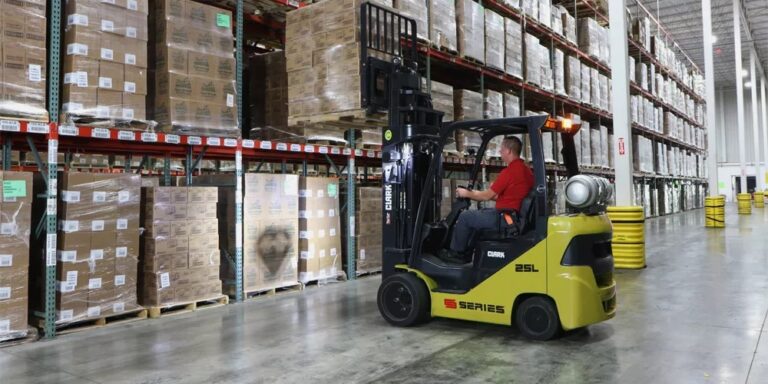
Leasing and financing offer alternatives to an outright equipment purchase, with payment structures and ownership options depending on the agreement.
Terms depend on credit, equipment, and structure, and get set during the quote rather than published here.

Rental
Short-term forklift rental covers seasonal surges, project work, and downtime backup while a unit is in for repair. Availability for gas and propane models changes, so confirm current rental inventory with Apex.
Long-term rental keeps equipment on site without a capital purchase, which helps operations with variable volume or an uncertain lease on the building itself.
Apex can help you compare available gas forklift models and configurations based on your load requirements, operating environment, and budget. Full program details live on the dedicated rental and lease pages.
Forklift operator training in Chicago
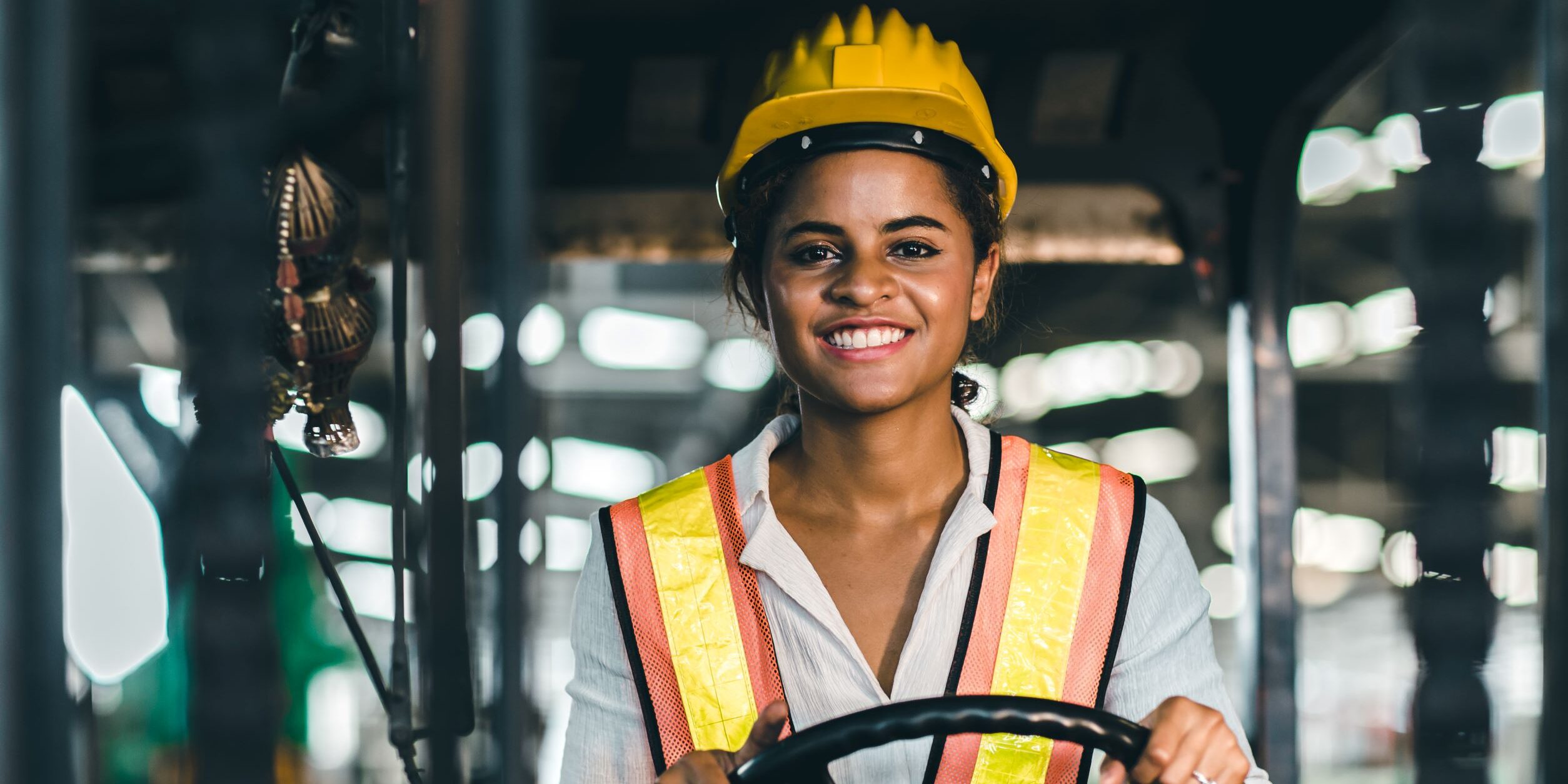
Operators transitioning from electric to gas forklifts need training and evaluation that address the differences in equipment and workplace conditions, as required by OSHA.
Apex operator training is built to support those requirements and covers the equipment your team actually runs. Group sessions work for facilities certifying or recertifying several operators at once, and train-the-trainer options let you keep the program in house.
What propane training typically covers
- Tank exchange technique
- Storage proximity
- Fuel system awareness
- What to do about a suspected leak
Gas forklift service and repair in Chicago
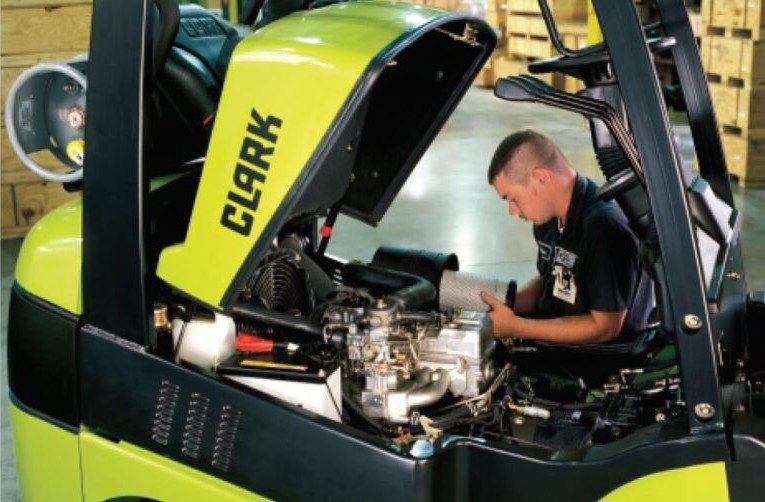
Gas forklifts need more scheduled service than electric equipment, and engine work is where fleets lose uptime.
Apex handles forklift service and parts for CLARK and other gas and IC brands with factory-trained forklift technicians.
Frequently asked questions
What is a gas forklift and how does it work?
A gas forklift is a counterbalance lift truck driven by an internal combustion engine, most often fueled by propane. The engine drives the wheels and the hydraulic pump that raises the mast, and a counterweight at the rear balances the load on the forks.
What is the difference between a propane forklift and a gasoline forklift?
Propane runs from a sealed, removable tank that an operator swaps in minutes, and it burns cleaner, which is why indoor-capable IC trucks usually run on it. Gasoline refuels from on-site fuel storage and is more common in yards and outdoor operations.
Can gas forklifts be used indoors in Chicago warehouses?
Sometimes, and it depends on the building. OSHA’s powered industrial truck standard, 29 CFR 1910.178, addresses which truck types may be used in which locations based on conditions in the work area. Whether ventilation is adequate is a facility-specific determination, so review indoor IC forklift use with your safety team before deploying equipment. Apex cannot confirm compliance for your site.
How often does a propane forklift need its tank changed?
Propane tank runtime depends on tank size, load weight, travel conditions, and equipment utilization. Tracking actual fuel consumption helps determine the right tank inventory and exchange schedule.
What lift capacity do I need for my Chicago warehouse?
It depends on your heaviest load, the load center distance, and required lift height, and rated capacity drops as either increases. Send load specifications and lift heights to Apex for a capacity review rather than matching a nameplate number from a spec sheet.
Does Apex offer gas forklift rentals near Chicago?
Contact Apex to confirm current availability for gas and propane rental models. Rental inventory moves, and availability by fuel type and capacity changes through the year.
What brands of gas forklifts does Apex carry?
Apex carries CLARK IC forklifts in pneumatic tire and cushion tire counterbalance configurations, plus pre-owned gas equipment as inventory allows. Ask about current models and capacities before planning a purchase.
What areas near Chicago does Apex service for forklift repair?
Apex serves the Greater Chicago metro area, including North Aurora, Aurora, and Oak Brook. Confirm coverage for your specific address when you schedule forklift service.
Talk to Apex about gas forklifts in Chicago
Call (630) 957-4020 or share your load requirements, facility conditions, and operating schedule through our contact page to discuss your equipment needs.


