Chicago Aerial Lift Equipment Sales, Rentals, and Service
Reach Higher, Work Safer: Aerial Lifts to Rent, Lease, or Buy
Aerial lift equipment is mobile machinery that elevates workers, tools, and materials safely to elevated work positions. From facility maintenance to construction, these machines handle vertical access tasks that ladders and scaffolding cannot do safely or efficiently.
Apex provides Chicago aerial lift equipment for rental, lease, or purchase, supporting operations across the metro area and the broader Illinois region. The inventory covers scissor lifts, boom lifts, telehandlers, vertical mast lifts, and crane equipment from leading manufacturers, including JLG (with the SkyTrak telehandler line), Terex (Genie), and Skyjack.
Equipment is suited for indoor and outdoor use, with electric and LP-powered options including quiet, no-emission units for indoor and noise-sensitive work. Manufacturing, warehousing, construction, shipping, transportation, utilities, and mining operations rely on this equipment to keep workers safe and projects on schedule.
Types of Aerial Lift Equipment
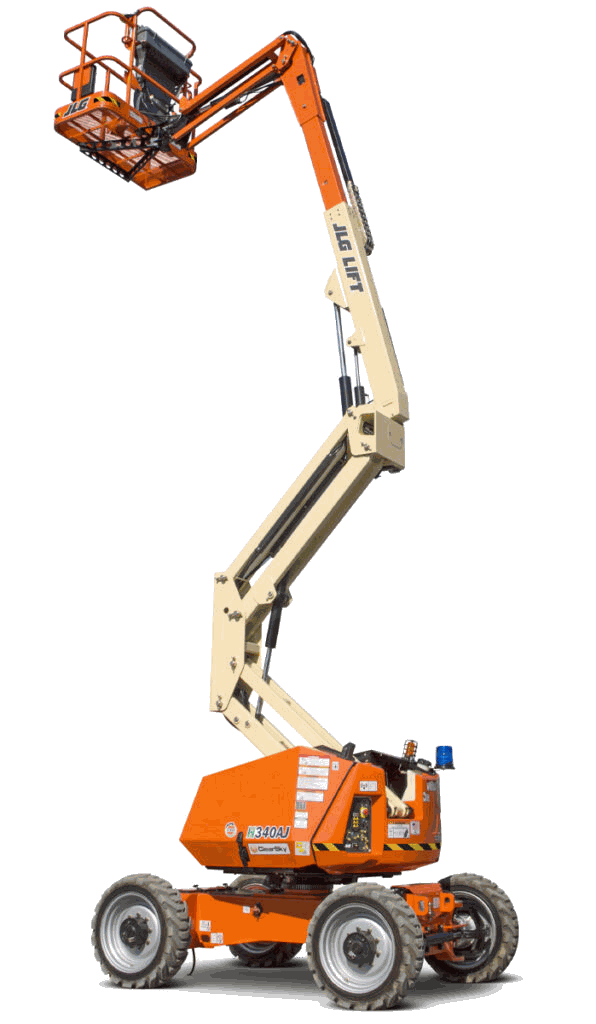
Aerial lift equipment is collectively known as Mobile Elevating Work Platforms (MEWPs), or OSHA Class 7 powered industrial trucks. The right machine depends on whether you need vertical reach only or vertical plus horizontal, indoor or outdoor use, and the floor or ground conditions.

Scissor Lifts
Elevate workers straight up via a vertical scissor mechanism. Electric units suit indoor warehouses; rough terrain models handle outdoor sites.

Boom Lifts
Extend horizontally as well as vertically. Reach over obstacles and across uneven surfaces. Articulating and telescopic models available.

Telehandlers
Lift, place, and move loads across construction sites and warehouse yards. Combines forklift capability with vertical and horizontal boom reach.

Vertical Mast Lifts
Compact, lightweight units for low-level indoor access. Fit through standard doorways. Ideal for stocking, signage, and ceiling repair.

Cranes
For controlled lifting and placement of heavy or awkward loads. Available in a range of capacities to match jobsite specifications.

Acquisition Options: Rent, Lease, or Purchase
Apex offers aerial lift equipment through three acquisition paths to match your timeline and budget. Learn more about rental and lease options across Apex’s full equipment line.
Short-Term Rental
Ideal for seasonal demand peaks, one-off projects, or evaluating a model before purchase. Scissor lifts, boom lifts, and telehandlers across a range of heights and power sources. See the short-term rental program.
Long-Term Lease
Preserves capital, delivers predictable monthly costs, and gives flexibility to upgrade. Best for steady ongoing use without the balance-sheet impact of buying. See leasing and financing options.
New & Pre-Owned Purchase
Lowest total cost per operating hour for high-utilization, long-term use. New JLG/Terex/Skyjack inventory plus inspected pre-owned units. Browse pre-owned equipment.
Industries and Applications
Aerial lift equipment shows up wherever workers need safe access to elevated work zones.
- Manufacturing and industrial facilities. Routine maintenance on overhead lighting, HVAC, conveyors, and ceiling-mounted equipment. Indoor electric scissor lifts and vertical mast lifts handle most of this work cleanly and quietly.
- Warehousing and distribution. Rack maintenance, signage installation, ceiling repairs, and fixture replacement. Indoor scissor lifts work well in narrow aisles.
- Construction sites. Framing, exterior finishing, glazing, steel erection, and trade work at height. Rough terrain scissor lifts and boom lifts handle uneven surfaces and outdoor weather.
- Utilities and outdoor services. Tree trimming, line work, sign installation, and exterior building maintenance. Articulating boom lifts reach over and around obstacles.
- Shipping, transportation, and mining. Equipment maintenance, loading dock work, and overhead repairs in industrial yards and remote sites.
Many Chicago-area operations cross several of these categories. The same fleet often supports manufacturing maintenance during the week and construction work on-site expansions in the same year.
How to Choose the Right Aerial Lift Equipment
Choosing the right aerial lift equipment comes down to matching the machine to the job. The wrong choice means lost productivity, safety risk, or paying for capacity you don’t need.
Working Height & Reach
Working height is platform height plus about 6 ft of operator reach. Straight-up access calls for a scissor lift. Reaching over an obstacle calls for a boom lift.
Indoor vs. Outdoor
Indoor: electric power and non-marking solid tires. Outdoor: LP power, pneumatic or rough terrain tires, higher ground clearance.
Platform Size & Capacity
Match platform width and weight capacity to your crew plus tools and materials for the job.
Access Constraints
Tight spaces, narrow aisles, low ceilings? Compact electric scissor lifts and vertical mast lifts work where larger units can’t.
Brands We Carry
JLG (Including SkyTrak)
One of the largest aerial lift manufacturers in the industry. Full range of scissor lifts, boom lifts, and telehandlers including the SkyTrak telehandler line. Widely deployed in construction, industrial, and rental fleet applications.
Terex (Genie)
Genie scissor lifts and boom lifts are widely used across rental fleets for reliability and serviceability. Covers indoor electric, outdoor rough terrain, and articulating/telescopic boom lifts.
Skyjack
Known for straightforward design, simplicity of operation, and ease of service. Covers electric and rough terrain scissor lifts and telescopic boom lifts. Apex can source additional brands on request.
Parts, Service, and Maintenance
Apex backs every sale, lease, and rental with parts, service, and maintenance support to keep equipment dependable and project schedules intact.
Factory-trained technicians service the major aerial lift brands, including JLG, Genie, and Skyjack. OEM parts availability supports both routine maintenance and emergency repairs without long supply delays.
Preventive maintenance plans for owned and leased equipment catch wear before it causes downtime. Scheduled inspections, fluid changes, and component checks extend equipment life and reduce mid-project failures. Emergency repair services include on-site service across the Chicago metro area.

Aerial Lift Safety Guidelines
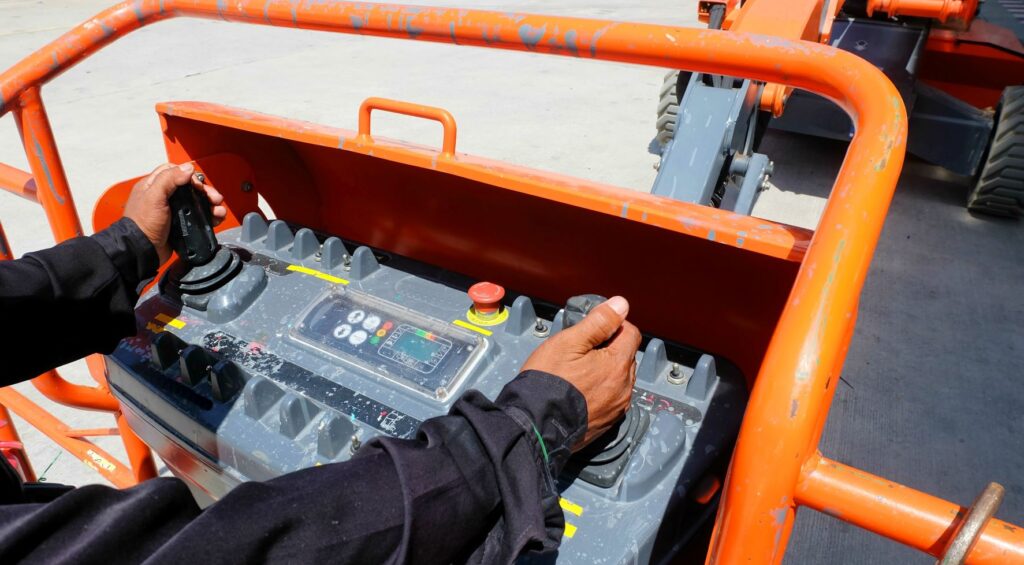
Aerial lift safety depends on properly trained operators, regular equipment inspections, and safe operating practices. In 2020, ANSI/SAIA updated the A92 standards and adopted the term Mobile Elevating Work Platform (MEWP), replacing the older Aerial Work Platform (AWP) designation.
Workers can be seriously injured by tip-overs, falls, electrocution, and crushing hazards when equipment is operated incorrectly. Apex offers Class 7 MEWP operator training and lift certification covering all lift types, led by an OSHA-certified safety program director who is also a certified instructor for JLG and Genie equipment and a 3M Certified Fall Instructor.
Pre-Operation Inspection
Before each shift, operators should complete a daily inspection to confirm controls, fluids, tires, structure, and safety systems are in working condition. Download the Daily Operator Checklist for Aerial Lifts.
Why Chicago Businesses Choose Apex for Aerial Lift Equipment
Apex has spent 21+ years serving Chicago-area warehouses, manufacturing operations, construction firms, and industrial facilities.
Full-Service Approach
Equipment, training, service, and parts from one provider. Fewer vendor handoffs, tighter accountability.
Range of Acquisition Options
Rental, lease, and purchase paths supported, with new and pre-owned inventory in the local market.
Cross-Trained Team
Covers material handling, storage, and warehouse automation in addition to aerial lift equipment.
Local Presence & Inventory
Regional team and locally available inventory mean shorter response times and faster equipment access.
Operator Training
On-site MEWP and forklift lift certification led by an OSHA-certified trainer, tailored to your equipment and facility.
Frequently Asked Questions
What are the primary differences between scissor lifts and boom lifts?
Scissor lifts elevate workers straight up with no horizontal reach. Boom lifts extend up and out, letting operators reach over obstacles or off to the side. If the work is directly above where the lift can park, a scissor lift fits. If it’s around an obstacle or beyond the wheelbase of the lift, a boom lift is the right call.
How do I choose the right scissor lift for indoor applications?
Start with the working height you need, then check platform size and weight capacity for your crew and materials. Indoor scissor lifts should be electric, with non-marking solid tires for finished floors. Confirm the unit fits your aisle width, doorway clearance, and any low-ceiling or overhead obstructions in the work zone.
When should I rent aerial lift equipment vs. purchasing?
Rent for short-term projects, seasonal peaks, or when you want to evaluate a model before committing. Lease when aerial lifts are part of your ongoing operations but you want predictable monthly costs and upgrade flexibility. Purchase when you’re using the equipment regularly over several years and total cost of ownership beats the lease and rental math.
What safety training is required before operating aerial lift equipment?
OSHA requires aerial lift operators to be trained, evaluated, and authorized by the employer before operating. Class 7 lift certification is valid for five years. Apex offers on-site MEWP lift certification led by an OSHA-certified trainer.
Can I use a rough-terrain scissor lift indoors?
It depends on the unit and the indoor surface. Rough terrain scissor lifts are typically larger, heavier, and louder than indoor electric models. Pneumatic tires can mark finished floors, and gas or LP power produces emissions not safe in enclosed spaces. For indoor work, an electric scissor lift is almost always the right tool.
What factors affect aerial lift equipment rental cost?
Rental cost depends on the type of lift, platform height, capacity, power source, rental duration, and whether the unit is new or pre-owned. Delivery, pickup, and accessories may also factor in. Talk to an equipment specialist to scope rental pricing for your project.
How do I determine the right working height for my project?
Measure the height of the highest work point, then add the operator’s standing reach (about 6 feet). The result is your minimum working height. Add a buffer for safety and unexpected access needs. Don’t choose a unit at the bare minimum, as that forces operators to overreach.
What are the annual ANSI inspection requirements for aerial lift equipment?
ANSI A92.5 and A92.6 require an Annual Machine Inspection (AMI) of every MEWP once every 12 months, covering structural elements, hydraulics, controls, safety decals, and functionality. Passing equipment receives a new compliance sticker and written report. Read more in Annual ANSI Inspections: The Foundation of Aerial Lift Safety.
Request a Quote on Aerial Lift Equipment
Whether you need a one-week rental, a multi-year lease, or a new unit for your fleet, the Apex Chicago-area team can match the right aerial lift equipment to your operation. Call (630) 957-4020 or fill out the form below.
We Got This!


