
Pallet Stackers for Chicago Warehouses
Pallet Stackers for Elevated Pallet Handling
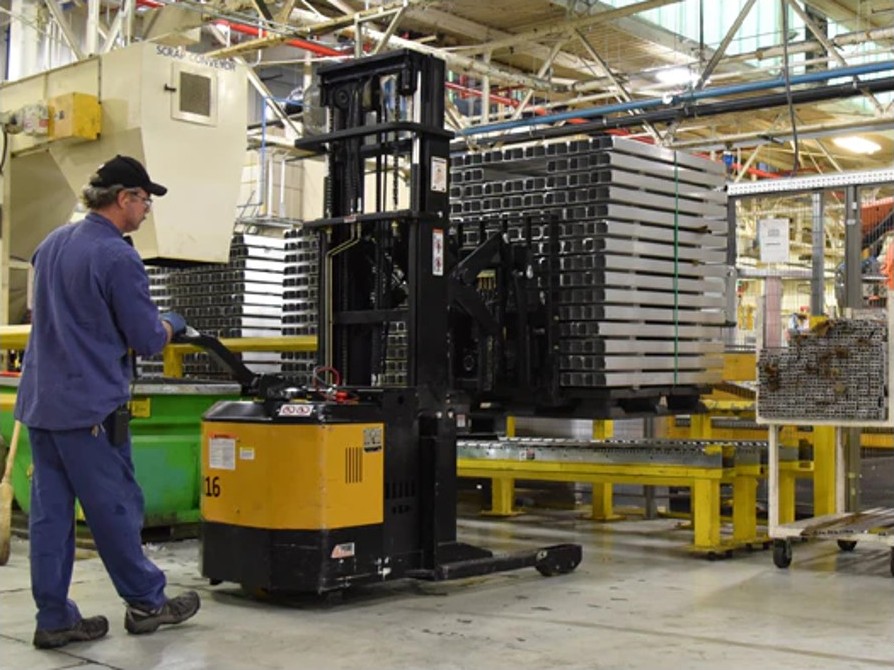
Pallet stackers lift and transport palletized loads, providing a compact alternative to larger forklifts for certain warehouse applications. They’re commonly used for pallet putaway, replenishment, and storage in areas with limited maneuvering space.
Apex Companies offers pallet stackers for Chicago-area operations, with new and pre-owned equipment, rental and leasing options, plus parts, service, and operator training.
How a Pallet Stacker Differs From a Pallet Jack and a Reach Truck
Electric pallet jack
An electric pallet jack moves loaded pallets horizontally at or near floor height. It has no mast, so it can’t place a pallet into racking. That covers dock, receiving, and staging work well, and it’s detailed on the pallet jacks and walkies page.
Pallet stacker
A pallet stacker adds a mast, allowing it to lift pallets into racking as well as transport them at floor level. Pallet stackers are commonly used for lower- and mid-level storage applications, with lift heights, capacities, and operating configurations varying by model.
Reach truck
A reach truck is built for taller storage and narrow-aisle rack work, typically offering greater lift heights and faster travel speeds than a pallet stacker. Reach trucks are available with seated or stand-up operator positions. If your storage requirements exceed a stacker’s capabilities, consider reach trucks instead.
Where Pallet Stackers Fit Best
Pallet stackers support a range of warehouse and material handling applications, particularly where space is limited or elevated pallet handling is needed.
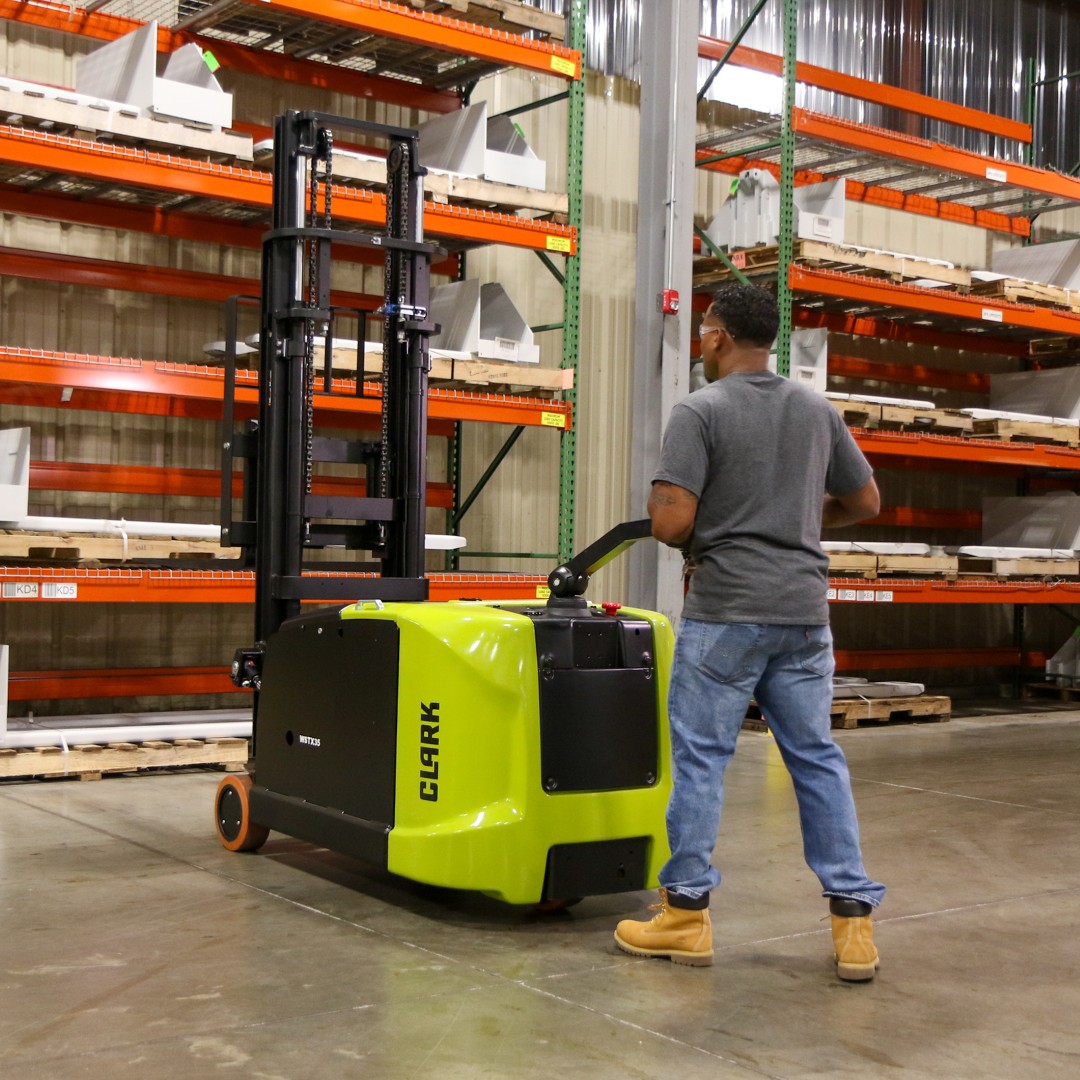
- Low-bay racking. Facilities storing product at lower rack levels can often handle put-away and retrieval with a stacker instead of committing a forklift to the aisle
- Mezzanine and second-level staging. Certain pallet stackers can lift pallets to mezzanine-level loading areas or handle materials on upper floors where a larger forklift may exceed floor load limits. Equipment capacity and lift height must be appropriate for the application
- Limited forklift access areas. Back rooms, production support areas, and tight aisles where a counterbalanced unit can’t maneuver comfortably
- Light manufacturing and assembly support. Feeding raw material or WIP pallets to work cells that sit at varying heights
- Retail and wholesale back-of-house. Stockroom and backroom operations with modest rack heights and limited space to work a forklift
- Facilities stepping up from manual equipment. Operations adding powered lifting capability without the space requirements of a larger forklift
Pallet Stacker Models Available Through Apex
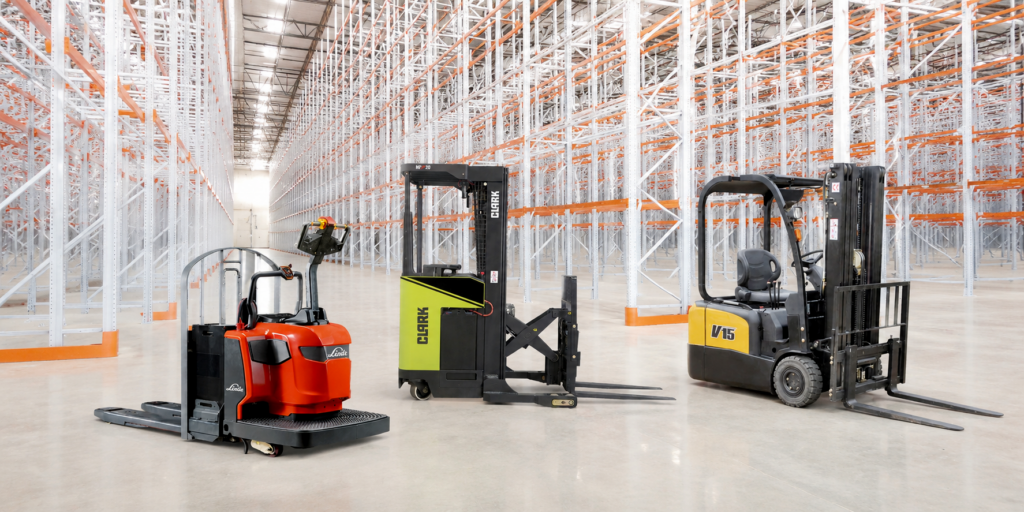
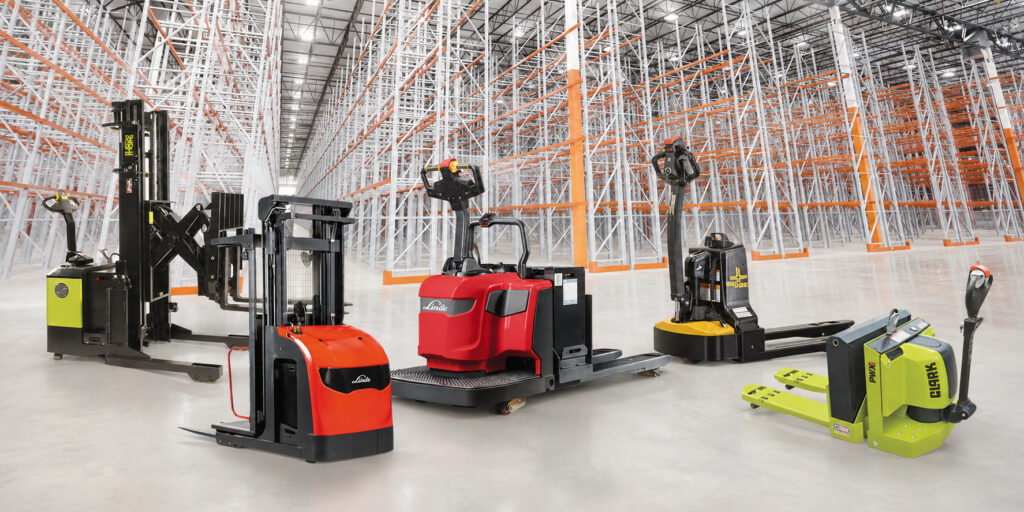
Apex offers pallet stackers from CLARK, Big Joe, and Linde, including straddle, counterbalanced, and reach configurations. Lift heights, capacities, and available features vary by model.
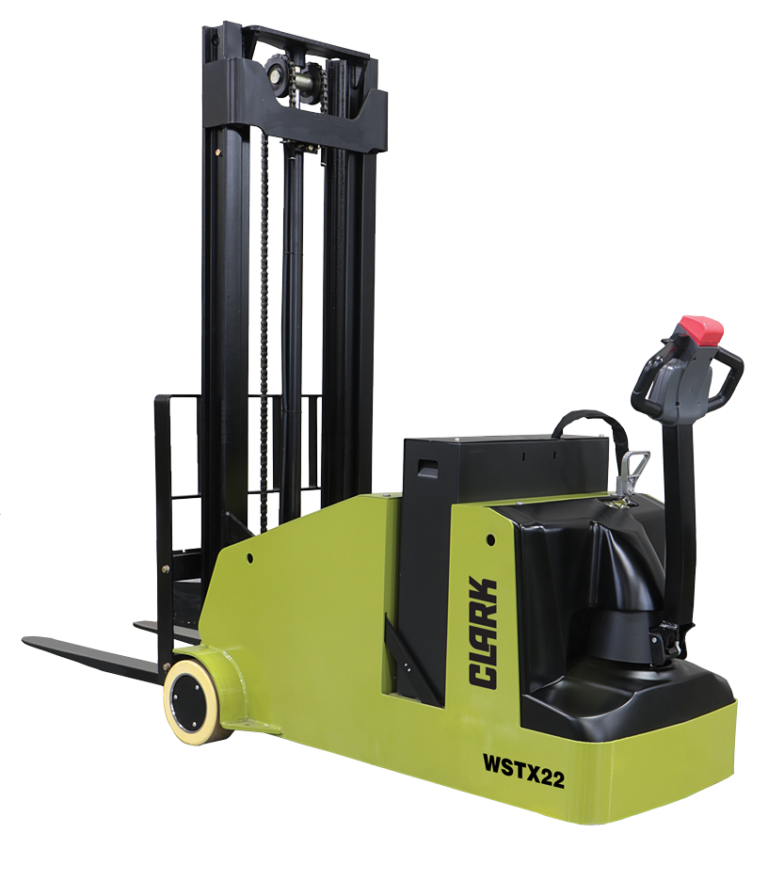
CLARK
CLARK offers electric walkie stackers, straddle stackers, and narrow-aisle reach stackers for pallet storage and material handling. Explore the CLARK pallet jacks, walkies, and stackers lineup.
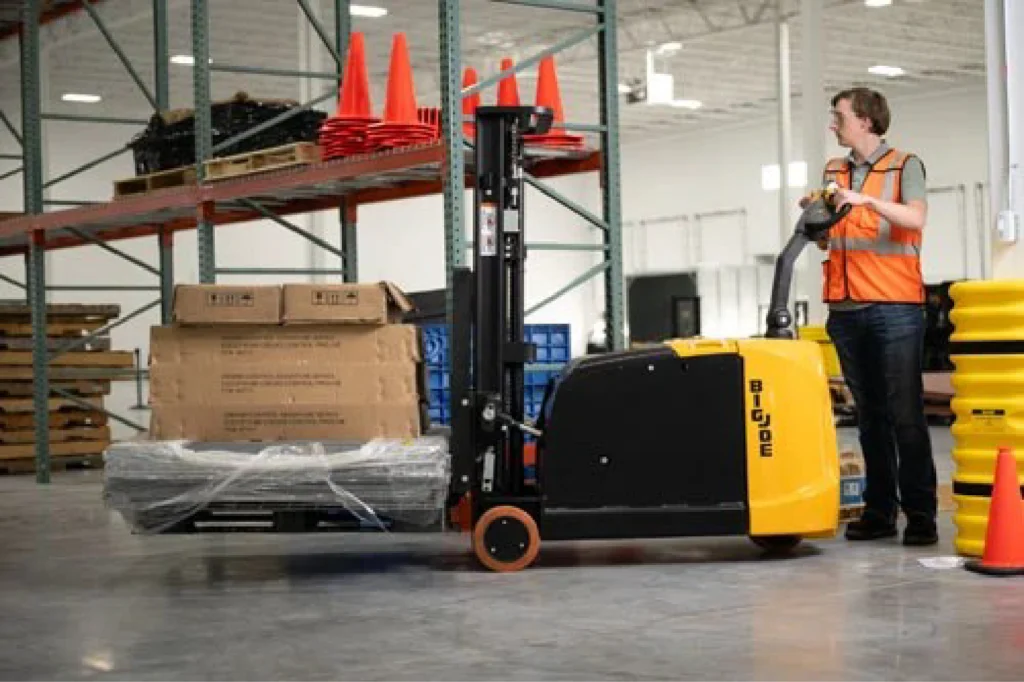
Big Joe
Big Joe offers a broad selection of straddle, counterbalanced, and reach stackers for pallet stacking, work positioning, and warehouse storage. Explore the Big Joe material handling lineup.

Linde
Linde electric pallet stackers offer a range of load capacities, mast heights, and configurations for warehouse storage, replenishment, and material handling in confined spaces. Explore the Linde pallet stacker lineup.
Not sure whether a stacker or a reach truck fits your racking?
Send us your rack heights, aisle widths, and load weights, and we’ll walk through the options. Call (630) 957-4020.
What to Consider Before Selecting a Pallet Stacker
Required lift height
Measure to the top beam level you actually need to reach, not the top of the rack. Confirm the model’s rated lift height against manufacturer documentation.
Capacity at height
Rated capacity can change as the mast raises. Confirm the capacity at your working height, not just the base rating.
Straddle or counterbalance
Straddle stackers use support legs alongside the load for stability; counterbalanced models use rear weight. Straddle-leg dimensions must be considered for rack clearance.
Aisle width and turning radius
Stackers are compact, but truck dimensions and fork length still affect maneuvering. Measure your narrowest working aisle.
Pallet type and condition
Fork entry, pallet bottom construction, and pallet condition all affect whether a stacker can pick a load cleanly.
Floor conditions and clear height
Rough floors affect stability under a raised load. Confirm overhead clearance, including sprinklers and lighting, before specifying mast height.
Battery type and charging
Lifting draws more energy than horizontal travel. Match battery type and charging setup to your duty cycle.
Operator training
Include operator training and evaluation when planning for new equipment.
Buying, Renting, and Leasing Pallet Stackers
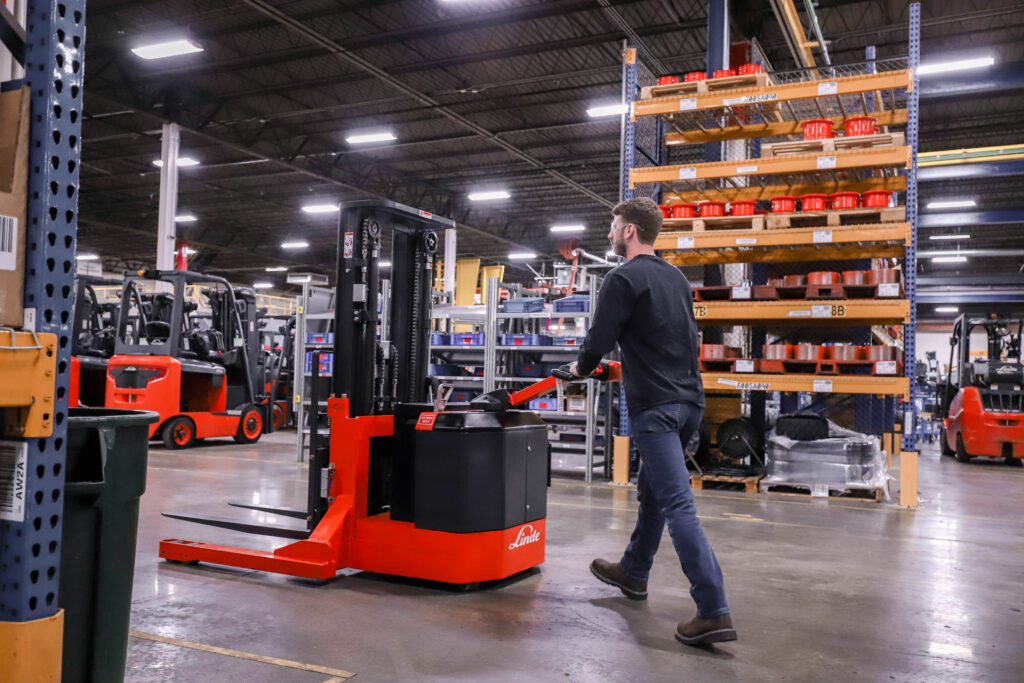
New equipment
New pallet stackers offer a choice of mast heights, load capacities, and fork configurations to match your operating requirements.

Pre-owned
Used stackers are available, with condition and hours varying. Check current pre-owned equipment options with Apex.
Short-term rental
Rentals cover project work, seasonal storage pushes, and coverage while a unit is down. See short-term rentals for scope.
Lease and financing
Leasing preserves capital when you’re adding lift capability across multiple areas. Start with forklift leasing and financing.
Service, Parts, and Operator Training

Service and repairs
Apex provides pallet stacker service and replacement parts to help keep equipment operating safely and reliably. Factory-trained technicians handle repairs and maintenance involving mast, hydraulic, brake, and other critical components.
Preventive maintenance
Preventive maintenance helps identify wear and potential equipment issues before they lead to costly downtime. Learn more about Apex’s forklift maintenance services.
Operator training
Pallet stacker operators require training and evaluation appropriate to the equipment they use, including load stability, mast operation, and overhead clearance. Apex offers operator training to support safe equipment operation.
FAQ: Pallet Stackers
What is a pallet stacker?
A pallet stacker is powered material handling equipment that uses a mast to lift and transport pallets, including placing them into racking. Stackers are available in walkie, straddle, counterbalanced, and reach configurations to accommodate different storage and handling requirements.
How is a walkie stacker different from an electric pallet jack?
An electric pallet jack has no mast and only lifts a load a few inches for transport. A walkie stacker adds a mast so it can place and retrieve pallets in racking. If you never need to put a pallet above floor level, a pallet jack is the simpler and less expensive choice.
Should I buy a stacker or a reach truck?
It depends on your rack height, aisle width, and throughput. Stackers suit low and mid rack levels, smaller footprints, and lighter duty cycles. Reach trucks handle taller storage, narrow aisle rack work, and higher throughput. Confirm your top beam height and busiest cycle before deciding.
What lift height and capacity should I specify?
Measure to the beam level you actually need to reach, and confirm the model’s rated capacity at that height rather than at ground level. Include pallet weight in your load calculation and allow margin above your typical load. An Apex rep can confirm ratings for any model you’re considering.
Can Apex service pallet stackers after purchase?
Yes. Factory-trained technicians service stackers with OEM replacement parts, and mobile service vans handle most repairs on site. In-shop diagnostics are available at North Aurora. Preventive maintenance scheduling is available, and it’s worth setting up on lift equipment given the mast and hydraulic components involved.
Find the right pallet stacker for your operation
Apex Companies offers pallet stackers from CLARK, Big Joe, and Linde, with options for different lift heights, load capacities, and warehouse layouts. Our team can help you compare models and find equipment suited to your storage and pallet handling needs, or call (630) 957-4020.
Talk to an Apex Expert About Pallet Stackers
Send us your rack heights, aisle dimensions, pallet type, and load weights. That’s enough to confirm whether a stacker fits or whether a different equipment class is the better call.
Talk To An Expert or call (630) 957-4020.
Related equipment: pallet jacks and walkies, walkie rider pallet trucks, and forklifts and lift trucks.
We serve: Greater Chicago Metro Area, North Aurora, Aurora, Oak Brook, West Chicago, Schaumburg, and Deerfield.


