
Walkie Rider Pallet Trucks in Chicago
Buy, rent, or lease walkie rider pallet trucks in Chicago
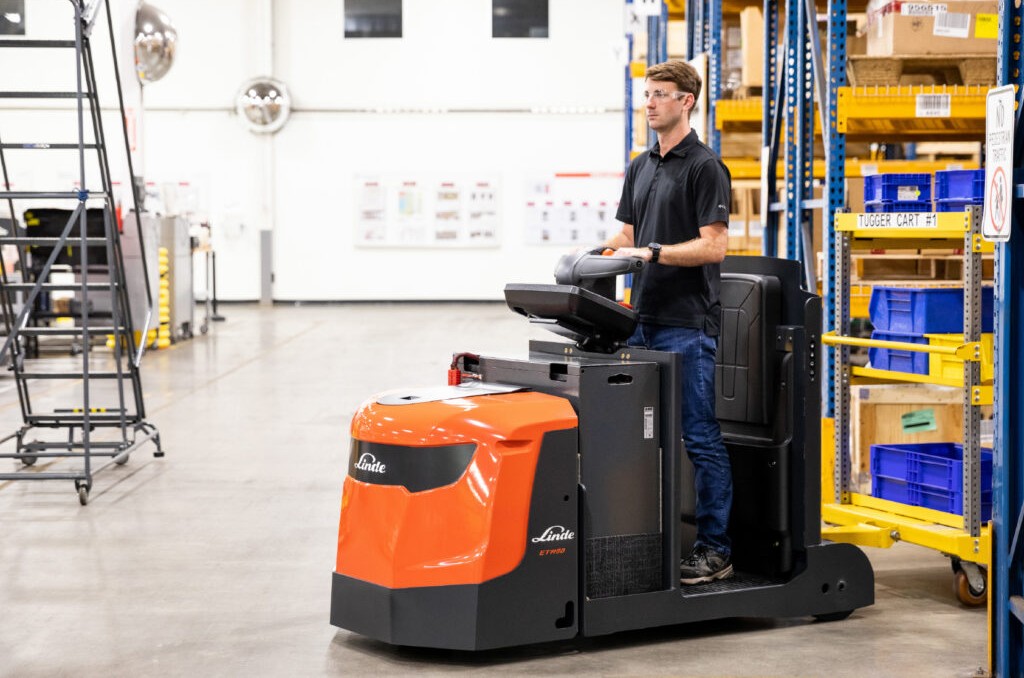
Walkie rider pallet trucks are electric trucks that move palletized loads across warehouse and distribution floors. They lift pallets only high enough to travel, not into racking.
Operators ride with the truck, which suits:
- Longer transport runs
- Dock operations
- Staging
- Replenishment
Apex Companies supplies Linde, CLARK, and Big Joe walkie riders to Greater Chicago operations, with factory-trained service and OEM parts support.
End-Controlled vs. Center-Controlled Walkie Riders
End-controlled riders
End-controlled riders position the operator on a platform at the rear of the truck. Easy access on and off the platform makes this configuration well-suited for frequent stops, trailer unloading, dock operations, and staging.
Center-controlled riders
Center-controlled riders position the operator within a protected compartment near the center of the truck. This configuration is generally suited for longer transport runs and applications where operators remain aboard for extended periods.
| Factor | End-controlled | Center-controlled |
|---|---|---|
| Frequent stops and extensive low-level picking | ✓ | |
| Long-distance runs | ✓ | |
| Dock loading and unloading | ✓ | |
| Operator comfort and safety | ✓ | |
| Maneuverability in tight spaces and narrow aisles | ✓ | |
| High-throughput operations | ✓ | |
| Visibility | ✓ | |
| Simplicity and lower cost | ✓ | |
| Stability | ✓ |
The best configuration depends on travel distances, handling frequency, available space, and workflow.
Where Walkie Riders Deliver Value in Chicago Warehouse Operations
Walkie riders earn their place in specific operating conditions. Here is where they tend to fit in Chicago-area facilities, and where they do not.
Where walkie riders fit
- Loading dock and cross-dock. Trailer-to-staging work is repetitive and high frequency, and the ride platform cuts the walking portion of every cycle. That matters most on high-volume docks and across multiple shifts
- Distribution and fulfillment centers. Larger facilities often involve longer travel distances between receiving, storage, and outbound staging. Walkie riders reduce operator walking time and improve efficiency throughout each shift
- Cold storage and food distribution. Some models are built for cold and temperature-transition work, with sealed electronics, cold-rated batteries, and moisture-resistant components. Confirm the rating against the specific model
- Manufacturing production floors. A good fit when a sit-down truck is oversized for the load or too costly for transport-only duty. Manufacturers use riders to feed lines and clear finished goods without tying up a counterbalance
Where a walkie rider may not fit
- Applications that require pallets placed into racking above floor level, which need a walkie stacker or a lift truck
- Very short travel distances, where a standard electric walkie is sufficient and less expensive
- Operations with extremely tight turning requirements, where the truck’s length works against you
- Facilities with no charging infrastructure or space to support an added electric unit
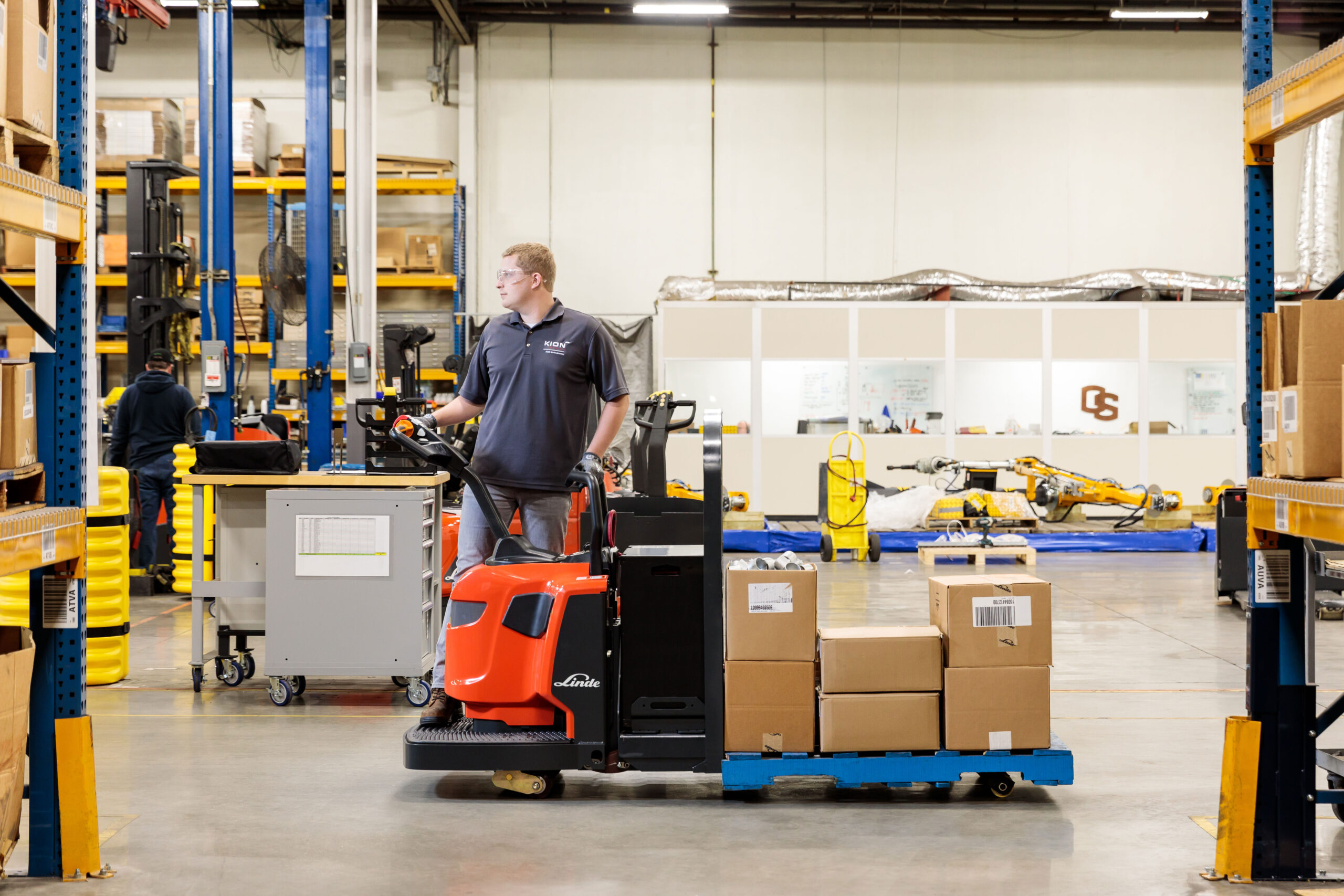
Is a walkie rider the right fit?
Apex can help you evaluate your pallet handling needs and determine whether a walkie rider is the right fit for your operation.
Walkie Rider Lineup at Apex: Linde, CLARK, and Big Joe
Apex is a multi-brand dealer, so the recommendation follows the application rather than a single manufacturer’s catalog.
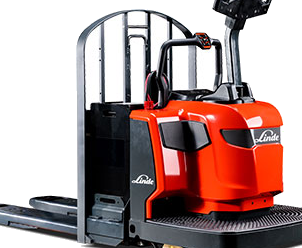
Linde Electric Walk/Ride Trucks
Linde electric walkie rider pallet trucks include the EW30/EW40 and EWR30/EWR40 series, along with ECR30/ECR40 center riders. These 6,000- and 8,000-lb capacity trucks offer electric pallet transport options for dock operations, distribution centers, and longer warehouse travel distances.
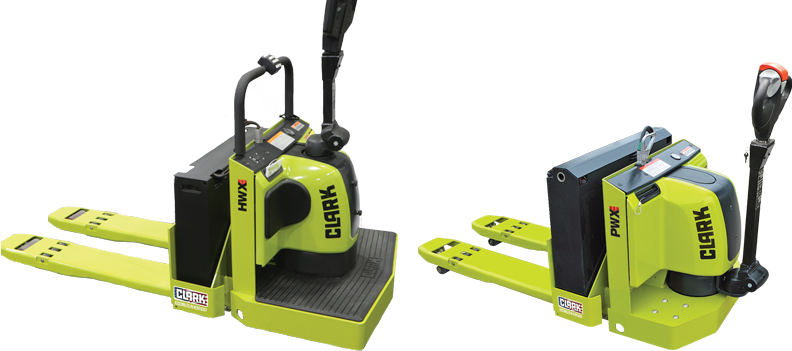
CLARK Walkie Riders
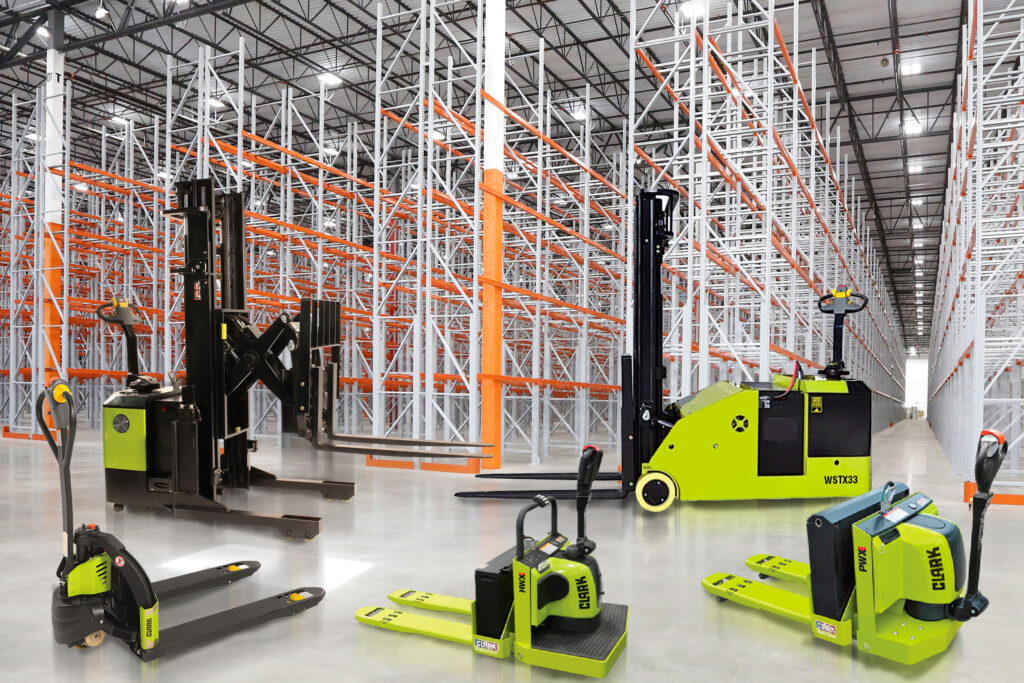
The CLARK HWXE electric walkie rider offers 6,000- and 8,000-lb load capacities for demanding pallet transport applications. Its ride-on platform, AC traction motor, and regenerative braking support efficient pallet movement throughout the facility.
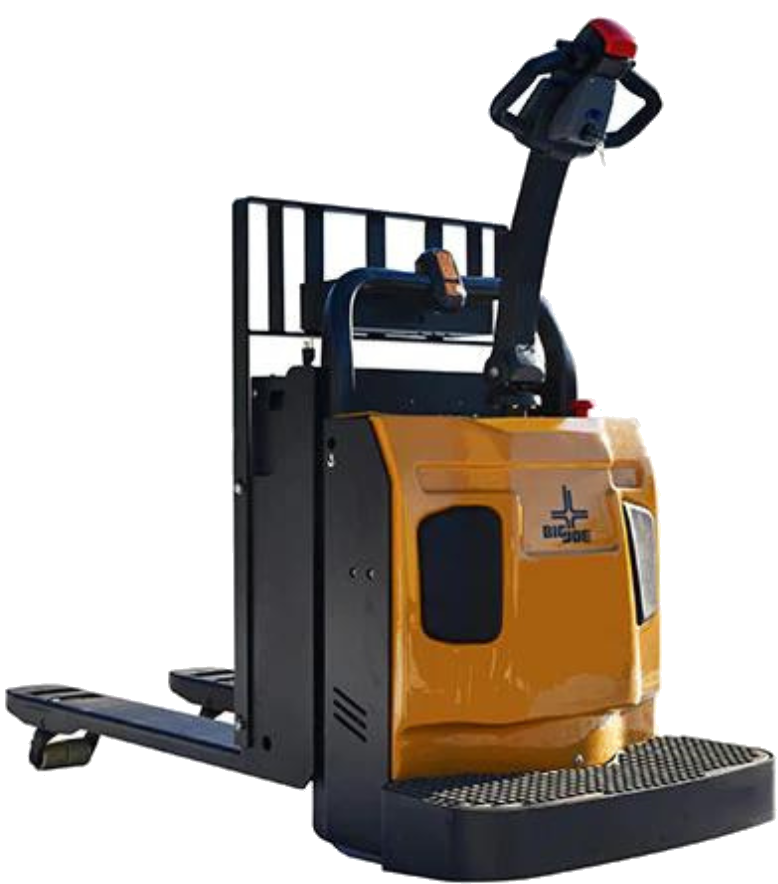
Big Joe Walkie Riders
Big Joe walkie rider pallet trucks include the compact RPL44 with a 4,400-lb capacity and the WRT60 with a 6,000-lb capacity. Both offer electric power and ride-on operation for efficient pallet transport, with configurations suited to different load and travel requirements.
Want an Apex specialist to walk your operation?
The right model depends on capacity, duty cycle, environment, and shift requirements. An Apex equipment specialist can walk your operation and confirm fit before you commit to a configuration.
Factors to Evaluate Before Choosing a Walkie Rider
Consider these factors when choosing a walkie rider for your operation.
Load capacity and duty cycle
Consider your heaviest routine pallet loads, trips per shift, and operating hours. Load weight determines required capacity, while frequency and shift schedules influence battery and equipment selection.
Travel distance
Walkie riders pay off when operators make repeated trips over medium to long distances. For shorter travel distances, a standard electric walkie pallet truck may be sufficient.
Battery technology
Battery options vary by model. Consider operating hours, charging requirements, and available infrastructure when evaluating lead-acid and lithium-ion equipment.
Floor and environment conditions
Floor conditions, outdoor dock exposure, and operating temperatures can affect equipment selection. Sealed and cold-rated variants are available on some models.
Aisle width and turning radius
Walkie riders are more compact than sit-down riders, but the platform adds length and they still need adequate end-of-aisle clearance. Check your narrowest working aisle and tightest turn against the published dimensions for the specific model.
Operator training
Walkie rider operators require training and evaluation appropriate to the equipment they use. Include operator training when planning for new equipment.
Acquisition path
Consider whether purchasing, leasing, or renting best fits your equipment needs, operating schedule, and budget.
Acquisition Options for Walkie Riders in the Greater Chicago Area
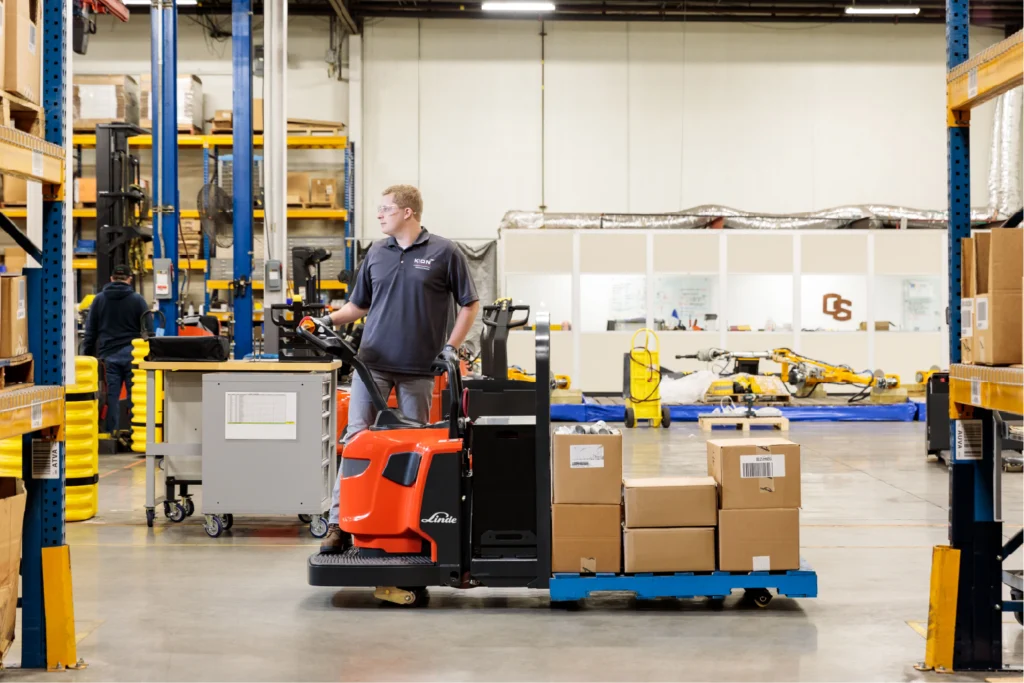
Purchasing
Works best when demand is stable year-round and the truck will run consistently across shifts. New and pre-owned units are both available, and Apex supports the equipment after the sale with factory-trained service and OEM parts. If the truck is a core part of daily flow, ownership usually produces the lowest cost per hour over the equipment life.
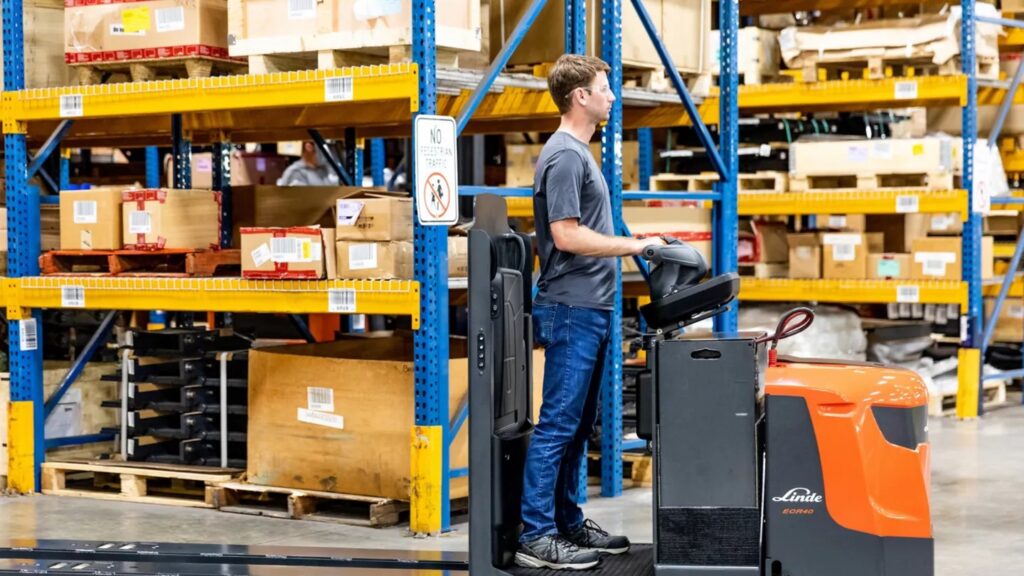
Leasing and financing
Suits operations that want to preserve capital or align equipment cost to predictable monthly payments. Terms depend on the equipment, the term length, and the structure you need. Talk to Apex about the options that fit your budget cycle. See the Forklift Leasing and Financing page.
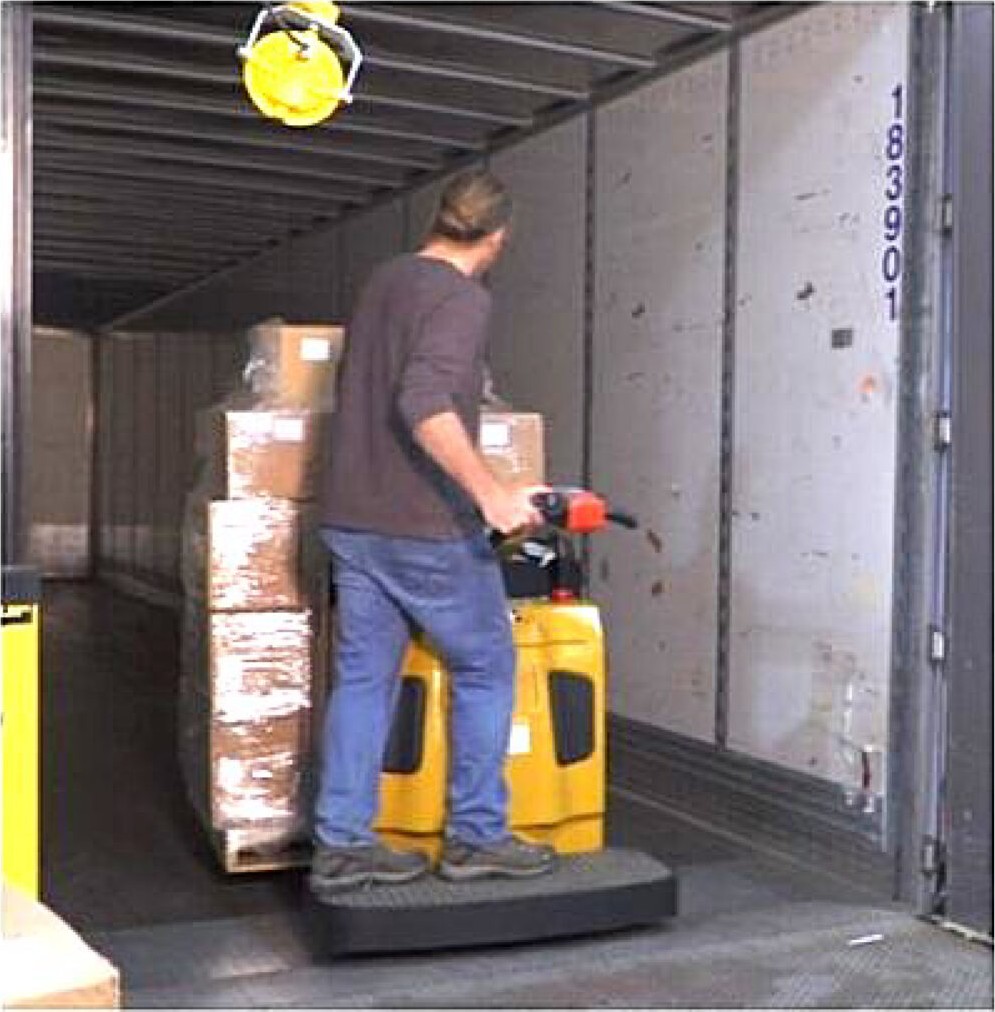
Short-term rental
Fits seasonal demand spikes, coverage during a repair, and project-based needs such as a relocation or a peak season. Daily, weekly, and monthly terms are available. Current walkie rider rental availability varies with fleet inventory, so confirm your dates and model requirements early. See the Short-Term Rentals page for details.
Pre-owned equipment
Gives budget-conscious buyers and lighter-duty applications a lower entry point. Inventory changes, so check current availability on the pre-owned equipment listings.
Not sure which option fits your operation?
Call (630) 957-4020 and an Apex specialist will confirm fit before you commit.
Operator Certification for Walkie Rider Pallet Trucks
Walkie rider pallet trucks are powered industrial trucks, and operators require training and evaluation appropriate to the equipment they use.
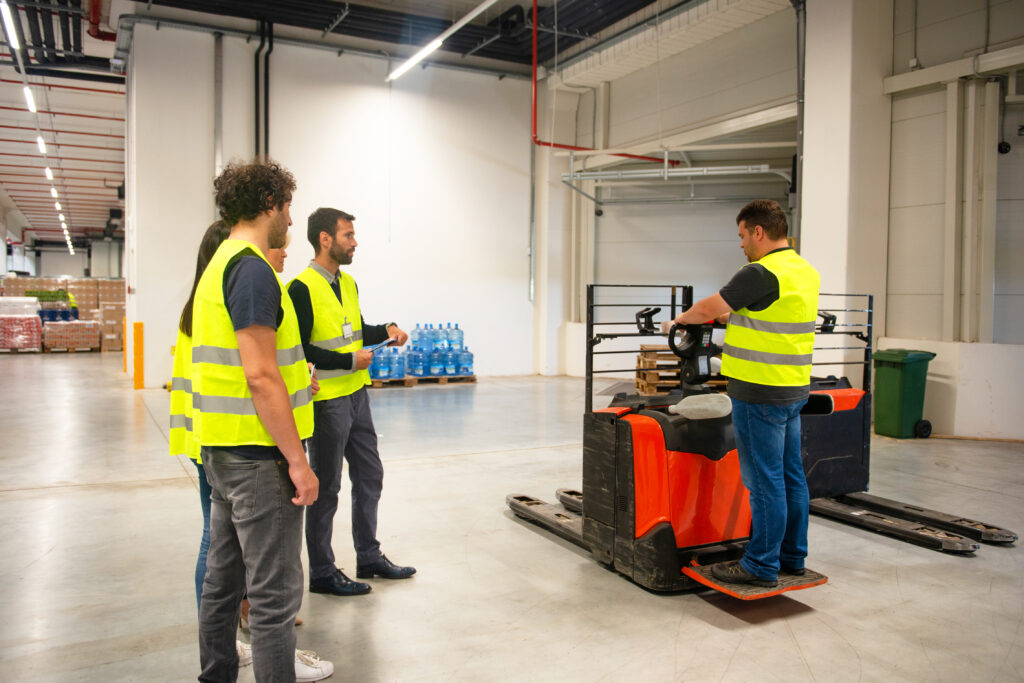
Apex offers on-site operator training that combines classroom instruction with hands-on operation. It covers:
- Equipment controls and pre-operation inspections
- Safe travel and load handling
- Dock plates, ramps, and pedestrian traffic
- The operator platform and travel controls
Service and Parts Support for Walkie Riders in the Chicago Area
Reliable parts and service support help keep walkie riders operating and minimize equipment downtime.
Apex provides service for Linde, CLARK, Big Joe, and other supported pallet truck brands through factory-trained technicians. Mobile service is available throughout the Greater Chicago area, with additional repair capabilities at Apex facilities.

Frequently Asked Questions About Walkie Rider Pallet Trucks
What is the difference between a walkie pallet jack and a walkie rider pallet truck?
A standard electric walkie pallet jack requires the operator to walk with the truck. A walkie rider allows the operator to ride on the equipment, making it better suited for frequent pallet transport over longer distances.
When does a walkie rider make more sense than a standard walkie?
Walkie riders become most operationally beneficial when operators are making repeated trips over medium to long distances and operator fatigue or throughput is a constraint. For shorter, occasional pallet movements, a standard electric walkie is often sufficient. Trip frequency, load weight, shift length, and facility size all affect this decision.
What is the difference between a walkie rider and a walkie stacker?
A walkie rider is designed for horizontal pallet transport. It lifts pallets only enough to clear the floor, commonly around three to seven inches depending on the model. A walkie stacker lifts pallets vertically and can place them into racking. If your operation requires pallet putaway into racking, you need a stacker. If you are moving pallets at floor level across the facility, a walkie rider may be the right fit.
What load capacities do walkie rider pallet trucks typically support?
Walkie rider models commonly support loads between about 4,400 and 8,000 lbs depending on the model and configuration. Linde EWR walkie riders available through Apex are rated at 6,000 and 8,000 lbs, and Big Joe rider models cover the lighter end of that range. Confirm the right capacity for your specific pallet weight, load center, and duty cycle with an Apex equipment specialist before selecting a model.
Do walkie rider operators need training and certification?
Yes. Walkie rider operators must receive training and evaluation appropriate to the equipment they operate. Apex offers comprehensive training, including both classroom and hands-on instruction, to help operators develop safe equipment-handling practices.
Can walkie rider pallet trucks be used in cold storage environments?
Some walkie rider models are designed for cold storage and temperature-transition use, with sealed electronics, cold-rated batteries, and moisture-resistant components. Not all models are rated for cold environments. Confirm whether the specific model under consideration meets the temperature range and environmental requirements for your facility.
Does Apex rent walkie rider pallet trucks in Chicago?
Apex offers short-term and longer-term rental options for pallet trucks in the Greater Chicago area. Current walkie rider availability varies by model and fleet inventory. Contact Apex to confirm availability for your timeline and equipment requirements.


