
Why Electric Forklift Rentals Need More Planning Up Front
Electric forklift rentals are a practical, cost-effective solution to meet short-term demand. But before you jump in, you’ll need to make sure your site can support the power, charging, and operating requirements that come with electric equipment. You’ll need to confirm charger access, available power, runtime, battery type, and whether the truck actually fits the application and facility layout.
This guide will help warehouse operators decide whether an electric forklift rental is a good fit for the job.
What Warehouse Teams Should Review Before Renting
Charging Access
Charging only works if the truck can be charged safely and conveniently, without interrupting the flow of the operation. Before the rental arrives, confirm where the truck will charge, whether that location fits the building layout, and whether operators can access it without disrupting aisles, docks, or staging areas.
Lead-acid and lithium-ion battery systems do not have the same charging, maintenance, or facility requirements, which can affect how well the rental fits the operation.
At a practical level, teams should check:
- Whether the charging location is close enough to the work area to be convenient
- Whether charging will block aisles, docks, or staging zones
- Whether the operators on the busiest shifts can realistically access the charger
- Whether the rental includes a compatible charger and the facility can support it
Power and Infrastructure
Renting the truck is only part of the decision. The facility also has to support the charger, battery type, and charging process tied to that equipment. Before the rental arrives, teams should verify available power, charger compatibility, and whether the building can support safe, practical charging. Some electric forklift charging setups — especially lead-acid systems — may require designated space, ventilation planning, and a layout that supports safe charging.
This is where teams should verify:
- Whether available power meets the charger requirements
- Whether the charger matches the battery type tied to the rental truck
- Whether the facility needs added outlets or wiring
- Whether the battery and charger setup requires a designated charging area, ventilation, or other site accommodations
- Whether charging can be done safely without disrupting surrounding operations
Runtime and Shift Demands
Runtime planning matters just as much as charger access. The right rental fit depends on how many hours the truck will run, how demanding the duty cycle is, and whether charging windows line up with the actual workflow. Battery type also affects the equation, since lead-acid and lithium-ion systems do not behave the same way in charging and shift use.
Questions to answer before renting include:
-
- Is this a single-shift, multi-shift, or peak-use application? Shift pattern matters because charging opportunities and runtime demands change throughout the day. In multi-shift use, lead-acid batteries may require a more deliberate charging plan, while lithium-ion trucks can support opportunity charging during breaks.
- Will the truck run steadily or in bursts? Duty cycle affects how much runtime the truck needs and how often charging opportunities may occur. Steady use can put more pressure on runtime, while stop-and-go use may create more natural pauses for charging.
- Can charging happen during breaks, shift changes, or overnight? Charging windows should match the battery type. Lead-acid batteries are often managed under the 8-8-8 rule — eight hours of charging, eight hours of cooling, and eight hours of use — while lithium-ion batteries can support opportunity charging during breaks, shift changes, and other idle periods. Read more on opportunity charging.
- Does the battery type and charging plan match the operation’s real schedule? If the charging approach does not align with the way the truck will actually be used, the rental may look workable on paper but create downtime in practice.
Application Fit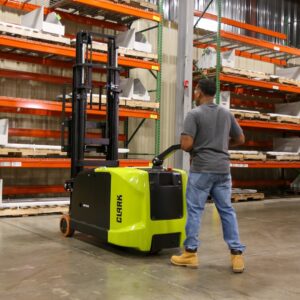
The rental spec still has to match the work. Electric forklifts can support a wide range of warehouse and manufacturing tasks. Many models are designed for both indoor and outdoor applications, but the fit depends on truck type, tires, load, terrain, and duty cycle.
That means checking:
- Indoor, outdoor, or mixed use
- Narrow aisle work, dock work, transport, order picking, or pallet movement
- Load weight and required lift height
- Floor condition, traction needs, and tire suitability
- Whether the truck class matches the real task mix
Facility Layout and Space
A truck that fits on paper can still create daily friction if the facility lacks space for charging equipment, parking, turning, and staging. Layout matters because electric rentals can change where trucks pause, charge, and queue during the shift.
Layout should account for operators, equipment, and charging activity through clear, intentional spacing. Look closely at:
- Available room for charging equipment and related workflow
- Aisle widths and turning space for the rental class
- Staging zones near docks and trailer loading areas
- Whether the truck will fit the flow of the building without creating new choke points
When Electric Forklift Rentals Make Sense
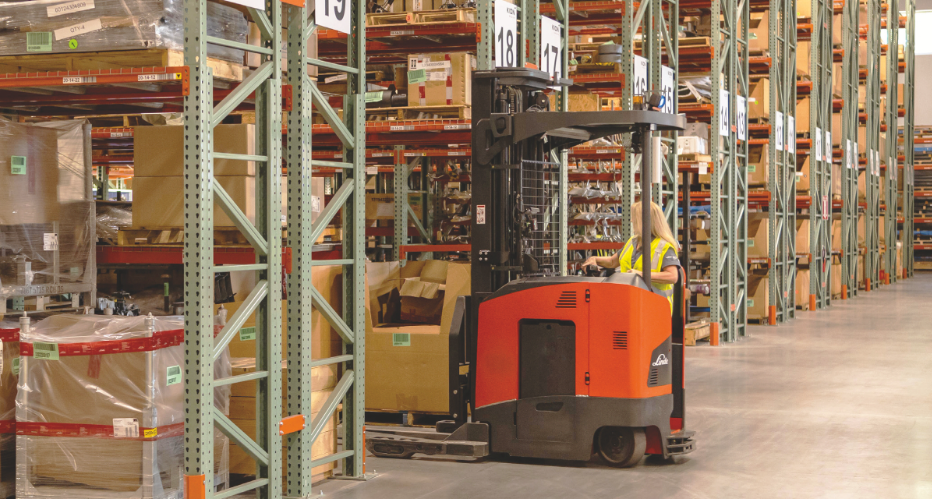
Electric rentals usually make the most sense when the need is real, but the timeline or application does not justify an immediate fleet purchase. Rental programs are commonly used to cover short-term demand, seasonal peaks, and special operating needs.
Common best-fit scenarios include:
- Peak seasons that require more truck capacity quickly
- Temporary growth or project-based demand
- Replacing a down truck while repairs are underway
- Testing electrification before a broader fleet transition
- One-off need for a specialized truck or attachment:
The Right Rental Plan Matches the Equipment to the Facility
The right rental decision depends on more than truck availability. Warehouse teams need to look at the application, charger access, runtime needs, facility constraints, and operator workflow together.
That is also where a consultative approach matters. Apex brings together material handling support, facility planning, and storage and automation expertise to help customers make better equipment decisions within the full operation. For a broader look at that model, see how Apex approaches being a full-service warehouse solutions partner.
Planning Electric Forklift Rentals for Your Warehouse?
Apex can help you evaluate the application, charger access, runtime demands, and rental terms so you get the right truck for the job.
Apex offers flexible rental terms and can help customers evaluate charger access, battery type, runtime demands, and application fit before equipment arrives. Rental options are available across the greater Chicago area, with support in parts of Wisconsin and Indiana based on equipment needs and availability.
Operator training is available separately through Apex’s training program.
Talk to an expert about your facility needs.