
Safety and Efficiency: The Two Main Goals Of A Forklift Battery Charging Station
Whether building a new warehouse or distribution center or expanding an existing one, you will make many safety-minded decisions. Aside from structural concerns, fall protections, and safe work zones, your battery charging station requires thoughtful attention. How and where you charge lead-acid forklift batteries is critical for efficient and secure operations. The following is an overview of design tips from the Apex experts to help you understand the spatial and safety requirements to power up your forklift battery charging area.
Set Up a Dedicated Forklift Charging Area
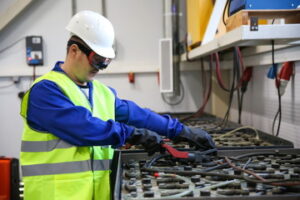 Select a spot away from potential ignition sources that won’t disrupt efficient facility flow and processing routes.
- Be sure to think about the future and provide space for the growth of your forklift fleet.
- Ensure access to substantial electrical power, a reliable water supply, and adequate floor drainage.
- Use flooring constructed of acid-resistant material.
- Make sure the area is temperature and humidity-controlled. Cold reduces battery effectiveness.
- Lighting – the area must be well-lit to comply with OSHA regulations.
- Ensure chargers are protected from forklift collision — bollards or other protective guard rails must protect the storage rack they’re sitting on.
Consulting with one of our professionals will ensure you’re setting your station up properly, contact us at (833) 226-4574 for a free consultation.
Ensure Proper Ventilation
This is a crucial item, as charging a lead-acid battery releases potentially explosive hydrogen gas and toxic, corrosive sulfuric acid fumes. If you are concerned about proper ventilation, install hydrogen gas detectors or alarms to ensure that the gas level in the area does not reach a critical level.
Install Sufficient Electrical Power
Once again, plan for the future. You may only be charging a handful of forklifts now, but that number may increase a year from now. Be sure to use chargers that meet your forklift’s power and voltag requirements. An insufficiently powered charger can increase charging times, slow down your operation, and potentially damage your battery or forklift. A general rule of thumb is to provide chargers that have at least 20% greater capacity than the batteries being charged.
Plan Your Charger and Battery Extractor Installation
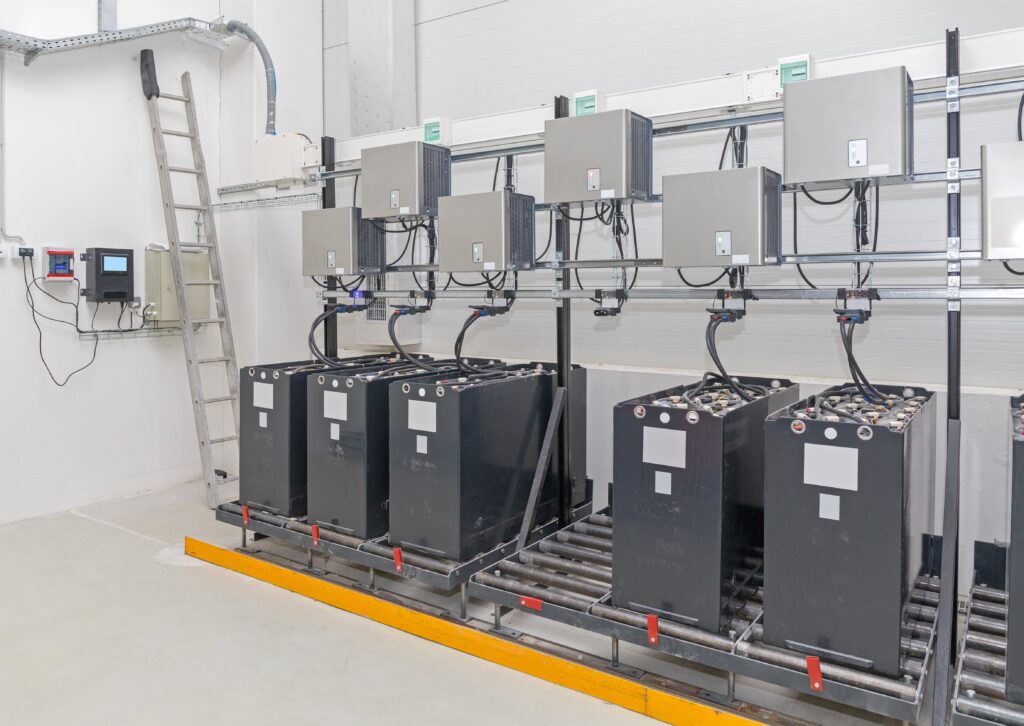
Provide adequate space between chargers. Chargers can be stacked on shelves to maximize floor space usage. Follow manufacturers’ recommendations for spacing to allow adequate ventilation of chargers. Determine whether you need side extraction, overhead extraction, or both. That will determine whether you need to install a gantry crane or a portable overhead extractor. For horizontal battery extraction, decide whether or not you need manual or powered transfer carriages. Charging-in-place is an option if you can keep the forklift out of service for the duration.
Provide All Necessary Safety Equipment
Staff safety is undoubtedly one of the primary considerations in designing and setting up a battery charging station or area. Here is a list of the mandatory equipment and services for setting up a safe and efficient charging station.
- Personal Protection Equipment – hard hats, eye protection, face shields, acid-resistant gloves, rubber aprons, and safety footwear
- Eye Wash Stations with adequate flow
- Fire extinguishers using dry chemicals, CO2, or foam within easy reach
- Neutralizing agents or spill kits, using baking soda or soda ash to neutralize acid spills
- Hoses for washing down neutralized spills
- A phone for emergency calls
- Protective rails or bollards to prevent forklift accidents
- Labels for all chemicals and electrolytic solutions –Place warning labels on all high-voltage electrical equipment. Signage should also indicate that the area is a designated lead-acid battery charging station.
- Signage – ensure PPE compliance, identify the eyewash station and fire extinguisher (required), and, of course, NO SMOKING signs in and around the area.
Develop A Trained Charging Staff
Ensure that all your staff tasked with charging forklifts have been properly trained to perform this potentially hazardous operation. Apex can provide this training. Your charging staff should also regularly inspect fire extinguishers, electrical connectors, hoses, and drains to ensure that they are all in good working order.
Apex can meet all your needs when setting up a lead-acid battery charging station. We can supply chargers and safety products, design services, and training for your team. Apex is your material handling and warehouse supply source for the Chicagoland area. Contact your Apex rep today for prompt support.
Of course, you can always avoid the risks and intricacies of lead-acid battery charging with lithium-ion-powered vehicles. Apex stocks a range of quality lithium forklifts from Clark, Big Joe, and Linde, as well as iron phosphate battery-powered vehicles from BYD. Contact the Apex team for the right solution for your operation.