
Is Opportunity Charging, Conventional, OR Fast Charging Best For Your Business?
The goal of most warehouse managers running a multi-shift operation is to maximize velocity. That is, to speed the flow of goods from the receiving to the outgoing dock. To achieve that goal, the forklift fleet has to be available for maximum time throughout the day. That’s when forklift opportunity charging and forklift fast charging come into play. Of course, if you’ve already converted your forklift fleet to Li-ion batteries, then you’re already practicing opportunity charging.
What is forklift opportunity charging? What is forklift fast charging?
In an ideal world, to get the longest life from your forklift lead-acid battery, you want to practice the 8-8-8 rule, i.e., eight hours of charging, eight hours of cooling down, and eight hours of use (discharging). Unless you can afford to let your forklifts sit idle for 16 hours–which you can if you’re on a one-shift operation–you probably need to find a way to put those forklifts to use during those potentially idle hours. Swapping out the battery with a fresh one at the end of each shift is one way, but that is an expensive, tedious and potentially dangerous operation, requiring heavy-duty lifting equipment and risking the possibility of acid spills and worker injury.
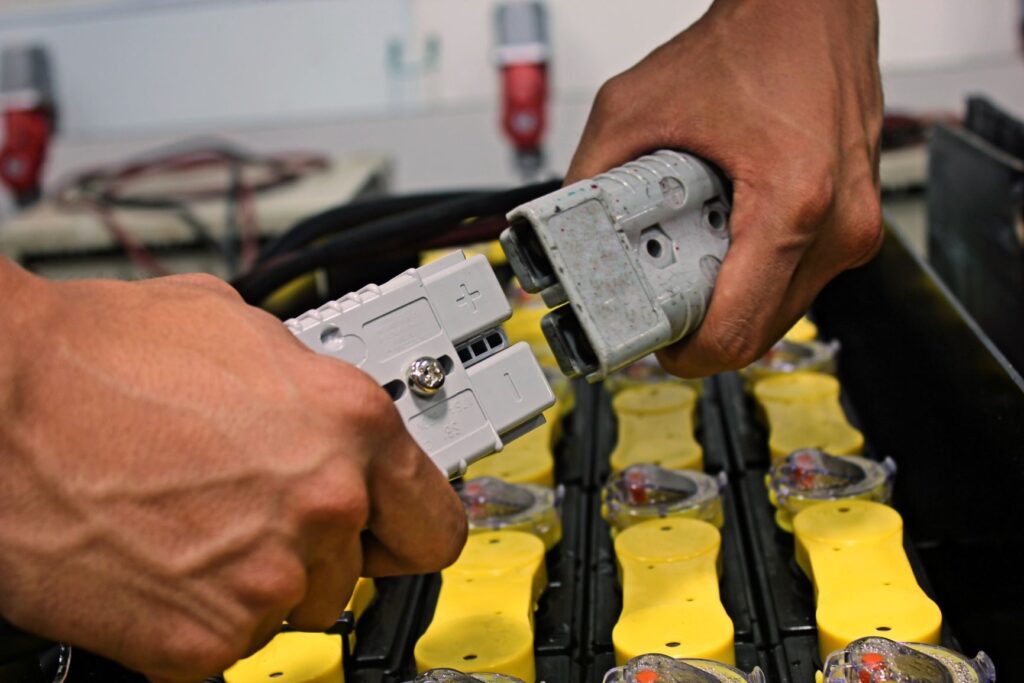
Enter forklift opportunity charging. In this method, the forklift battery is charged every time the forklift is not being used for an extended period of time, such as during lunch and coffee breaks, shift changes, or when the forklift operator needs to perform some other task. But opportunity charging of lead-acid batteries has its drawbacks and advantages. Let’s take a look…
Opportunity Charging & Fast Charging – Considerations
- Opportunity charging requires a different charger – A conventional battery charger is rated at 16 to 18 A/100Ah . Opportunity chargers, which are rated at 25 A/100Ah, pump more juice into a battery in a given timeframe. This allows them to charge up the battery more quickly.
- Fast chargers push even more electrons– They’re like opportunity chargers on steroids, and are rated at 40 to 50A/100Ah. Fast chargers are a little more expensive than conventional chargers. Just make sure the charger’s voltage matches that of the battery!
- Opportunity charge to only 80 to 85% – With opportunity or fast charging, the goal is not to reach 100% SOC (State of charge). On the other hand, don’t let the battery discharge to below 30% of capacity.
- Opportunity charging and fast charging shorten a battery’s life – Normally, a lead-acid battery has a lifespan of 5 years or 1,500 charge cycles. If you are charging and recharging the battery more frequently than once daily, it will take a toll on its lifespan. Opportunity charging can reduce the battery’s useful life to less than 3 years, but the greater availability of the forklift makes up for that reduction in battery life.
- Weekly battery equalization is required – You’ll need to take the battery out of service once a week to allow it to charge up to 100% to reduce sulfate buildup and then give it a cool-down period.
- Training – Operators need to be diligent about using any significant forklift downtime to charge up the battery. This can be difficult to implement, but is key to successful opportunity charging or fast charging.

- Strategic location of charging stations – Charging stations should be located near break rooms, lunch areas, loading docks or any other location where the forklift might sit idle for a period of time.
- Opportunity charging saves space – You won’t need to have dedicated storage space for additional batteries or for a battery swapping-out station.
- Increased battery maintenance – Both opportunity charging and fast charging cause the battery to churn through electrolyte. Therefore, water levels need to be carefully monitored and topped up as needed.
- Do the math – Opportunity and fast charging can actually save your operation money if you factor in the higher level of availability of your forklifts, not needing a spare battery for each forklift, and avoiding the upfront cost and the labor cost of a battery changing station. And that’s taking into account that opportunity charging can shorten your battery’s life.
What about Li-ion-powered forklifts?
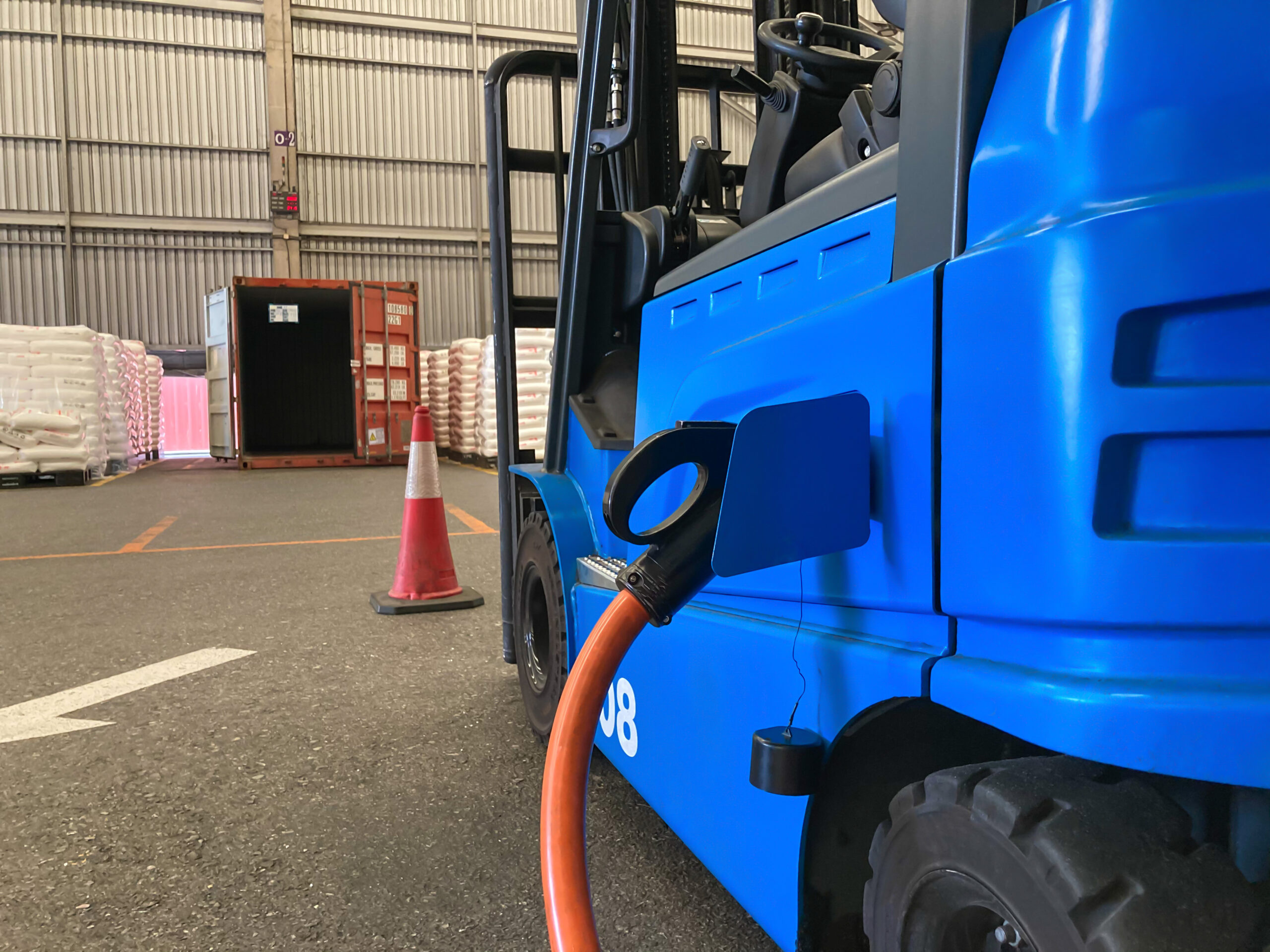
As mentioned earlier, if you’ve converted your electric forklift fleet to Li-ion batteries already, then you’re using opportunity charging as part of your daily routine. Li-ion batteries charge up faster, and their useful life is not affected by opportunity charging. Although their upfront cost is substantially more than that of lead-acid batteries, in the long run they save money by being simpler to operate, faster to charge, and by providing a longer lifespan.
Clearly, opportunity charging is not ideal for every situation, but it can make a big difference in a multi-shift operation as long as its protocols are carefully followed. Your Apex rep can help you do the calculations to decide which flavor of charging best suits your operation. If you’ve decided to make the switch to Li-ion batteries, we can help you pick a Clark, BYD or Big Joe forklift for your specific application. In the Chicagoland area, Apex is your one-stop warehouse and material handling supplier.