
Match Pallet Jack Forks To Your Pallets, Aisles, And Travel Path
Pallet jacks are handy tools you’ll find in nearly every warehouse. Most facilities already have them, and most operators already know how to use them. But one detail that’s easy to overlook is fork size.
Pallet jacks are available with different fork lengths and widths, and those dimensions can affect how easily the jack fits your pallets, moves through aisles, and handles loads throughout the day. When fork size doesn’t match the pallets or the space you’re working in, the result is usually small but constant friction: pallets that don’t seat cleanly, tight turns in staging lanes, or operators making extra adjustments just to line up a load.
The good news is that sizing pallet jack forks correctly is straightforward once you know what to check.
What Fork Sizing Means On A Pallet Jack
When sizing pallet jack forks, you will need to understand the following dimensions: fork length, fork width, and spacing.
-
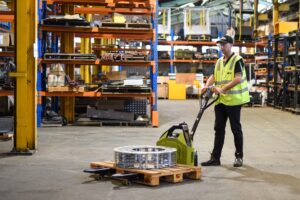
Fork length — How far the forks extend into the pallet.
- Fork width and spacing — The overall width across the forks and the distance between them (measured from inner edge to inner edge) determine whether the pallet jack fits the pallet openings and operating space.
Fork width is measured across the straight portion of the forks, not the tapered tips designed to help the forks enter pallet openings.
Before comparing equipment specifications, take a moment to look at the pallets and loads moving through your facility and answer a few simple questions:
- Are your pallet sizes consistent, or do you handle multiple pallet types?
- Do loads extend past the edges of the pallet?
- Do you need to enter pallets from one side only, or both?
- Are different pallet sizes used in other areas of the warehouse?
The answers to these questions will help determine whether a standard fork configuration will work—or whether your operation may benefit from a different fork length or spacing.
Choosing The Right Pallet Jack Fork Length
 |
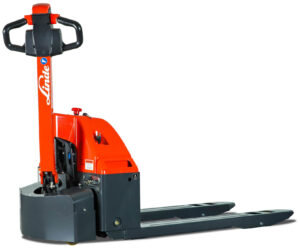 |
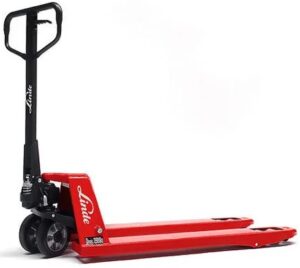
| Manual Pallet Jack | Electric Pallet Jack |
Most pallet jack applications work well with standard fork lengths.
Manual pallet jacks typically have 48-inch forks, with 24-inch fork options available for specialized applications.
Electric pallet jacks typically have 45- to 48-inch forks, with shorter configurations available when needed.
For many operations handling standard pallets, these common fork lengths provide the right balance of load support and maneuverability. Ideally, forks should extend far enough into the pallet to support most of the load footprint, helping distribute weight evenly during movement.
However, some applications call for different fork lengths. If inventory regularly extends beyond the pallet edges or your operation uses longer pallet footprints, longer forks can provide better load support and stability while maneuvering product—provided you’re not dealing with tight aisles or congested staging lanes.
Shorter forks can also make sense in confined handling areas where maneuverability is more important than reach. In these environments, a shorter fork configuration can make it easier to navigate tight spaces while still safely supporting the load.
Apex Insight: Choose the shortest fork length that still allows the forks to fully support your typical loads and move efficiently through your normal travel paths and staging areas.
Pallet Jack Fork Width: Match Your Pallet Openings And Operating Space
Standard pallet jack fork widths are designed to accommodate common pallet dimensions.
Manual pallet jacks typically have 27 inches across the forks (edge-to-edge) with about 15 inches between the forks. Narrow configurations are also available, such as 20 inches across with approximately 8 inches between forks.
Electric pallet jacks commonly use the same 27-inch overall fork width with 15-inch spacing, with narrow options available when needed.
A narrower fork configuration can be helpful when handling smaller pallets, specialized containers, or working in areas where overall equipment width must remain minimal. A standard fork width is often the best choice for operations built around common pallet sizes, as it provides the greatest compatibility across docks, staging areas, and shipping lanes.
Considering Aisles, Turns, and Right-Angle Stack
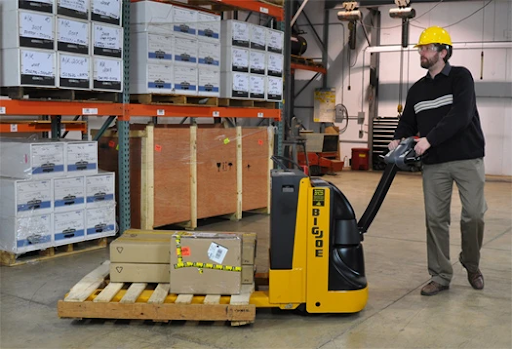
Even when fork length and width are properly sized for your pallets, the pallet jack still needs to move efficiently through your facility’s layout.
Equipment dimensions—particularly the right-angle stack measurement—help determine how easily a pallet jack can navigate aisles, staging lanes, and dense storage areas. This measurement indicates the space required for the equipment to enter a pallet position and complete a 90-degree turn.
When evaluating pallet jack fit within your operation, consider the following:
- Can operators make a clean 90-degree turn into staging lanes without multiple repositioning moves?
- Do turns, doorways, or dock areas force constant realignment of the pallet jack?
- Are there bottlenecks where a narrower configuration could reduce congestion?
Apex Insight: Fork size should always be considered alongside the operational layout. Confirming that pallet jacks can navigate aisles and turns comfortably helps prevent slowdowns and unnecessary handling adjustments during daily operations.
Manual Vs Electric Pallet Jacks: When Fork Size Isn’t The Only Factor
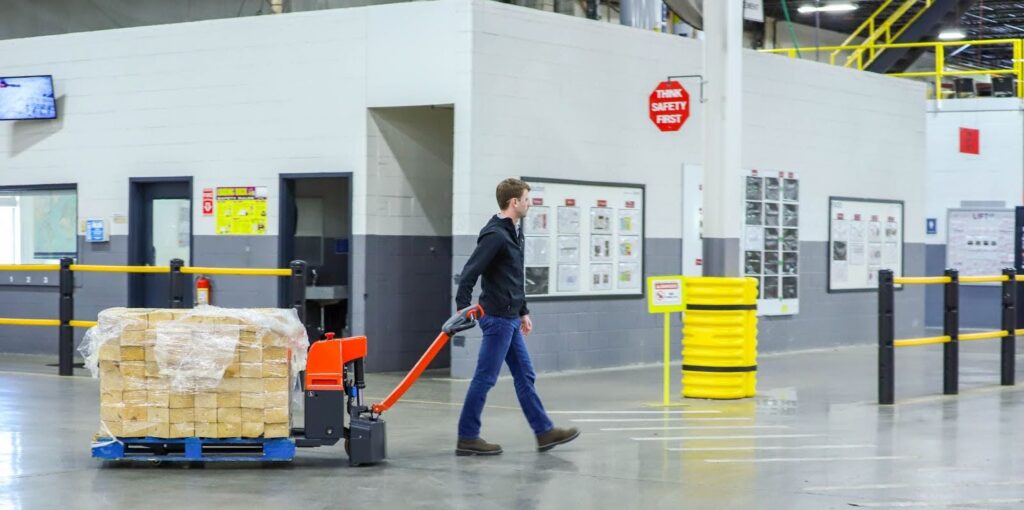
Fork sizing is important, but in day-to-day warehouse operations, it’s only part of the equation. The type of pallet jack being used can also affect how efficiently loads move through the facility.
Manual pallet jacks are widely used because they are simple, reliable, and effective for short-distance pallet movement. However, they require the operator to push and pull the load, which can become physically demanding when loads are heavy or travel distances increase.
Electric pallet jacks use powered travel to move loads, reducing the physical effort required from operators. In operations where pallets are heavier or must travel longer distances, electric pallet jacks can help reduce operator fatigue and maintain productivity across a shift.
In these situations, choosing the correct fork size still matters—but it may not solve the underlying issue if the equipment itself is undersized for the workload.
Apex Insight: If operators regularly move heavy loads across long distances, upgrading from a manual pallet jack to an electric model can improve both safety and efficiency.
Safe Handling Starts With The Right Fork Fit
Proper fork sizing plays an important role in safe pallet handling. When forks fit the pallet correctly, loads are easier to balance, maneuver, and move through the facility.
Several basic handling practices are closely tied to fork fit:
- Insert the forks fully into the pallet to support the load evenly.
- Center the load on the forks and use caution when turning; sharp turns can increase the risk of tipping.
- Plan the travel path ahead of time and remove obstacles before moving heavy loads.
Changes in equipment configuration—such as switching fork sizes or moving from manual to electric pallet jacks—are also a good time to review operator training and inspection practices.
Apex Insight: When equipment changes, even small ones like fork configuration, a quick review of safe operating practices helps ensure operators use the equipment as intended. Apex provides pallet jack safety training and equipment certification to help operations maintain safe and efficient pallet handling.
Simple Pallet Jack Fork-Sizing Checklist
1. Measure your loads
-
- Pallet sizes you handle most often
- Typical load overhang and how frequently it happens
2. Map your path
-
- Tightest aisle/turn you need to make
- Where pallet jacks operate most: staging, pick faces, trailers, docks, backrooms
3. Match fork length
-
- Choose a fork length that seats your loaded pallets cleanly (manual and electric both offer shorter/standard options)
4. Match fork width
-
- Confirm fork spacing/overall width aligns to pallet openings and space constraints (standard and narrow options exist)
5. Confirm maneuverability
-
- Check right-angle stack / overall dimensions for restricted environments
Right-Size Your Pallet Jack Forks For Smoother Operation
If your operation uses more than one pallet type—or if you’re dealing with tight aisles, tight staging lanes, or mixed workflows—fork sizing is one of the fastest ways to improve day-to-day flow. Matching fork length and width to the pallets moving through your facility helps reduce unnecessary adjustments, improves maneuverability, and supports safer load handling throughout the workday.
The good news is that Apex offers a variety of pallet jacks with multiple fork lengths and widths, available in manual or electric, with different lift capacities, and even rider platforms for longer travel distances. If you’re unsure which configuration best fits your operation, Apex can help you evaluate your pallets, aisles, and workflow to recommend the right pallet jack setup.
For more guidance, check out our related blog on matching your jacks to pallet size, aisle layout, and workflow, or contact the Apex team for expert support.