
Check Out the Apex Pallet Jack Selection Guide
In the world of material-handling vehicles, pallet jacks appear to be the most basic; however, they can range from simple manual pallet movers to ride-on models that rival the convenience and utility of forklifts –just in a smaller, more budget-friendly, and more agile package. A big advantage of their small size is maneuverability in small spaces like narrow-aisle warehouses, manufacturing plants, or retail stores. Here is a guide to selecting the pallet jack that best suits your lifting and moving task.
Pallet Jack Options
- Manual Pallet Jacks – This equipment is the most basic material mover beyond the hand truck. These non-powered devices are economical and enable a worker to lift and move pallets over relatively short distances. Lifting the pallet off the ground is achieved by pumping the handle, which engages a hydraulic lift. They are propelled by the user pushing or pulling them and are available with a weight capacity of up to 5,000 lb. However, maneuvering a fully loaded manual pallet jack requires a certain amount of worker strength and can lead to injuries. Manual pallet jacks are ideal for light-duty tasks such as stacking retail shelves, delivering parts to manufacturing workstations, and loading and unloading small trucks in a warehouse.
- Powered Pallet Jacks – A step up from the manual pallet jack, the powered pallet jack, also referred to as a pallet truck or a walkie, provides the user relief from the manual tugging and pushing required in using a manual pallet jack. Available powered pallet jacks can lift and haul loads of up to 8,000 lb and have a top speed of about 2.5 mph when loaded. They can be equipped with either a manually or electrically operated hydraulic pump to lift the pallet.
- Rider Pallet Jacks – This is a powered pallet jack designed for longer travel. Many of the capacity specs are similar to a walkie. However, with the operator having a platform to stand on, the rider pallet jack can achieve speeds of up to 6 mph loaded or 8 mph unloaded. These are well suited to a large warehouse where you must travel a football field’s length from unloading to putaway.
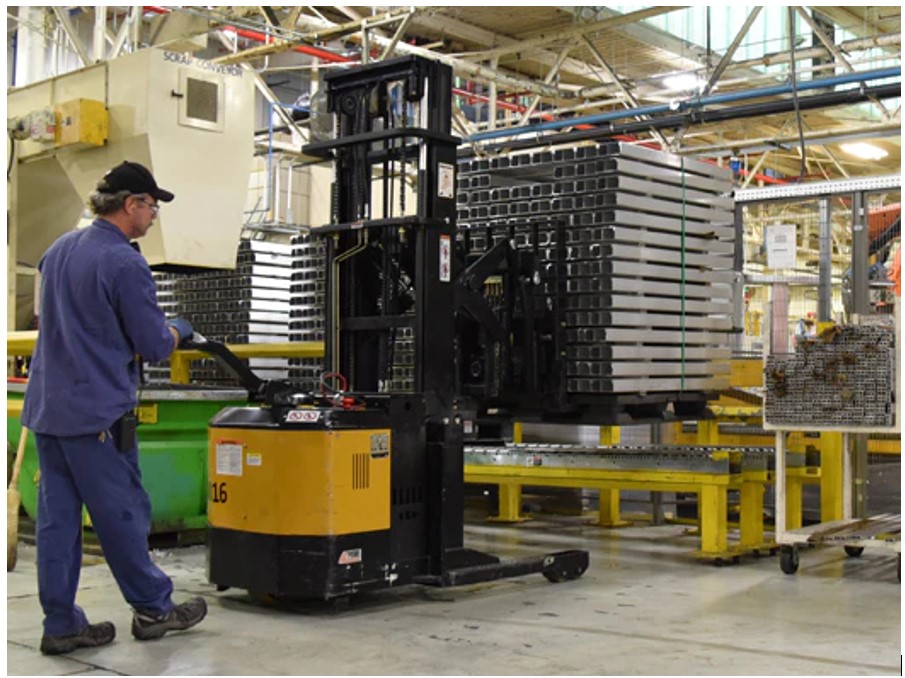
- Walkie Stacker – For warehouses with elevated racks or manufacturing workstations on mezzanine levels, the walkie stacker is the ideal vehicle, especially if the travel distance from pickup to putaway is not that great. Walkie stackers are available that can lift a 3,000 lb. loaded pallet up to 15 ft. They come with straddle legs or counterbalanced to provide extra stability.
Choosing the Right Pallet Jacks
With the myriad of options available for less-than-forklift applications, you need to consider the following factors when deciding which pallet jack works best for you.
- Capacity – How much weight will the pallet jack lift? If you are asking your pallet jack to do lightweight lifting, say under 2,000 lb., you can easily use a simple manual pallet jack with a manually operated hydraulic lift that you tug or push. If you routinely move and lift pallets in the 5,000+ lb. range, consider a powered hydraulic lift and motorized propulsion for your pallet jack.
- Fork length and width – Pallets come in different sizes, and pallet jacks are available with different fork lengths and widths between the forks. When you specify your pallet jack, be sure to buy one that matches the loads you’ll be lifting. If you opt for a straddle stacker, ensure the dimension between the straddles accommodates your pallet sizes.
- Pallet Jack Dimensions – If you have a narrow-aisle warehouse or retail operation, be sure to buy a pallet jack that can accommodate those restricted environments. Most material handling equipment comes with a right-angle stack dimension that helps calculate how well a pallet jack can navigate the narrow aisles and bays in a dense-storage warehouse.
- Manual or Electric – This choice depends on the weight of the loads you plan to move and lift. It also hinges on your budget. Manual pallet jacks are economical if you don’t need the extra brawn that an electric pallet jack provides.
- Room to Move – Manual pallet jacks are typically considered more nimble, but the advent of lithium-powered batteries has removed a significant portion of heft from electric pallet jacks. That, coupled with their pinwheeling ease puts them in the running for tight spaces like truck loading/offloading.
- Walkie or Rider – If your pallet jack is going to cover a lot of ground, go for a rider. The time the operator saves in whisking the load from a trailer to a distant rack can make a big difference in productivity.
- Load height – Most pallet jacks lift a load 3” to 7” off the ground. Choose a stacker if you need to elevate a pallet to put it away in a rack. Stackers are also available with a pantograph to allow reach stacking.
- Overall weight – Most pallet jacks are relatively lightweight, but if you are specifying a stacker, especially a counterbalanced vehicle, be sure the total weight doesn’t exceed the floor loading capacity in your facility or in a truck being unloaded.
- New or Used? Rent or Buy? – Apex has an extensive inventory of gently used material-handling trucks. Whether you opt for a new or used pallet jack, we can structure a financial package that best suits your needs.
- Don’t Forget Training – While manual pallet jacks seem simple to operate, there are definite guidelines for using them. Check out our blog on safe pallet jack operation.

When a forklift is just too much, pallet jacks can meet your needs at a more economical price point. At Apex, we can help you analyze your material handling needs and recommend the device that provides you with the best combination of economy and efficiency. In the Chicagoland area, Apex is your top choice for full-service support in warehouse and material handling products and services.