How to Pick The Best Forklift Purchase Option for Your Situation
OK, so you need a new forklift. Or a bunch of ‘em.
When weighing Forklift Purchase Options — rent, lease, or buy — the right choice depends on how you run your facility, how predictable your volumes are, and how quickly your needs change. This guide walks through the practical tradeoffs involved in acquiring new forklifts–specifically reach trucks and order pickers, but also traditional counterbalance forklifts so you can match your budgetary needs to your operational needs and avoid costly mismatches in equipment and financing.
Choosing the Right Equipment for the Job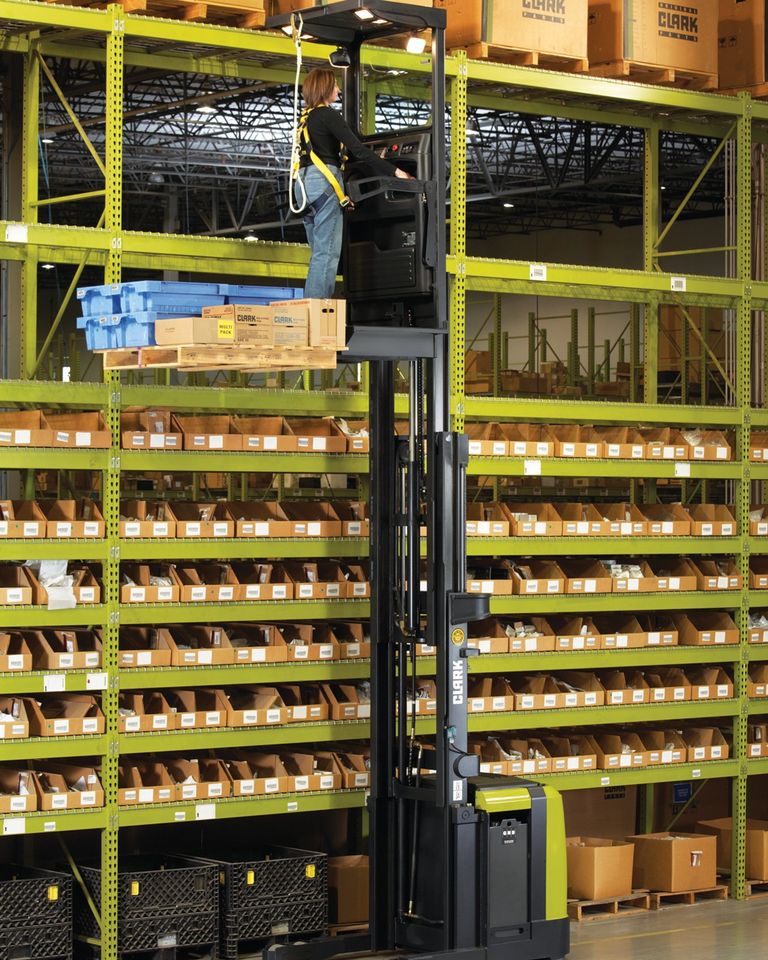
Why Reach Trucks and Order Pickers Matter More Today
Reach trucks and order pickers shine in high-density, fast-fulfillment environments. They’re built for narrow aisles, high racks, and frequent picking cycles, which makes them ideal for SKU-rich operations and e-commerce fulfillment centers. Most are electric and optimized for indoor use, so you must factor in charging infrastructure and battery lifecycle costs when budgeting. Of course, this becomes a lot simpler if you opt for Li-ion forklifts.
These Forklift Purchase Options Still Hold for Counterbalance Forklifts
Counterbalance forklifts remain the go-to for traditional warehouses, heavier loads, outdoor yards, and mixed-use facilities. If you move bulky pallets, work on uneven surfaces, or need a machine that can handle both indoor and outdoor tasks, a counterbalance would be the preferred option — although it might be less efficient in narrow-aisle, high-density racking warehouses.
Forklift Rent vs Lease vs Buy — Key Comparisons
Let’s review the pluses and minuses of the three methods of forklift purchase–renting, buying, and leasing.
Renting: The Flexible, Short-Term Solution
- Best for: Seasonal spikes, short projects, or unpredictable demand.
- Financials: Little to no upfront capital; predictable short-term expense.
- Operational perks: Quick access to specialized machines like turret trucks and very-narrow-aisle forklifts without long-term commitment; maintenance often included.
- Tradeoffs: Higher cost over long durations; no asset ownership or resale value.
Leasing: A Balanced Approach for Predictable Operations
- Best for: Businesses that want modern equipment with lower upfront cost.
- Financials: Monthly payments that preserve capital; options like full-service leases bundle maintenance.
- Operational perks: Easier upgrades at lease-end; predictable budgeting.
- Watchouts: Usage limits, early termination fees, and potential end-of-lease charges for wear.
Buying: The Long-Term Investment
- Best for: High-utilization fleets and operations seeking the lowest lifetime cost.
- Financials: Higher initial capital outlay; equipment becomes an owned asset with resale potential.
- Operational perks: Full customization, no contractual usage caps, and control over maintenance schedules.
- Tradeoffs: Responsibility for repairs, downtime, and obsolescence; requires capital planning.
Quick data point to model ROI: estimate your annual operating hours, then compare monthly lease/rental costs versus depreciation and maintenance when buying to find the break-even horizon for ownership.
What’s Right for Your Warehouse? Let’s Break It Down
Ask Yourself These Questions:
- How many hours per week will this forklift run? High hours favor buying; low or variable hours favor renting.
- Do you need the same unit year-round? If not, renting avoids idle capital.
- How quickly does your operation change? Ever-changing layouts or SKUs favor flexible options.
- Can your budget handle a capital purchase this year? If not, leasing preserves cash while delivering newer tech.
Quick Reference Decision Flow
- If you operate seasonally or with fluctuating volume → Rent
- If you have predictable throughput and want newer tech without ownership → Lease
- If you run equipment intensively and want the lowest lifetime cost → Buy
- If you expect major layout or product-mix changes → Lease or Rent
And Don’t Rule Out the “Pre-owned” Forklift Market
Many companies end up trading in their gently used forklifts when their business or material-handling needs change. They may have upgraded to a more advanced vehicle or even switched to AGVs. The perfect forklift for your operation might be available in the second-hand market. In general, the same three financing options are available to you. Ask your Apex rep about what’s available in our “pre-owned” inventory.
Cost Elements to Include in Your Budget
Here are the budgetary line items that you need to be aware of during a forklift purchase:
- Acquisition or monthly payments (purchase price, lease payments, or rental fees)
- Maintenance and service (in-house vs full-service lease)
- Downtime and productivity impact (include expected mean time to repair)
- Battery and charging costs for electric trucks (replacement batteries, chargers, and charging infrastructure)
- Operator training and safety (initial and ongoing)
- Resale value or end-of-lease charges (for purchases and leases, respectively)
What About Automated Forklifts? When It’s Worth Considering
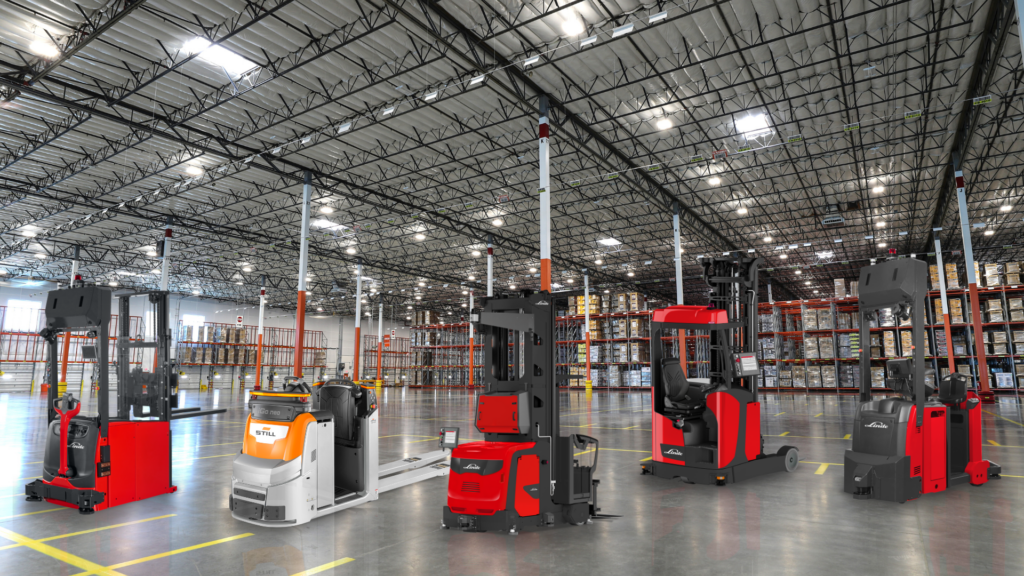
Linde Automated Matic Series Lift Trucks
Automated lift trucks—such as AGVs and automated goods-to-person systems—can outperform manual forklifts in repeatable, high-volume workflows. Consider automation when you have:
- High, predictable throughput and repetitive tasks
- High-bay racking or GTP workflows where AGVs reduce travel time
- A desire to reduce labor dependency and improve consistency
Automation requires a different budgeting approach (integration, software, and culture change management), but it can deliver measurable gains in throughput and accuracy for the right use cases. For a deeper dive into automation options, contact Apex automation specialists and schedule a warehouse material flow audit.
Final Thoughts: Call Apex for the Right Forklift Plan
Choosing between rent, lease, or buy is less about a single “best” option and more about aligning your Forklift Purchase Options with your operational requirements and financial strategy. Reach trucks and order pickers are purpose-built tools; you’ll want to pick the acquisition path that keeps your operation nimble, productive, and within budget.
Next step: take stock of your forklift utilization pattern, budget flexibility, and growth plans. If you want a side-by-side cost comparison tailored to your facility, the Apex team can help model rent, lease, and buy scenarios and recommend the right equipment mix.
Contact Apex today for a personalized quote, demo, or equipment assessment.
Related Content
Want a deeper dive into Turret Trucks? Read: Manual, Semi-Automated or Fully Automated Turret Trucks – Which Do I Need?