Forklift Rentals: How To Build A More Flexible Warehouse Fleet
Warehouse demand rarely stays steady for long. Some weeks require more lift capacity because product is moving faster, trucks are arriving more often, or temporary work is pulling equipment away from normal tasks. In other periods, your team may already have the right number of forklift trucks to manage the workload.
For many operations, the risk sits on both sides:
- Buying equipment for every possible peak can leave the business with forklifts sitting idle when demand slows.
- Running too lean can create delays when volume rises, especially around docks, staging areas, replenishment work, trailer loading, or high-turnover storage zones.
That is where forklift rentals can support a more flexible equipment strategy. Forklift rentals can add lift capacity when you need it without requiring every short-term demand change to become a permanent equipment purchase. As part of a flexible fleet strategy, rentals help teams match equipment capacity to the work at hand, whether the need lasts a few days, a few weeks, or a few months.
What A Flexible Fleet Strategy Means
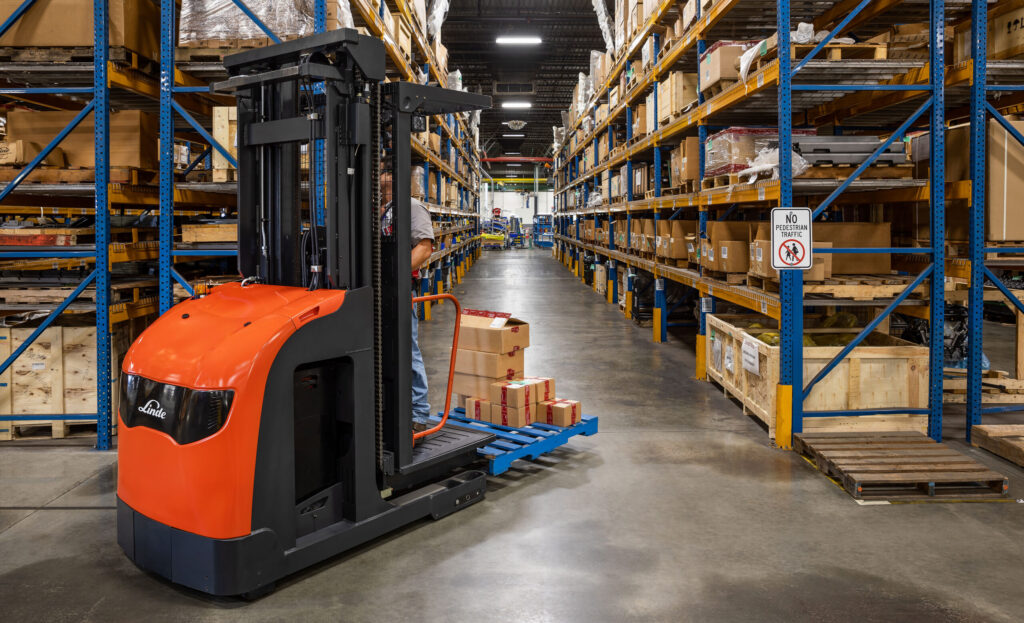
Forklift rental equipment supporting flexible warehouse fleet capacity
A flexible fleet strategy uses owned equipment, forklift rentals, and leasing options in the right roles. The goal is to match equipment capacity to the workload without overcommitting to equipment the operation may not need long-term.
A practical fleet mix may include:
- Owned forklifts for steady daily work and regular pallet movement.
- Forklift rentals for seasonal peaks, short-term projects, equipment downtime, unexpected demand, or temporary capacity gaps.
- Leasing options for longer-term needs where the equipment will be used regularly, but the business does not want to purchase outright.
The key question is whether the need is temporary, recurring, uncertain, or permanent.
When Forklift Rentals Make Sense
The key is to start with the work, not the truck. Before renting, teams should understand what needs to move, where it needs to move, how often the truck will be used, and whether the demand is temporary, uncertain, or likely to continue.
Seasonal Or Temporary Demand
Peak seasons are one of the clearest rental use cases. If a warehouse knows certain months will bring more inbound freight, outbound orders, staging pressure, or replenishment work, rentals can add capacity for that defined period.
This can be especially useful when the operation can predict the general timing of the demand but does not need the same equipment year-round. Depending on where the pressure shows up, the right rental may be a reach truck, order picker, walkie rider, or another truck type matched to the application.
Equipment Downtime Or Service Gaps
When a primary forklift goes down, the operational problem is not only the repair itself. It is what stops moving while that truck is unavailable. Loading may slow down. Replenishment may fall behind. Operators may have to share equipment. Other trucks may be pushed into work they were not originally planned to handle.
A rental can help cover that gap while the owned equipment is being repaired. This is where it helps to think beyond the rental as a standalone decision. If the same provider can support rental equipment, parts, and service, the facility has a clearer path for keeping the operation moving while the original truck is brought back into working condition.
Short-Term Projects Or Layout Changes
Some forklift needs are tied to a project, not normal daily volume. Temporary inventory moves, rack rework, facility changes, expansion phases, special orders, and staging projects may all require extra lift capacity for a limited window.
The rental decision should still be based on the application. Before choosing a truck, confirm the load weight, lift height, travel distance, aisle width, dock or trailer access, surface conditions, power or fuel requirements, and whether trained operators are available for that equipment type.
Uncertain Growth Or Equipment Trials
A new customer, sales increase, product line, or shift change may create a real need for more equipment. But if the facility does not yet know whether that workload will continue, buying immediately can create risk.
In that case, a rental gives the team time to test the need before making a larger decision. It can also help teams try a different truck type before committing to a purchase, longer rental, or lease. For example, a facility may want to test whether an electric or I.C. truck is a better fit for the work than the equipment currently in use.
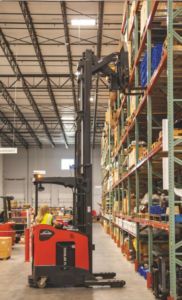
Linde Reach Truck Forklift Rentals
What To Confirm Before Renting A Forklift
Once the need for a rental is clear, the next step is making sure the equipment fits the actual operating conditions. A rental forklift may be available quickly, but availability alone does not make it the right choice. The truck still needs to match the load, lift height, aisle space, dock setup, floor conditions, operator training requirements, and rental timeline.
1. Start With The Work The Forklift Needs To Do
Before choosing a rental, narrow the application down to five practical criteria. These details help determine which type of forklift or lift equipment is best suited for the task.
Start by confirming:
- Load weight: Know the average load weight and the heaviest load the truck may handle.
- Load size and shape: Oversized, uneven, long, or unstable loads may require a different truck or attachment.
- Lift height: Match the truck to the highest point it needs to reach, not just the most common lift.
- Travel pattern: Short dock moves, long warehouse travel, frequent lifting, and narrow aisle work all point to different equipment needs.
- Work area: Confirm whether the truck will work in trailers, rack aisles, staging areas, outdoor yards, production areas, or mixed-use zones.
This helps prevent renting a truck that has enough capacity on paper but does not fit the job.
2. Match The Truck Type To The Application
Different forklift types are built for different work. A counterbalance truck may fit indoor dock and pallet movement. A reach truck may be better for racking and replenishment. A walkie or rider pallet truck may be suitable for frequent horizontal pallet movement. In some cases, the right rental may not be a forklift at all. If the work involves moving carts, transporting materials horizontally, or supporting repeated point-to-point movement, a tow tractor or utility vehicle may be a better fit than a lift truck.
The practical check is simple: can this truck handle the load, reach the required height, move safely through the facility, and keep up with the pace of work without forcing operators to work around its limitations?
3. Confirm The Truck Fits The Facility
Check the areas where the truck will actually operate, not just the main aisle. Problems often show up at the dock, rack ends, staging zones, trailer entries, ramps, pedestrian crossings, or tight turning points.
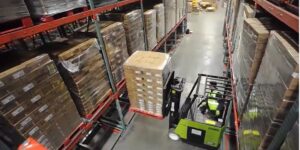
Counterbalance Forklift: Forklift Rentals
Confirm:
✔ Aisle width and turning radius: The truck needs room to travel, turn, enter aisles, and position loads without creating congestion.
✔ Dock and trailer conditions: If the truck will enter trailers, confirm trailer floors, dock plates, gradients, and load cycles are appropriate for the equipment.
✔ Floor and surface conditions: Uneven floors, outdoor surfaces, ramps, or grades can limit which trucks are suitable.
✔ Traffic flow: Pedestrian areas, restricted zones, blind corners, and shared equipment paths should be considered before the truck arrives.
✔ Power or fuel setup: Electric rentals require charging space, and some require specific battery-handling procedures. Fuel-powered trucks need the right fueling setup and operating environment.
4. Ensure Operator Training, Inspections, And Service Support
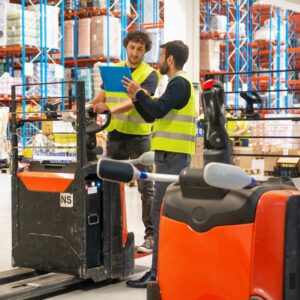
Forklift Operator Training for Forklift Rentals
A rental does not remove the need for proper operator training. If the truck type, controls, visibility, capacity, fuel source, attachment, or operating environment is different from what operators normally use, refresher training or evaluation may be needed.
Operators should understand the truck’s controls, capacity, visibility limits, attachment use, pre-use inspection requirements, charging or refueling procedures, and site-specific hazards before the rental goes into service.
Service expectations should also be clear before the rental starts. Confirm who to contact for support, which issues require the truck to be removed from use, how quickly service is available, and what happens if the truck cannot remain in operation. This matters most when the rental is covering a peak period or a service gap. If the truck is there to protect uptime, the support plan needs to be clear.
5. Confirm The Rental Term And Availability
Confirm whether the truck is needed for a few days, several weeks, a season, or a project timeline. Also, confirm what happens if the need changes.
Before finalizing the rental, ask:
- How long will the truck realistically be needed?
- Is the work daily, weekly, seasonal, or tied to a specific project?
- Is the right truck available when the work starts?
- Can the rental be extended if the project runs longer?
- Can the equipment be adjusted if the first truck is not the right fit?
- Does the rental timeline still make sense if the demand becomes more predictable?
A good rental plan should solve the current need without locking the facility into the wrong equipment for longer than necessary.
How Rentals Can Help Control Costs Without Overcommitting
Forklift rentals can help control costs by giving the warehouse extra lift capacity without requiring a large upfront purchase for a temporary or uncertain need. Rentals can also help keep capital available for other priorities, such as inventory, labor, facility improvements, racking, dock upgrades, or warehouse technology.
The key is to match the rental term to the expected need. Short-term forklift rentals can be a practical fit when the timeline is limited or uncertain. If the need becomes more predictable and longer-term, forklift leasing and financing may be worth reviewing before purchasing equipment outright.
Over a long enough period, however, renting may cost more than owning, so the decision should be based on expected timeline, utilization, and application.
Get The Right Forklift Rental For The Job
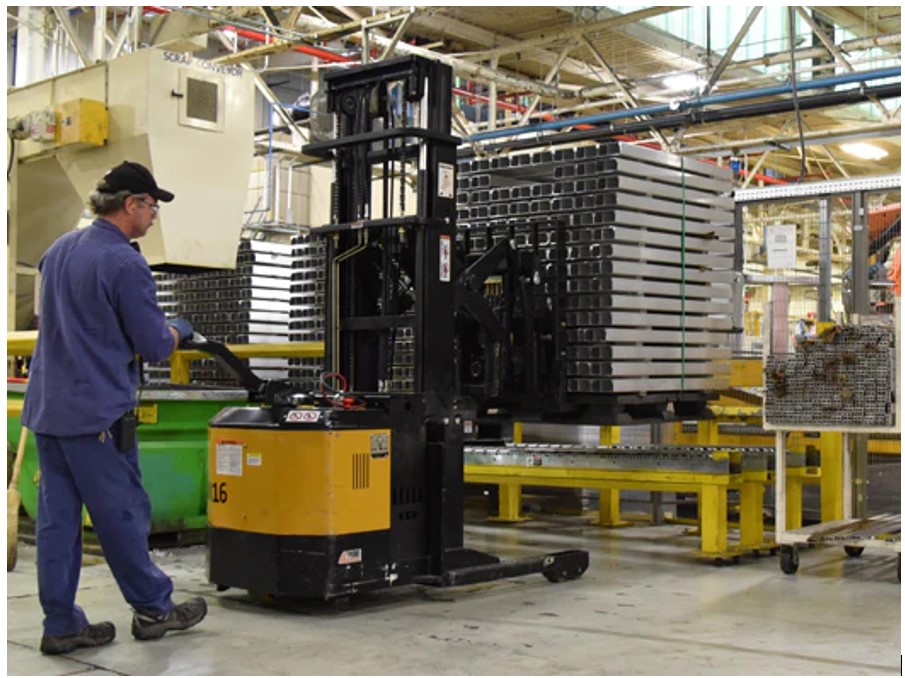
Forklift rentals work best when they are matched to the application, facility, and timeline. Before renting, confirm what needs to move, how often it will move, how high it needs to be lifted, how far it needs to travel, and the conditions the truck will operate in.
Planning forklift rentals in the Chicago metro area? Apex can help you review your application, equipment requirements, rental timeline, service needs, and current availability so you get the right truck for the job.
Talk to the Apex material handling team about forklift rental availability.