
A Step-by-Step Guide To Handling Your Depleted Forklift Battery
No matter how carefully you’ve maintained and conditioned your forklift battery, it will eventually reach the end of its useful life. Lead-acid batteries can typically endure 1,500 charging cycles, meaning that they will last about 5 to 7 years if used daily. Lithium-ion batteries, on the other hand, have a longer lifespan–they can handle 2,000 to 3,000 charging cycles and provide 7 to 10 years of daily service.
Since lead-acid batteries have been around for decades, an extensive recycling and reconditioning industry exists, making it fairly easy to dispose of lead-acid forklift batteries. Lithium-ion batteries, being a more recent player in the forklift battery world, present a little bit more of a challenge when they reach the end of their useful life. But that’s starting to change.
Either way, it’s incumbent upon the forklift fleet owner to responsibly dispose of depleted forklift batteries. Improper disposal can lead to environmental damage, including toxic chemicals seeping into water supply systems. Don’t rule out being hit with a hefty fine by states or municipalities for improper forklift battery disposal.
Note: If your electric forklift is leased or rented, the contract company will likely handle battery disposal and replacement for you. This ensures you’re not only getting rid of the old battery responsibly but also that the replacement battery is compatible with your current charger and forklift.
If you purchased your forklift, the dealership may offer to dispose of the old battery as well. Alternatively, you can contact the battery manufacturer, who may assist in disposal.
How Can I Tell When It’s Time To Replace My Battery?
The typical usage/charging cycle for a lead-acid battery is the 8-8-8 pattern. Eight hours of usage, eight hours of charging, and eight hours for cool down. Batteries should be charged up to 80% of a full charge and taken out of service for recharging once they reach about 20% of capacity. If you find that you’re getting less than eight hours of efficient forklift operation from eight hours of charging, it’s time to consider replacing your forklift battery. Depending on your application, you may be able to get away with less than a full eight hours of operation, but you should know that your battery is on the way out.
Likewise, if you find that your battery is taking longer than the required time to charge up, it means the battery is on the way out. It’s time to replace it.
Battery Diminishment Signs: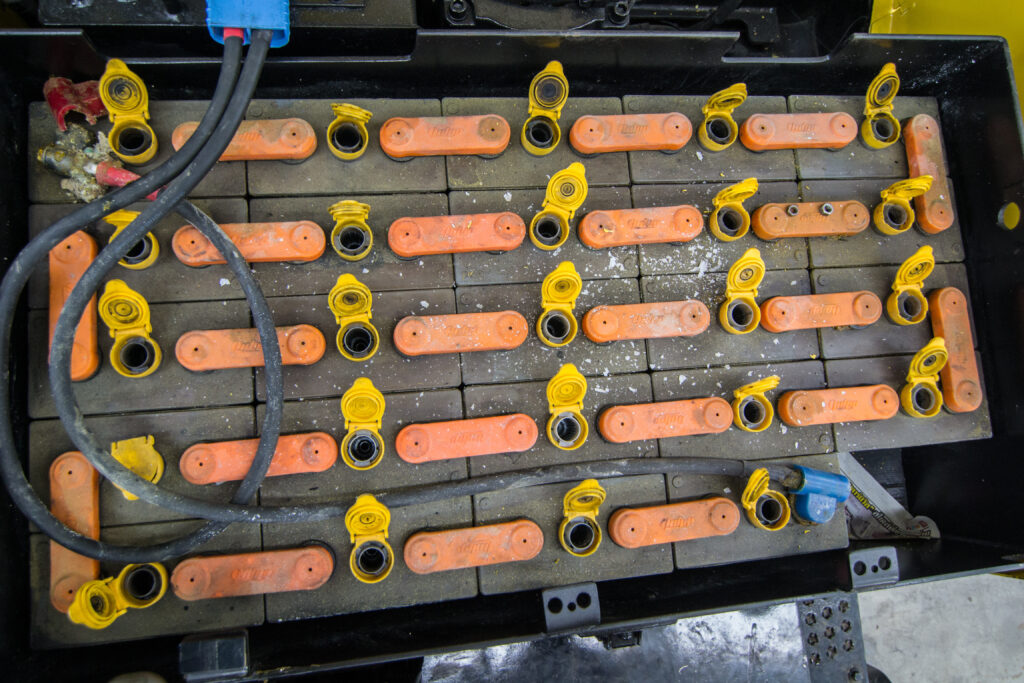
- Less than 8 hours of efficient operation per 8-hour charge
- Longer than usual charging time
- Reduced lifting and driving capacity
- Cracked or leaking battery case
- Extensive corrosion
Operating a forklift with a diminished battery can be dangerous. It can damage forklift components, and worse, it reduces the lifting and driving capacity of the forklift, posing a safety hazard to both forklift operators and nearby workers.
Naturally, there are other factors that would warrant a battery replacement–a cracked battery case, a leaking battery, or extensive corrosion that can’t be fixed or cleaned up.
Determining the end of the useful life of a lithium-ion battery is similar. If you find that the battery is taking an excessive amount of time to charge up, is not reaching its specified operating voltage during charging, or is discharging too rapidly–that is, not giving you the full length of service time it once did- then it’s time to replace it. Also, if the battery starts to swell, overheats, shows signs of leakage, smokes, or emanates a foul odor, it’s time to replace it.
Disposal of Your Old Lead-Acid Battery
If your facility regularly removes its forklift’s batteries for charging, then you have in place what you need to remove the battery for replacement. Lead-acid batteries weigh anywhere from 1,000 to 4,000 lbs. You probably have a hoist that will allow you to remove it. If not, you can obtain a hoist attachment and use another forklift to lift the battery. Some forklifts are set up so that the battery can be directly removed with another forklift. Here are the steps to safe battery removal:
- Turn off the forklift and remove the key.
- Park the forklift on a flat surface with the emergency brake engaged
- Use the proper personal protective equipment–gloves, goggles, acid-proof apron, and safety shoes.
- Disconnect the battery, starting with the negative terminals first.
- Lift the battery carefully with a hoist and place it on a pallet. Use another forklift to transport the battery to a disposal area. Cover the terminals with tape or other insulating material to avoid shorting out the battery and creating sparks.
- Contact your recycler to find out how the battery needs to be packaged. Many recyclers will come to your facility to pick up a battery for recycling. Use only reputable recyclers.
- If you need to transport the battery to the recycling center, ensure that it is securely attached to a pallet, and then securely fasten the pallet to the truck so that it doesn’t move during transportation. Contact your local DOT to determine if the truck carrying the lead-acid battery needs to be labeled as containing hazardous material, and follow local highway regulations regarding the transportation of hazardous materials.
- Always document who you turned the battery over to, the date, the company, and the battery type, and get a signature if possible.
Disposing of Your Spent Lithium-ion Battery
While lithium-ion forklift batteries weigh less than lead-acid batteries, they are still in the range of 500 to 2,500 lb. and should be handled in much the same way that lead-acid batteries are handled.
Some lithium-ion battery manufacturers will take back spent batteries. While they were difficult to find a few years ago, lithium-ion battery recycling facilities are starting to become more available. Be sure to use a reputable recycler.
Always work with a reputable recycler, since using a discount “fly-by-night” outfit could leave you liable if your battery is illegally dumped and traced back to your company. The EPA provides guidelines for locating approved recycling centers.
Finally, be sure to document every transfer: record who received the battery, the date, the company name, and the battery type—and obtain a signature whenever possible.
Extend Battery Lift with Proper Care & Maintenance
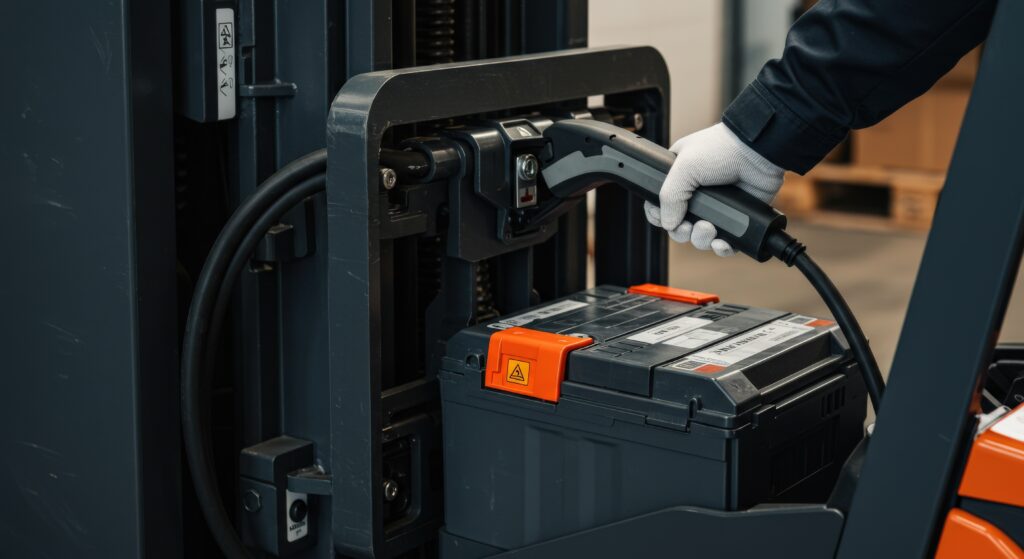
Lead-acid batteries are powerful energy sources but require following proper operation and maintenance steps to give you their maximum output, lifespan, and, thus, cost-effectiveness.
Forklift Battery Care:
- Invest in high-quality batteries.
- Follow the manufacturer’s guidelines on usage, charging, and maintenance.
- Use proper charging practices, including equalization and maintaining proper water levels.
- Perform regular maintenance and inspection, including cleaning terminals and checking for leaks and cracks.
- Monitor battery performance using a battery management system to alert you of potential problems.
Consult our Comprehensive Guide to Lead-acid Forklift Batteries for details on how to get the most out of your lead-acid forklift batteries.
Considering making the switch to lithium-ion batteries? Check out our Tips on Converting from Lead-acid to Lithium-ion Batteries
Apex–The Forklift Experts
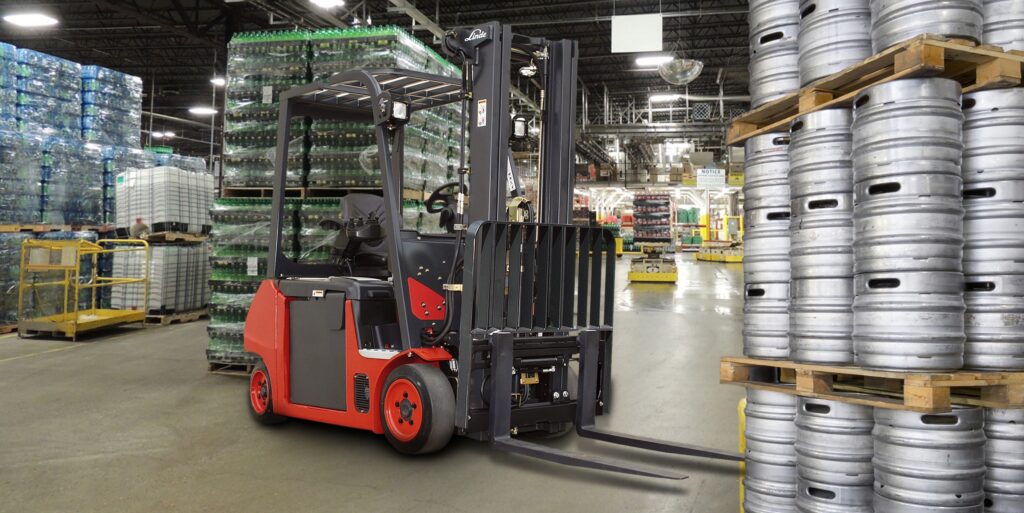
Your Apex rep is your trusted source for all things forklift, including batteries. If you are looking for new or reconditioned batteries, spare forklift parts, or forklift service and maintenance, your first call should be to Apex.
We also offer operator training, certification, and recertification to ensure proper forklift use, which also protects your equipment and extends the life of your batteries.
Visit our website for your next vehicle! We offer favorable lease, rental, and purchase options for quality Linde vehicles available nationwide and CLARK, BYD, and Big Joe forklifts within the Chicago metro area. Contact our team today for pricing and availability.
For more information on forklift battery care, check out our blogs on related topics!
Related Blogs