
Get the Power, Safety & Higher Efficiency by Switching to Lithium-Ion
A sea change is about to happen in the electric forklift market. While lead-acid-powered forklifts accounted for 90% of all electric forklifts sold in 2021, the market for lithium-ion forklifts has begun an inexorable rise. The day is not too far off when the sale of lithium-ion forklifts exceeds that of lead-acid forklifts.
Li-ion Advantages
The edge that Li-ion batteries have over lead-acid batteries is well documented –we even covered it in an earlier blog. More Power. Faster charging. Less Maintenance. Safer. Longer lifespan. Less space-consuming. But there are operational factors that must be taken into account in making the switch.
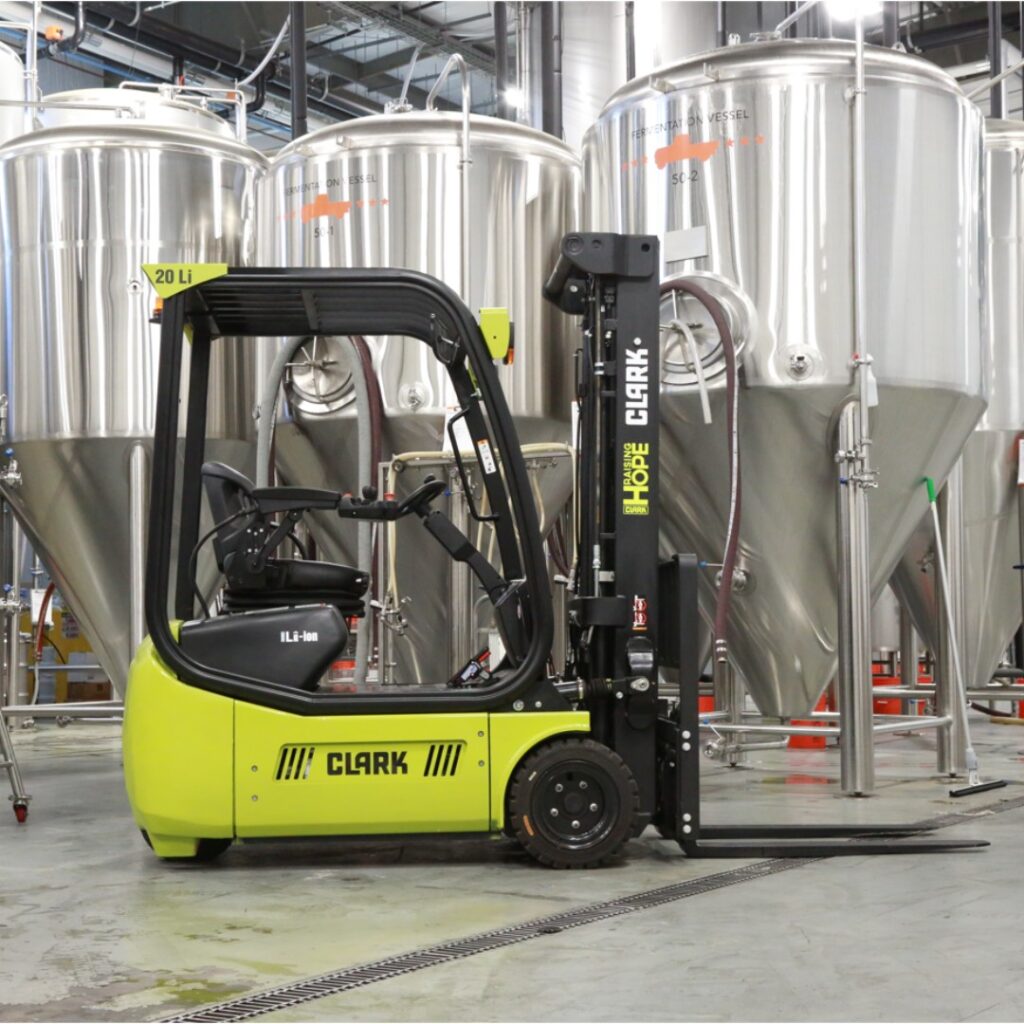
CLARK TWLi20 Forklifts
First Things First
Before you go ahead and start buying Li-ion batteries for your forklifts, you need to do some financial calculations. Li-ion batteries cost considerably more than lead-acid batteries–about 2 to 3 times as much. You’ll also have to invest in a new charging structure, as Li-ion batteries require a decentralized, high-output charging network to take advantage of their ability to be opportunity-charged. If your operation runs on multiple shifts, Li-ion forklifts can provide real productivity improvements. If you run on just one shift and you already have a fleet of lead-acid forklifts, it may be economically wise to stick with what you have.
Considerations for Making the Switch
Big Joe LXE50 Forklifts
Match Voltage and Output – Lead-acid batteries generally run on 24, 36, 48, or 80 v. Make sure that the Li-ion battery you buy matches both the voltage and the power output of the battery you’re replacing.
New Charging Infrastructure – Since Lithium-ion forklifts offer the highest efficiency if you employ opportunity charging, you’ll have to convert from a single battery charging area to a series of decentralized, high-output charging stations close to where the forklifts will be working. This allows forklift operators to use any downtime–breaks, lunch, time allotted to other tasks–to replenish the forklift’s Li-ion battery.
Culture Change – To reap the benefits of a Li-ion forklift’s efficiency, operators need to be vigilant about opportunity charging. Some old habits are hard to break, and a training session on the differences in operating and maintaining a Li-ion-equipped forklift is a must.
Be aware of Ballast Changes – Li-ion batteries weigh much less than comparably powered lead-acid batteries, and the weight of the latter is included in calculating the weight of the forklift and, thereby, its ability to counterbalance a load. In order for your forklifts to achieve an equivalent hauling capacity of lead acid battery-powered vehicles, Lithium-ion forklifts need to have a ballast weight added to match the weight of the swapped-out battery. If this can’t be achieved, the forklift’s data plate must be revised to indicate the new lifting and hauling capacity.
End-of-life Considerations – A well-developed industry currently exists for recycling lead-acid batteries, but not so much for Li-ion batteries. You may want to research local resources for recycling Li-ion batteries. On the other hand, if you buy a forklift with a Li-ion battery today, after the five-plus years of expected use, the recycling stream for Li-ion batteries will likely be much more robust. For example, BYD offers a 10-year warranty on its Li-ion batteries.
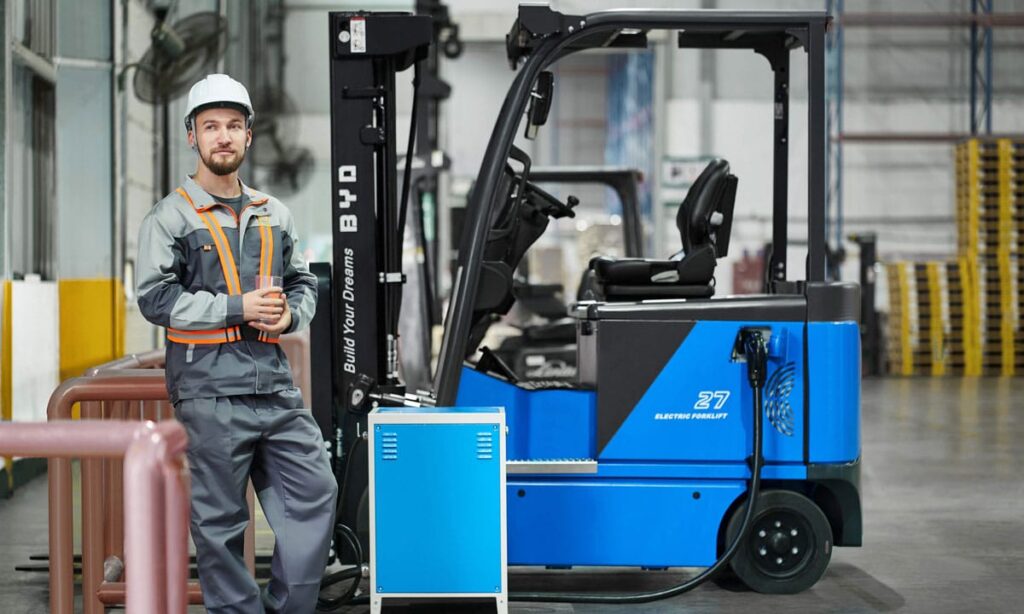
As they have with on-road vehicles, Li-ion batteries are making big gains in the material handling market. Apex offers the latest Clark and Big Joe Li-ion powered forklifts along with the full line of BYD Lithium-ion forklifts. If you are planning to retrofit your existing fleet of lead-acid-powered forklifts with Li-ion batteries, talk to the experts at Apex, who can help guide you in making the switch. In the Chicagoland area, Apex is your one-stop warehouse management and material handling equipment and service provider.