
Cold Storage Warehouse Forklifts — It’s a Hot Topic!
Cold storage warehouses–collectively known as the cold chain–are a huge and critical part of the US’s food and pharmaceutical supply. Some studies estimate that as much as 70% of the food supply makes a trip through a cold storage warehouse at some point in its journey from source to consumer.
Cold and frozen storage warehouses are expensive to build and operate and thus are designed to pack the most product in the least amount of space. This high-density layout and first-in-first-out (FIFO) operating protocol to ensure maximum freshness makes movement of product in these warehouses challenging at best.
Forklifts and people subjected to these harsh conditions need to be well-prepared. Their efficient functioning in such conditions requires a well-thought-out plan to get maximum productivity from both.
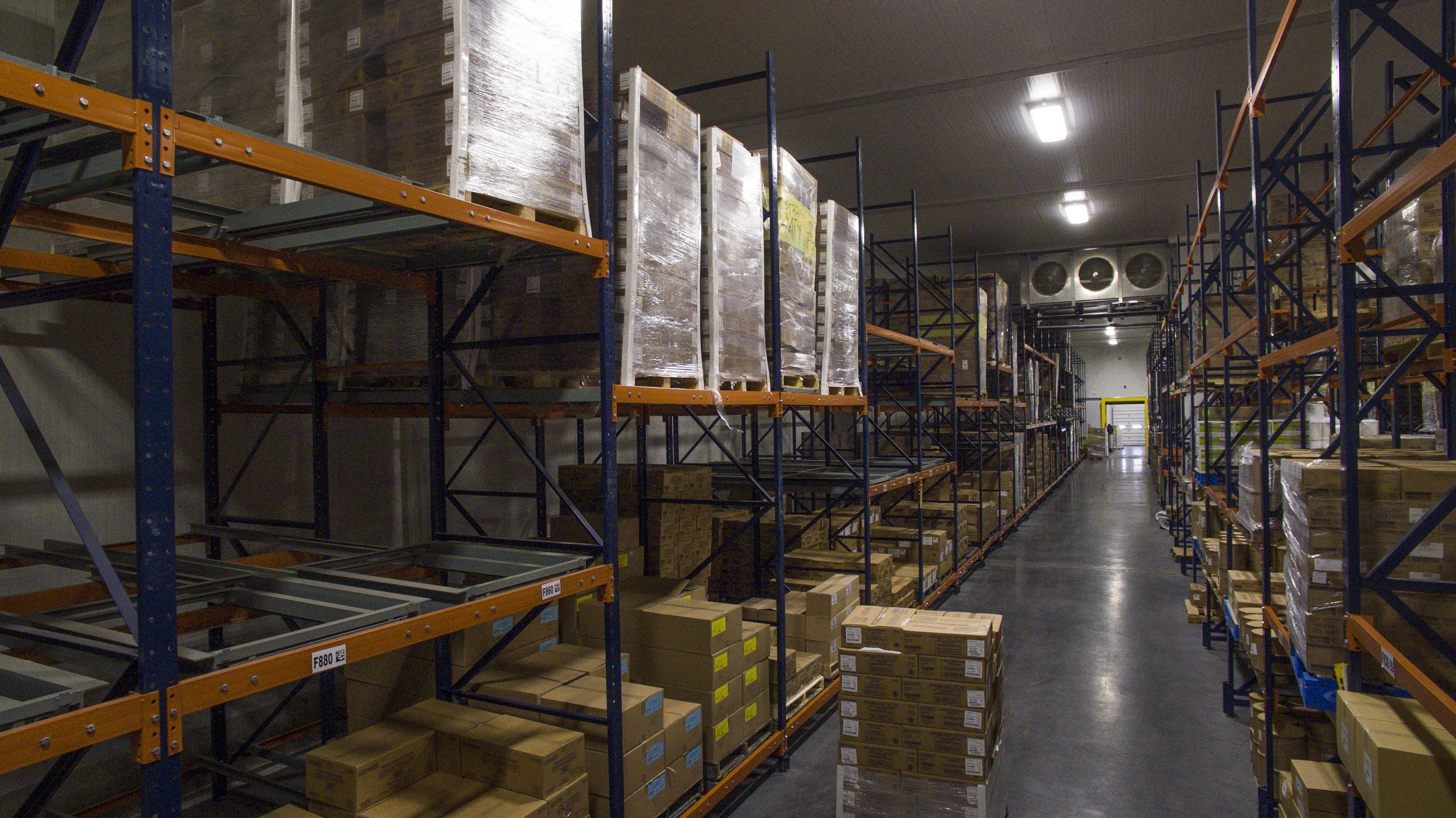
Here are some tips on best practices for operating forklifts in freezer and cold storage warehouse facilities:
- Condensation can be a forklift killer.
Many cold storage operations require the forklift to move between a very low-temperature warehouse and ambient conditions that might be warm and humid. This drastic change in temperature and humidity can cause motors and electrical connections to get wet, leading to corrosion and failure. Likewise, untreated metal parts like forks can corrode and lead to failure or contamination of product. When possible:
-
- Avoid making a lot of trips out of the cold storage warehouse. A forklift that stays in the cold temperature will fare better.
- Prep the forklift before using it in a cold storage application. Electrical connectors and switches should be physically sealed or coated with a dielectric sealant to prevent moisture from corroding the contacts. Galvanized forks are available that eliminate the problem of corrosion.
- Forklift batteries don’t like the cold.
As anyone who’s tried to start a car in Vermont on a frigid January morning knows, batteries can really struggle when the thermometer goes down. Take a look at the efficiency of lead-acid batteries as the temperature drops:
| Work Area | Temperature Efficiency | ||
| 30℉ 10℉ 0℉ -20℉ |
75% 56% 45% 20% |
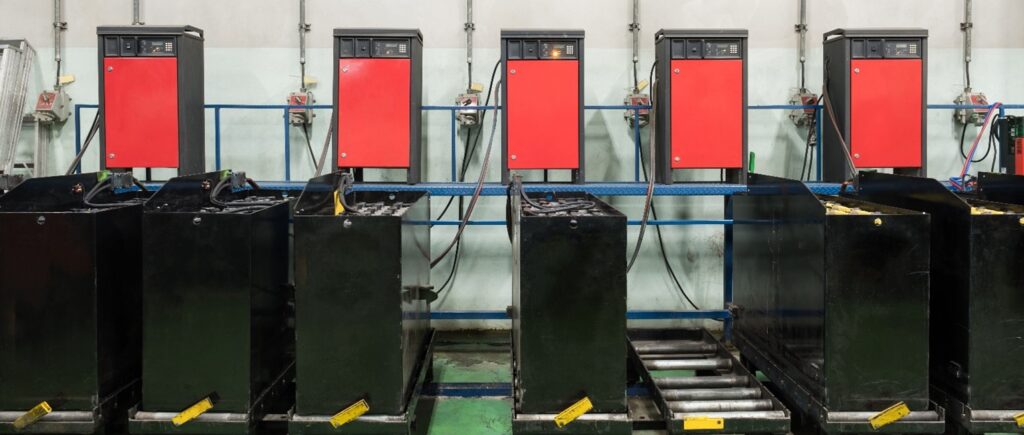
A forklift that stays in a cold storage area as recommended above will quickly need its battery recharged. One alternative is to keep spare batteries on hand to swap out the discharged one. Alternatively, you can run the forklift battery down to empty and then move it out of cold storage to dry out and recharge. A battery will charge up much more quickly at ambient temperature than at freezer temperatures. Replacing lead-acid batteries with lithium-ion batteries is also an option. The latter recharge faster, hold a charge longer and outlast lead-acid batteries. The downside: they cost considerably more.
- Be aware of your forklift’s fluids.
Hydraulic fluids and lubricants get sluggish as the temperature drops. This can negatively affect the productivity of a forklift. Make sure the fluids in the truck are designed for the freezer temperature you are operating in, or replace standard fluids with their low-temperature counterparts. - Use winter driving techniques.
Cold storage warehouses may have icy floors, making driving a forklift tricky. What’s more, as stated earlier, cold storage warehouses tend to be very high-density facilities, requiring the use of narrow aisle, turret, or reach trucks. All this adds up to make sure you use extra caution when maneuvering through a cold storage warehouse. Forklifts should have polyurethane rather than rubber tires; the former offer much better traction in sub-zero conditions. Forklifts with outriggers improve stability. - Ensure your forklift operators are trained for site-specific, cold-storage conditions.
The Apex forklift operator training team can tailor a package to include any special procedures that apply to your facility or forklifts due to cold storage alterations. Call our team to schedule on-site, training, certification, and re-certification - It’s not only the forklift that needs preparing.
Operators need proper cold-weather gear–gloves, hats, coats, and boots. Spending a long time in a cold storage warehouse can be very fatiguing and sap an operator’s energy and acumen. Forklifts with heated operator cabs can be a godsend to operators spending long hours in a frozen storage warehouse. - Conduct regular inspections and maintenance of cold-storage forklifts.
You should do this every 250 to 500 hours of forklift use in cold storage conditions. Besides the regular forklift inspection and maintenance items, check for condensation damage on the body, the mast, and the forklift’s forks. Ensure all electrical connections are solid and properly sealed. Check that battery fluid is topped up. Inspect all moving mechanical parts for proper lubrication. Confirm tire integrity.
Some manufacturers offer forklifts that are ‘environmentally conditioned’ to meet the ambient characteristics of the space in which they’ll be used. For cold-stage forklifts, this could include specially sealed electrical contacts, galvanized or stainless steel structural items, oversized batteries, special cold-compatible lubricants, and hydraulic fluids, and special tires designed for cold, slippery applications.
If you’re planning to outfit your cold storage warehouse with new forklifts, your best bet is to contact Apex and have one of our application specialists go over your specific needs and recommend the best solution for your application. Apex is the dealer that should be on the top of your list for material handling and racking solutions in the Chicagoland area.