
Optimizing Forklift Outrigger Positioning: Narrow vs. Wide Configurations
Many warehouses turn to high-density storage systems to optimize their storage capacity without expensive facility expansion. Double-deep pallet rack is a great option for potentially doubling your pallet storage (vs. a standard selective rack system) without complex redesign and installation. Not only do they boost pallet density, double-deep racks can also reduce the floor space required for aisles. However, managing these systems requires a deep-reach forklift and a clear understanding of properly using the vehicle outriggers.
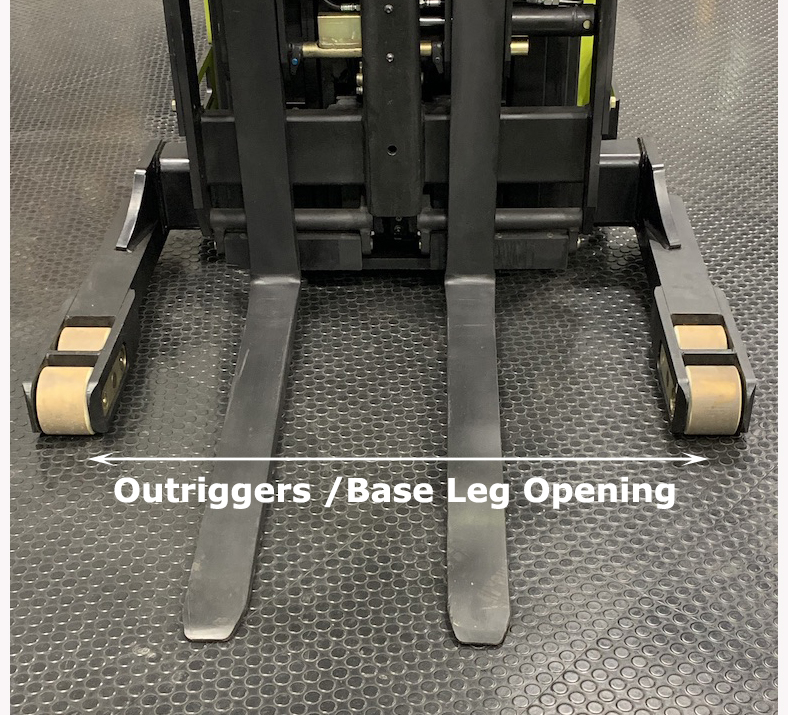
If you are unfamiliar with forklift outriggers, they are horizontal stabilizing arms that extend in front of the vehicle to provide balance and support during lifting and maneuvering operations.
So, why does positioning matter? Misaligned or improperly positioned outriggers can lead to a host of problems, including damaged equipment, inventory, and rack structures, not to mention the associated costs of downtime and repairs. For warehouse managers and operators alike, understanding proper outrigger positioning isn’t just a best practice—it’s an essential element of safety, efficiency, and cost control.
Whether you’re a seasoned forklift operator or a warehouse manager seeking to streamline operations, this guide will help you navigate the nuances of deep-reach forklift operations and ensure your team is set up for success.
Outrigger Positioning

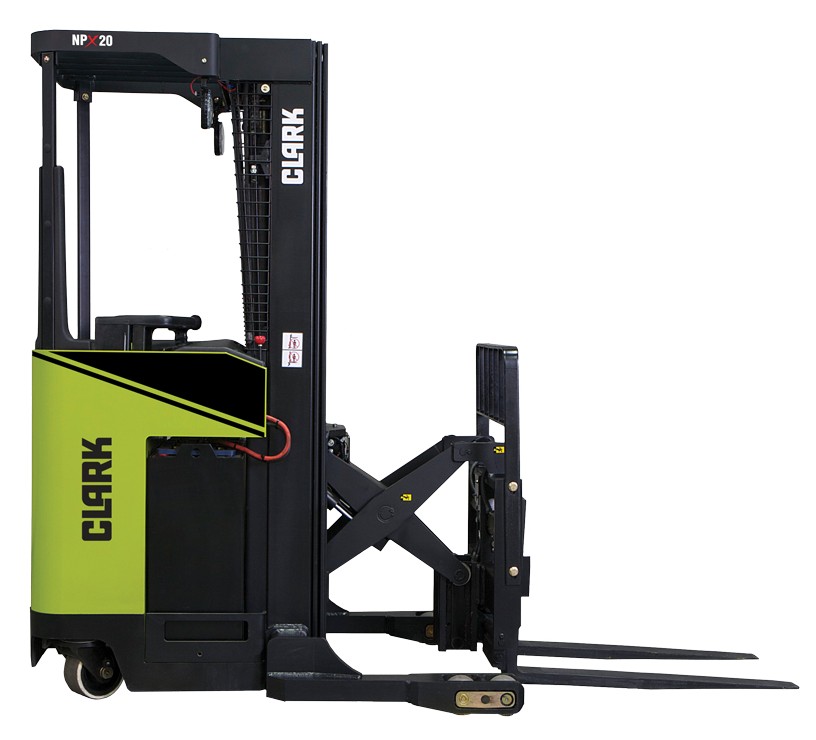
Narrow Aisle Reach Truck with Pantograph Attachment
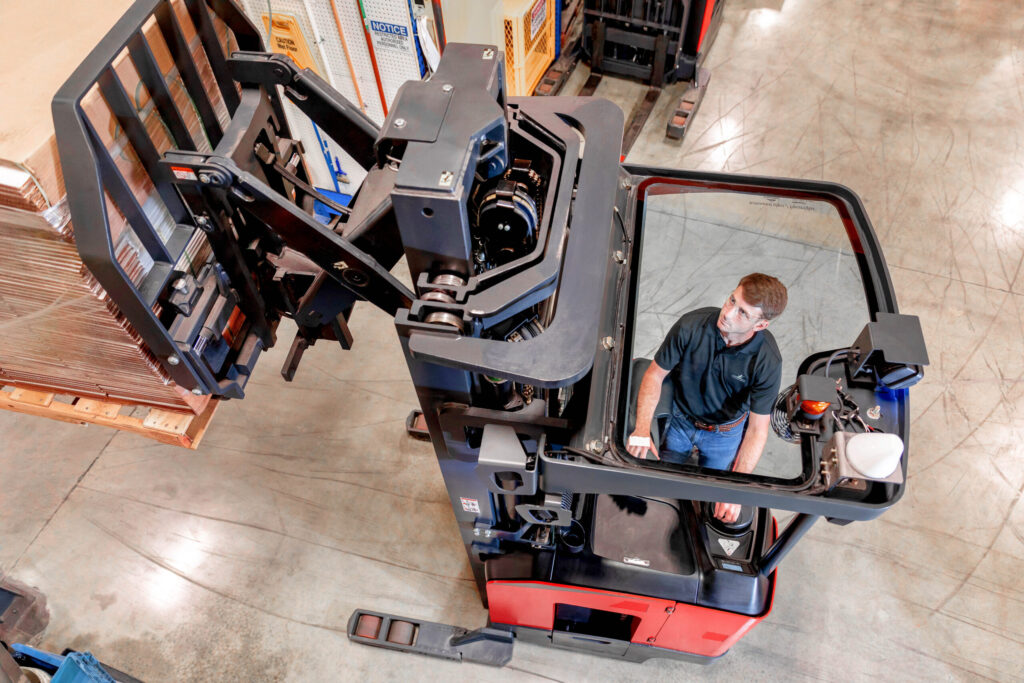
Outriggers provide essential stability to the forklift, playing a key role in ensuring safe and efficient pallet handling during loading and extraction from double-deep rack systems. Working in tandem with the forklift’s pantograph—a scissor-like mechanism that extends the forks deeper into the racks—outriggers help maintain balance and precision throughout the process.
Outriggers offer two positioning options, with the optimal choice determined by specific operational needs. Let’s explore these options in detail.
Option 1: Narrow Outriggers

Narrow outrigger positioning is most beneficial where precise rack alignment and efficient use of aisle space are top priorities. In this configuration, the outriggers remain within the pallet’s width, enabling easier navigation in narrow aisles and reducing the need for excessive side-shifting.
Advantages
- Precision Placement: Narrow outrigger positioning limits the extent of side-shifting required when placing pallets into racking. Operators can more accurately align the load, minimizing time spent adjusting.
- Space Efficiency: This setup requires less floor space, which is beneficial in tight or high-traffic areas.
Limitations
- Ground-Level Challenges: When picking up pallets from the ground, operators must extend the forks outward and lift the pallet “up and over” the outriggers. This can increase the complexity of operations and demand greater operator skills.
Option 2: Wide Outriggers
 Wide outrigger positioning is an ideal solution for ground-level pallet pickup and handling a variety of pallet sizes and shapes. By extending beyond the pallet’s width, wide outriggers allow forklifts to lift pallets directly without requiring fork extension, simplifying operations and improving efficiency.
The wide outrigger positioning also provides added stability and versatility, particularly valuable in warehouse environments, where pallet dimensions often fluctuate. This design ensures smooth handling and operational flexibility, even during seasonal peaks or when managing mixed-use storage systems.
Advantages
- Simplified Ground Pickup: With wide outriggers, operators can “scope” the pallet directly without extending the forks. This approach saves time and reduces strain on the equipment.
- Improved Versatility: Wide outriggers are generally more accommodating for varied pallet dimensions, making them suitable for dynamic warehouse environments.
Limitations
- Rack Alignment: Wider outriggers may require more side-shifting to align pallets with racks. This can slightly extend the time needed for each operation, especially in tightly packed storage systems.
Key Considerations for Choosing the Right Configuration
Selecting the optimal outrigger configuration for your deep-reach forklift balances efficiency, safety, and versatility. Each operation is unique, so considering the following factors will help ensure your equipment aligns with your operational needs.
- Operational Priorities
Start by identifying what matters most to your operation. Are speed and precision in pallet placement your top priorities? If so, narrow outriggers may be the better option, as they allow for quicker alignment with racks in double-deep systems. On the other hand, if versatility in ground-level pallet handling is more critical—such as in environments with frequent pallet size variations—wide outriggers might offer the flexibility you need. - Warehouse Layout
Your warehouse’s layout plays a significant role in the decision. Assess your aisle dimensions and storage density to determine which configuration will allow operators to work efficiently without compromising safety. - Pallet Dimensions and Weight
Consider the size and weight of your most commonly handled pallets. The chosen outrigger configuration must accommodate your inventory without causing handling inefficiencies or safety concerns. Additionally, ensure the forklift’s load capacity aligns with your heaviest pallets to maintain stability during operations. - Frequency of Use
How often the forklift will be used and the type of tasks it will perform should also factor into your decision. - Operator Skill and Training
Operator expertise is key to safely and efficiently handling the chosen outrigger configuration. To support your team, Apex offers comprehensive forklift operator training to ensure your staff is equipped with the knowledge and skills needed to manage your equipment safely and effectively.
Apex Full-Service: One Call Does It All!

We design warehouse storage racking solutions, provide the right material handling vehicles, train and certify forklift operators, and conduct equipment service and repairs!
From planning and installation to ongoing maintenance and operator support, Apex is your trusted partner in optimizing warehouse operations. It’s just one call away—let us help you streamline your processes, maximize productivity, and ensure safety every step of the way!