
Your Application Will Determine The Proper Choice of Indoor Forklift Tires
Your forklift’s tires are literally where the rubber meets the road. It’s one of the components of your forklift that experiences the greatest amount of wear and tear, and proper selection–as well as maintenance–can also significantly affect the efficiency and, thereby, cost-effectiveness of your forklift.
This is the first in a two-part series that explores forklift tire selection for both indoor and outdoor forklifts.
Forklift tires come in two basic flavors: cushion and pneumatic. For the lion’s share of indoor forklift applications, cushion tires are the way to go.

About Cushion Tires
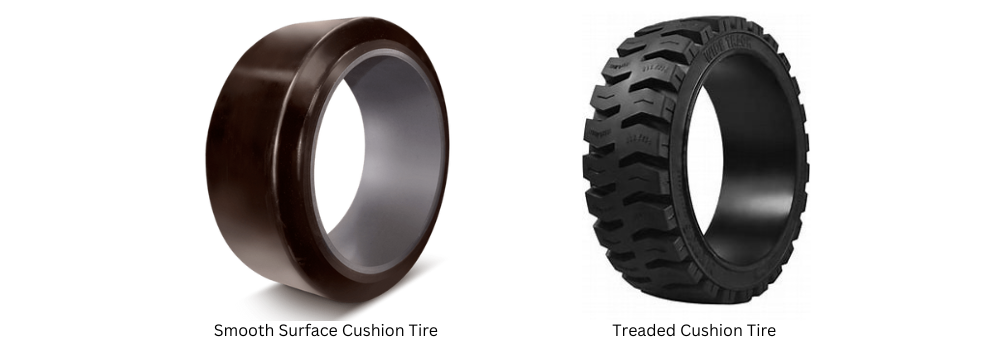
Cushion forklift tires, sometimes called press-on tires, are made of solid rubber molded over a steel band. As the name suggests, these tires are pressed onto a wheel and come in a smooth or threaded surface.
Smooth Surface Cushion Tires –
- Best used on smooth floors — Smooth cushion tires are ideal for most warehouse and distribution center applications where your forklift will move boxes or pallets in a clean environment without a lot of floor debris. They offer a smooth, comfortable ride to the operator.
Threaded Surface (Lugged) Cushion Tires –
- Best used for varying surfaces — Lugged cushion tires from smooth to uneven surfaces, inclines, declines, wet floors, cold storage, or if the vehicle is also operated outdoors. Treaded tires are more prone to leaving marks on the floors, so if this is a concern, a treaded non-marking style might be your best choice.
Cushion Tire Advantages:
- Designed for maneuverability. Cushion forklift tires typically have a low profile that allows easy turning and superior handling in narrow aisles or dense storage warehouses and distribution centers.
- Cost-effective. Cushion tires have less material and are cheaper to manufacture and thus cost less than pneumatic tires and typically have a longer useable life.
Cushion Tire Options
For specific applications, there are several options you should consider:
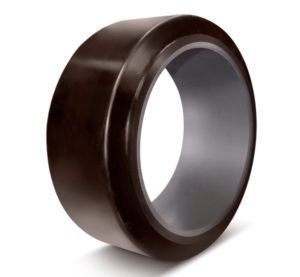
Polyurethane Cushion Tires
Polyurethane tires are lighter than rubber tires and more resistant to splitting, chunking, and chipping. They also offer lower rolling resistance and, therefore, higher efficiency. Polyurethane tires have a lifespan of about twice that of rubber tires. But they cost more. They can handle heavier loads and work better in areas where there is some floor debris but offer a harder ride than comparable rubber tires. Polyurethane tires with microgrips or razor sipes are recommended for indoor use in cold storage applications or facilities with wet or oily floors.
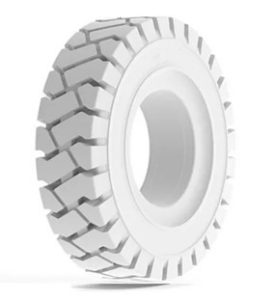
Non-Marking Cushion Tires
These specialized cushion tires are designed for areas where rubber tires might leave unappealing black marks on the floor. They are typically used in retail applications where customer appeal is essential. The carbon black used in regular forklift tires is replaced with hydrated silica and special additives to achieve the tire’s non-marking properties. Non-marking cushion tires operate similarly to regular rubber forklift tires but have a shorter lifespan.
Determining Cushion Tire Size
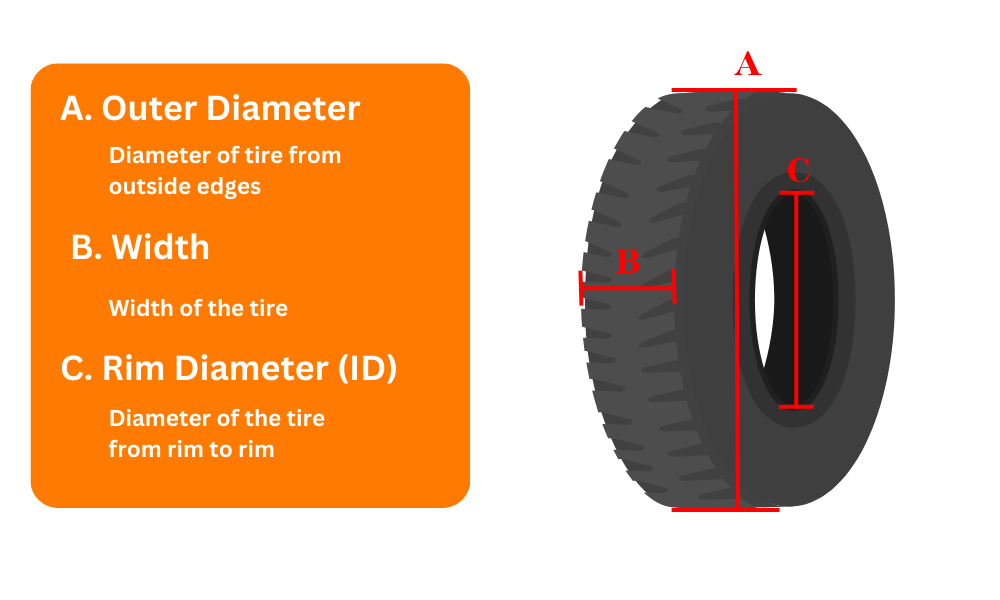
Forklift cushion tire size is represented as Outer Diameter x Width x Rim Diameter. Thus, an 18x8x12⅛ tire has an outside diameter of 18 in., a width of 8 in., and an inside diameter of 12⅛ in.
Indoor Use of Pneumatic Tires
For manufacturing, warehouse, and distribution center applications that require greater lifting capacity or combined indoor and outdoor use, pneumatic tires are sometimes the way to go. This is especially true in applications where there might be a considerable amount of debris on the floor, as in recycling centers or indoor lumber yards. In those cases, you might opt for solid pneumatic tires for their weight-handling ability and resistance to damage from debris.
The Significance of Clean Floors
As a final note, remember that a clean floor is the BEST way to improve tire traction, safety, and the useful life of your tires. Industrial sweepers and scrubbers efficiently eliminate debris and potentially harmful substances from your warehouse floors and outdoor areas, promoting a secure working environment… and protecting your equipment investment. Debris can take chunks out of tires, resulting in premature replacement. Additionally, dust and debris can create slippery conditions, risking the safety of vehicle operators and personnel.
When To Replace Your Cushion Forklift Tires
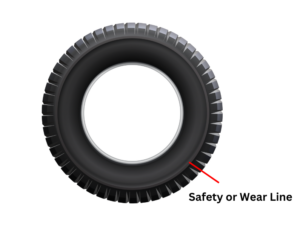
Cushion Forklift tires have a safety line that indicates when the tire is worn beyond its useful life and needs replacement. If no safety line is evident, it’s prudent to use the 2-in rule. If the tire’s outside diameter has been reduced to 2 inches by wear, it’s time to replace it. Naturally, tires with sidewall damage, stress cracks, or missing chunks are inefficient and safety hazards and should be replaced immediately.
Your Apex material handling specialist can help you choose the forklift and tire combination that will offer you the highest efficiency and cost-effectiveness for your application. When it comes to replacement tires, Apex can help you select the correct tire size and material or recommend a tire change that will improve efficiency. In the Chicagoland area, Apex is your material handling headquarters. Give us a call today.