
Aerial Lift Safety Starts Before The Platform Begins Its Ascent
In our last blog, we outlined the different equipment options for projects that require raising people or materials to elevated heights. Those tasks also raise a whole host of potential safety issues, which we’ll address now.
With aerial lifts, your main safety concern is gravity. You know…what goes up must come down. And you want your workers to be safe on the way up, while up high, and on the way down. But gravity is only one of the issues. Power lines, overhead obstructions, ground or floor conditions, and proper equipment maintenance all play a part in safely operating aerial lifts. Safety checkpoints need to be made before, during, and after operating an aerial lift.
Before You Get Started

First, let’s talk about who gets to take the vertical lift mast, scissors lift, or articulated boom lift for a spin. Operators need to be thoroughly trained on the ins and outs of the specific piece of equipment they’ll be using. More than anything, this involves being aware of the lift’s capabilities and limitations.
Let’s start with what the officials say. In March of 2020, the American National Standards Institute (ANSI) updated the designation of aerial work platforms (AWPs) to mobile elevating work platforms (MEWPs). These changes can be found in Section A92. MEWPs as defined by ANSI is “a machine/device intended for moving persons, tools and material to working positions.” The ANSI guidelines provide guidance for training, machine design, and safe use.
Aerial Lift Training Should Include:
- Explanation of all potential hazards–falls, tip-overs, power lines, and falling objects
- Procedures for dealing with those hazards. Recognizing and avoiding unsafe conditions
- Instruction on proper lift operation. Equipment capabilities and limitations
- Performing pre-shift inspections
- “Driver’s Test” to demonstrate skills before actually using equipment
Apex offers a variety of training courses for both new aerial lift operators and refresher courses so that current operators can keep up with certification requirements, advances in technology, and updated safety procedures. The Apex training ensures that your team is trained and compliant with all the latest ANSI regulations including the recently updated A92 regulations.
It’s a good idea with any industrial equipment to keep thorough records on maintenance and use. Aerial lifts are no exception. As part of that vigilance, you should have a pre-operation checklist to ascertain that the equipment is ready for action. This checklist should be managed by either the maintenance or operations department and updated when new equipment is added to the fleet. Items should include:
 |
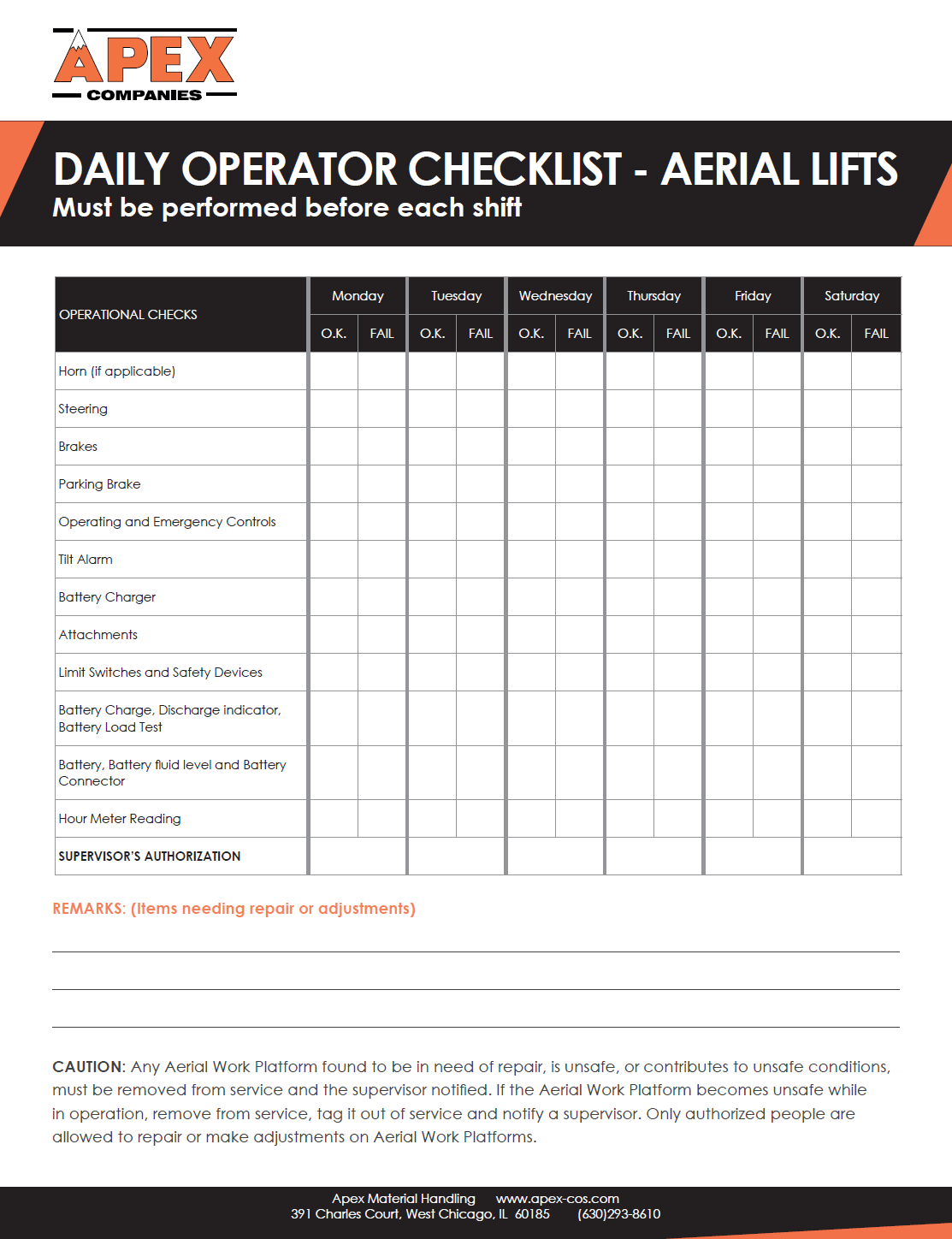 |
 Vehicle checks
- Proper fluid levels (engine oil, battery water, fuel, hydraulic fluid, coolant)
- Leaks to any of the above systems
- Wheels and tires
- Structural damage
- Battery and charger operation
- Vehicle controls
- Horn, gauges, instruments, lights, and alarms
- Steering and brakes
- Capacity and safety labels
Lift component checks
- Operating and emergency controls
- Guardrails and other personal protection equipment
- Hydraulic, pneumatic, and electrical equipment
- Bucket insulating material
- Safety placards, warning stickers, and operational and instructional markings
- Mechanical fasteners and locking pins
- Cables and wiring harnesses
- Outriggers and stabilizers
- Availability of manufacturer’s operation and maintenance specs
Worksite inspection is as important a consideration in preparing to use an aerial lift as is the physical conditions of the lift. An unstable base makes an unsafe lift. Be aware of the following:
 |
Indoors
Outdoors
|
While Using The Aerial Lift
Here’s where the rubber meets the road. An excellent idea is to create a custom procedure manual based on the operator training courses you’re using and the manufacturer’s instruction manual.
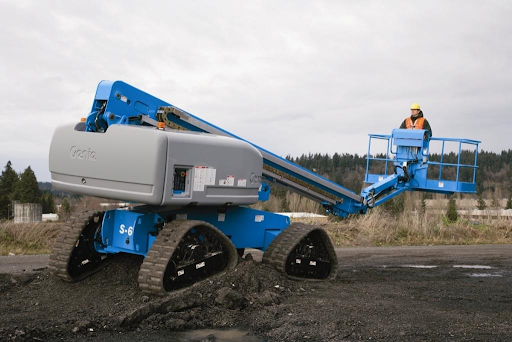
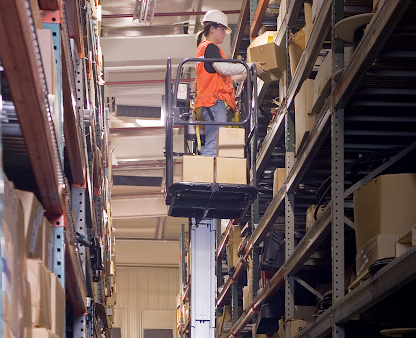
- If the vehicle is self-powered, operate it carefully. For indoor lifts like vertical lift masts and scissor lifts, make sure you have enough clearance before entering doorways or rack tunnels.
- Look both ways. That is, vertically and horizontally. Be aware of overhead pipelines, electrical lines, and utilities hanging from the ceiling.
- Know the turning ratio of your lift. A large outdoor boom lift needs a lot of room to move.
- Outdoors, treat all electrical lines as live. Maintain a distance of at least 10 ft. from power lines carrying less than 50 kV and 45 ft. for lines carrying over 750 kV.
- Make sure the platform or bucket gates are closed. Clear the platform of debris. Wear a hard hat and use a harness or safety belt.
- Don’t climb on or lean over guardrails. Reposition the lift if necessary. Don’t use planks or ladders to get more height.
- Be aware of the lift’s weight and height limitations. Add the weight of the workers, tools, and materials to arrive at a total loaded weight.
- Do not position yourself between the platform and an external object. You could get crushed.
- For lifts with a horizontal reach, don’t exceed the lift’s combined weight and range of motion. That’s a formula for a tip over.
- If you’re using a material lift, don’t get impatient. Make an extra load rather than try to stretch the lift’s weight limit.
- Communicate! If your lift has two operating positions (vehicle and platform), make sure your co-workers know what moves you plan to make before you make them.
- Don’t move a lift with workers on an elevated platform unless permitted explicitly in the manufacturer’s operating instructions.
- When operating outdoors, be aware of changing weather conditions. Cease operating the lift if wind or precipitation appears to be a hazard.
- Do not override safety devices or interlocks.
- If using outriggers, make sure they are placed on a solid, level surface or use pads. Set the brakes and use chocks if necessary.
- Set up a restricted work zone beneath the lift for the safety of mechanics, construction workers, or warehouse personnel in the area.
|
|
At The End of the ShiftEnsure that everything works properly during your shift and report any operating deficiencies or maintenance issues to your manager or the maintenance department. You want the next guy to be using a safe machine. Aerial lifts are versatile pieces of equipment that can increase productivity and enhance worker morale compared to using ladders and scaffolding. They also can pose a danger if not used properly. It’s essential to have a documented plan for dealing with the various types of aerial lift accidents–tip-overs, falls, electrocution, material falling onto workers, and workers getting caught between the lift and stationary objects. Proper training of operators and fostering a company-wide safety culture are the best route to enjoying long, accident-free use of your aerial lift equipment. |
Your Apex representative can supply you with all relevant safety information on aerial lifts, whether you purchase a new or used machine or simply rent one for a short-term project. Contact our team today for expert advice and generous lease, rental, and purchase options, and remember Apex when your looking to add new pallet racking systems to your warehouse —we offer attractive leasing agreements that help you stretch your capital expenditure dollars.