
Master High-Bay Load Handling with Pro Tips for Forklift Safety and Efficiency
Modern warehouses—especially those built for today’s high-density logistics operations—feature taller ceilings that allow racking systems to reach 25 to 30 feet or more. While this maximizes storage capacity within a limited footprint, it also introduces unique challenges for forklift operators. Handling pallets at height demands intense focus, specialized equipment, and targeted training to ensure safety, prevent product damage, and maintain efficient workflows. In this blog, we’ll share practical, field-tested forklift operator tips for tall racking, including equipment selection, handling techniques, safety protocols, and more.
Understanding the Risks of High-Rack Operations
- Limited visibility leads to higher error rates.
- Misalignment of forks can cause product falls or damage.
- Strain on operators increases with height and tight aisle configurations.
- Accidents can lead to injury, equipment damage, and costly downtime.
Best Practices for Forklift Operators Handling Tall Racks
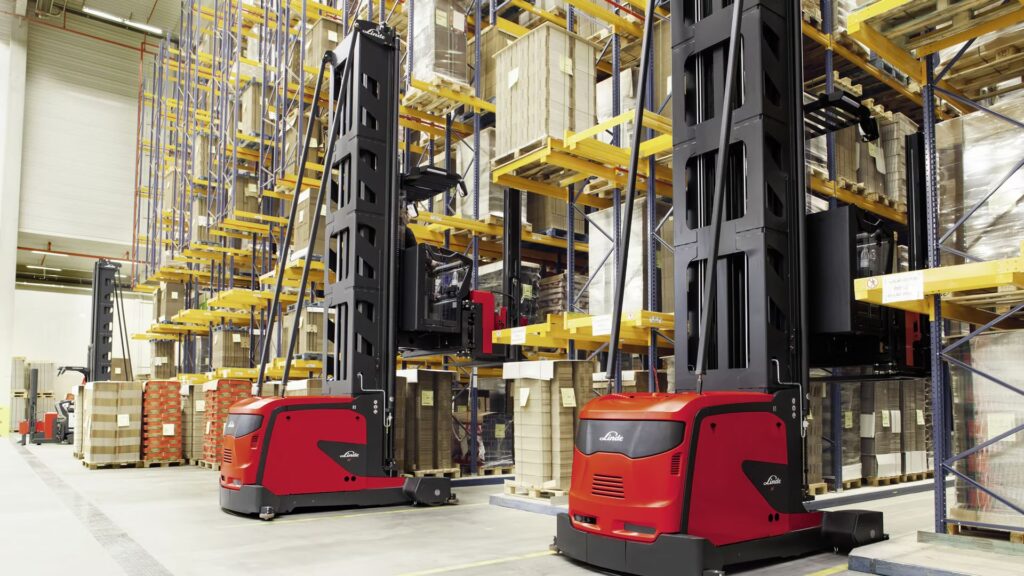
Linde Turret Trucks
Handling pallets at height requires more than just lifting and lowering—it demands careful planning, precise execution, and constant awareness. Here’s how to do it right, whether you’re loading or retrieving from upper rack levels.
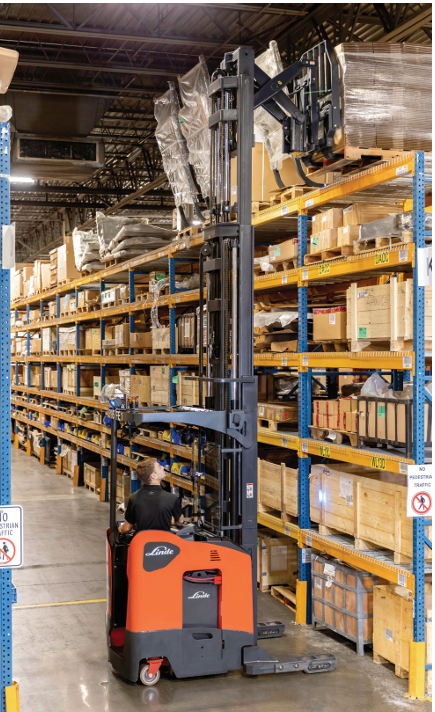
1. Specify the Right Equipment For High-Rack Pallet Handling
- Standard Aisles: In wide or conventional aisles, traditional counterbalance forklifts can be used—provided they’re properly configured for the weight and height of high-bay pallet loads.
- Narrow Aisles & High-Density Storage: Reach trucks and turret trucks are essential for these tighter configurations. Make sure your equipment is rated for both the height and load capacity to avoid instability during elevated operations.
- Add the Right Attachments: Tools like pallet positioners, side shifters, fork extensions, load backrests, and pallet supports enhance control and stability. Safety accessories such as strobe lights, mirrors, and audible alarms improve operator awareness in busy aisles.
- Stay on Top of Maintenance & Certification: Operate only equipment that’s routinely inspected and on a preventative maintenance schedule. Keep load capacity plates clean and visible to avoid overload risks. A well-maintained machine is key to both uptime and safety.
2. Require Application-Specific Operator Training
- Hands-On, Equipment-Specific Training: Operators must be trained and certified on the exact class of powered industrial truck they’ll use—including high-lift models and any attachments. Training should combine classroom instruction on load dynamics and regulations with supervised, real-world practice in your warehouse.
- Build Situational Awareness: Go beyond basic operation. Teach operators to read rack labels, assess load center and weight distribution, and plan lifts before entering an aisle. Include guidance for handling partial or unstable pallets, responding to stuck loads, and navigating damaged racking.
- Ongoing Evaluation & Refresher Courses: Conduct regular skills assessments and offer refresher training to reinforce safe practices and introduce updates on equipment or procedures. OSHA mandates operator training and recommends periodic evaluations to maintain competence.
3. Ensure Adequate Rack Clearances
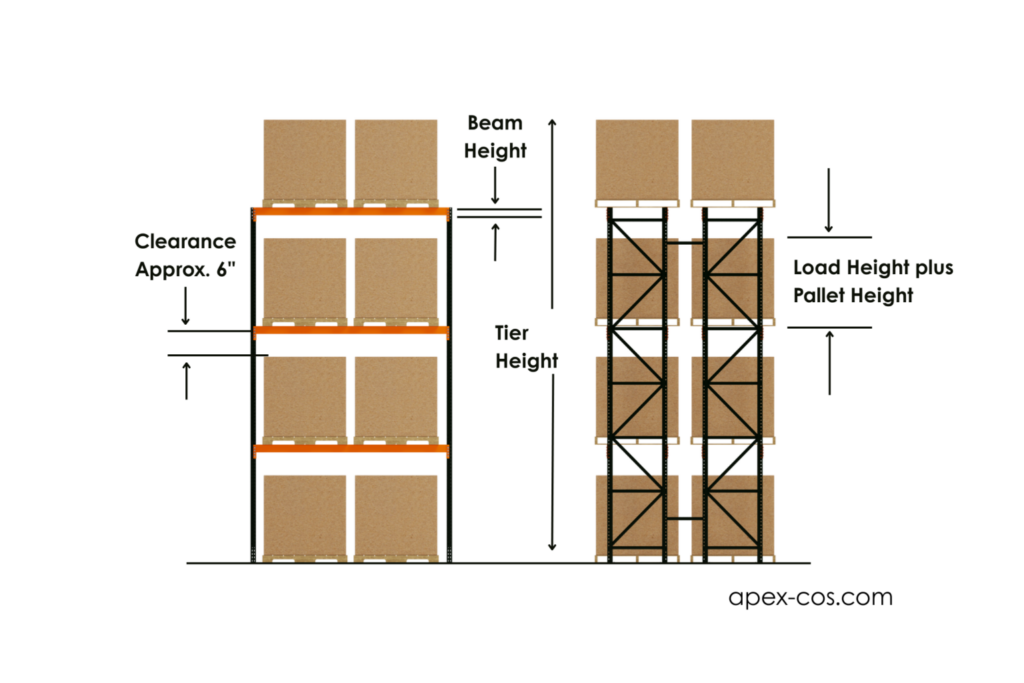
- Maintain Proper Side and Vertical Clearances: Allow at least 6 inches of clearance between pallet loads and upright frames, and 6 inches of vertical clearance between the top of the load and the beam above. These clearances reduce the risk of snagging, collisions, and improper load placement—especially critical at higher elevations where visibility is limited.
- Use Visual Aids for Accuracy: Install high-visibility rack labels, beam indicators, and load guides to help operators align pallets correctly. Clear visual cues support quicker and more confident placement and retrieval, reducing the time spent repositioning at height.
How to Load and Unload Pallets Safely from Tall Racking
Plan Before You Lift:
-
- Clear the aisle and remove debris from the rack bay.
- Inspect the pallet for damage and ensure the load is evenly distributed.
- Stage pallets far enough from the rack to align forks cleanly.
- Maintain a minimum of 6 inches of side clearance and 6 inches of vertical clearance in the rack.
- Approach with Precision:
- Approach squarely and lift to the correct height before moving forward.
- Slowly insert forks, place the load evenly, and lower it carefully onto the beams.
- Double-check fork position, fully retract the mast, and reverse slowly.
- Stop when forks are 6″ clear of the stack, then lower them just above floor level and apply rear tilt—this is your ideal travel position.
- Stack Smart & Secure:
- Place heavier loads on lower levels.
- Keep loads compact and centered.
- Use pallet supports, wire decking, and/or pallet stops where applicable to prevent shifts or falls.
Read our recent blog on Tipped Pallets to learn how to handle compromised pallets and loose inventory within the most common pallet rack system configurations.
7 Safety Considerations for High-Rack Storage & Retrieval
Operating at height demands more than precision—it requires a safety-first mindset. Here’s how to reduce risk across your facility:
- Control Traffic & Improve Visibility:
Mark pedestrian walkways, install convex mirrors at blind corners, and designate one-way aisles when possible. Use physical barriers and rack protectors to reduce forklift impact damage. - Leverage Forklift Safety Tech:
Equip forklifts with cameras, laser guides, and fork leveling sensors to improve visibility and accuracy. These tools help operators position loads correctly—especially in upper rack levels where visibility is limited.
- Enforce PPE & Fall Protection Protocols:
Require hi-vis clothing, hard hats, and steel-toe boots in all high-rack zones. If personnel must work at height, use proper fall protection systems and have a clear rescue plan in place.
- Install Rack & Pallet Safety Systems:
Use safety netting, wire mesh panels, rear load stops, and safety straps or panels to keep pallets secure and prevent falls. These low-cost additions provide critical backup if a load shifts or is bumped. - Inspect Racks & Equipment Regularly:
Check for bent uprights, missing clips, loose anchors, or beam misalignments during daily walkthroughs. Schedule deeper structural inspections quarterly or after any impact. Use visible rack labels and document all findings.
- Don’t Skip Forklift Checks:
Inspect forks, hydraulics, and attachments before each shift—especially when working at height. Any malfunction can escalate quickly in high-bay applications.
- Fix It Right, Right Away:
Remove compromised rack bays from service immediately. Replace damaged components with OEM-approved parts—never makeshift fixes. Quick, proper repairs prevent small issues from becoming major hazards.
Need help? Ask the experts!
The right equipment, thorough operator training, disciplined loading/unloading procedures, and a proactive safety program will dramatically reduce risk and improve throughput in high-rack operations. For tailored recommendations, equipment options, operator training programs, and a professional warehouse assessment, the Apex team has you covered. Contact our team today for full-service support.
Related Content: