
Need To Relocate a Disabled Forklift? Here’s How.
Moving a disabled forklift is like moving a 5,000 lb. lump of steel. How do you do it?… Very. Carefully. Although forklifts are remarkably reliable pieces of equipment, a myriad of things can go wrong, like a combustion engine freezing up, electronic interlocks going haywire or a suddenly dead battery. Here are some tips on how to safely move a stubbornly inert forklift.
Check the Forklift’s Service Manual
Not all forklifts are created equal, and manufacturers may recommend specific protocols to move a disabled forklift. It’s a good idea to follow them because damage to a forklift that’s not moved according to the manufacturers’ recommendation could void the vehicle’s warranty.
Before taking any action, it’s crucial to conduct a thorough assessment of the situation regarding the disabled forklift.
Determine whether the issue lies with the forklift itself or if there are external factors at play. For instance, in the case of LPG forklifts, verify if the LPG tank’s valve is open and correctly connected.
For electric forklifts, ensure that the connections between the battery and the forklift are secure. Additionally, consider if the forklift has safety features that may have caused it to shut down, such as a sensor detecting an empty seat or an unsecured seat belt. If uncertain, it’s advisable to contact a manager or a service person who is present on-site to assess the situation thoroughly.
If it’s confirmed that the forklift is indeed disabled and will remain inactive for a period, take proactive measures to ensure safety. Mark the area with cones or tape it off to prevent accidental collisions with other forklifts or equipment. This precautionary step minimizes the risk of potential accidents and ensures a safe work environment for everyone involved.
Tow It – The easiest way to move a disabled forklift is to tow it with another forklift or tow tractor. However, there are a number of things to be aware of before trying that.
Do a Risk Assessment – Make sure the route that the towed forklift traverses is flat and clear of debris. Make sure plant or warehouse workers are out of the way.
Check Capacity – The forklift doing the towing must have the capacity to pull the disabled forklift. For example, if the disabled forklift weighs 5,000 lbs., the capacity of the towing forklift or tractor must be at least 5,000 lbs.
Inspect Both Forklifts – Check the tow pins and only use pins that came with the forklift. Make sure counterweights and other mechanical parts are secured.
Tow with Care – Before starting the tow, chock the wheels of the disabled forklift to prevent it from rolling. Securely fasten the two forklifts with a tow bar or chain. If the forklift has a “tow mode,” make sure it’s engaged. Release the brakes and check that the service brake pedal is released so the disabled forklift can move freely. Make sure the key switch of the disabled forklift is in the off position. Remove the chocks and slowly tow the forklift to its destination. Don’t allow an operator to ride on the towed forklift unless it’s necessary to steer or brake the disabled forklift.
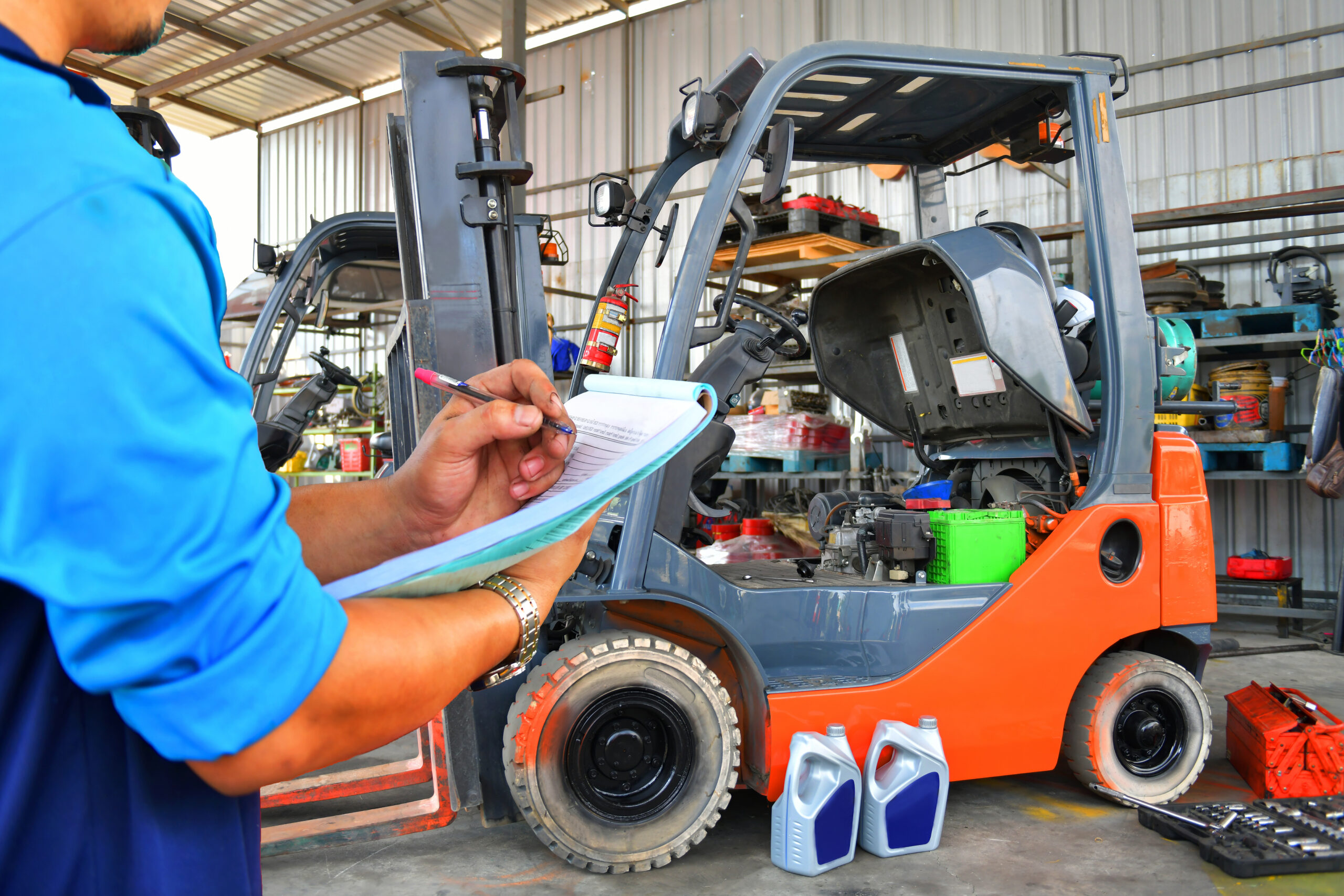
Lift It – If the wheels of your disabled forklift are locked, let’s say, due to an electronic lock-out, you may not be able to tow it. If you have a larger forklift with enough capacity, you could potentially lift it and carry it to its destination. Check the service manual to determine whether the forklift can be lifted. Follow the same rules stated above regarding risk assessment, capacity evaluation, and inspection. An alternative is to just position the towing forklift’s forks under the disabled forklift at the drive wheels, lift it slightly to raise the wheels just an inch or so off the floor, and slowly drag the forklift to a maintenance station. This operation is tricky and should be performed with the utmost caution.
What About A Disabled Pallet Jack?
A “dead” pallet jack is a bit easier to move because it weighs a lot less than a forklift. The first thing you can try is to get a couple of strong people to pull it to where it needs to be taken. If that doesn’t work, you can also carefully lift it with a forklift, taking care not to damage anything on the undercarriage of the pallet jack. Check the pallet jack’s service manual to see if that is recommended. Finally, you can tow it if it’s equipped with a tow pin or hook. If not, you can place a chain or rope around the base of the pallet jack and carefully tow it, being careful not to damage the pallet jack in the process.
A disabled forklift is not only an operational disruption but also a drain on productivity and profitability. The wise thing to do is to get in touch with Apex’s Service Department and have our maintenance professionals get your disabled forklift up and running as soon as possible. We can offer you a short-term rental to keep your operation running smoothly while your forklift is serviced. In the Chicagoland area, Apex is your prime source for all things forklift!