
Forklift Attachments – Turn Your Forklift Into a Specialty Tool
Forklift attachments transform the plain vanilla forklift into a truly customized, specialty material handling tool. From carton clamps and drum rotators to side shifters and fork extensions, attachments allow operators to handle a variety of difficult-to-handle loads with relative ease. However, these tools also introduce new risks and cautions. In this blog, we’ll delve into the selection, installation, inspection, safe operation, and maintenance of forklift attachments.
How Do I Select the Right Forklift Attachment?
If you can think of a specialized material handling task, there’s probably an attachment for it. The challenge is pairing your forklift with the right attachment to ensure safe, efficient product handling and storage. While it’s an investment, this type of tailor-made tool can improve safety, boost productivity, and often deliver a quick ROI.
Key Considerations
- Application: Match the attachment to the task. Carton clamps are ideal for handling appliances, while layer pickers streamline high-volume case picking and mixed-SKU pallet building.
- Load Characteristics: Consider size, shape, weight, and fragility. Rotators are perfect for ingredient mixing or dumping, while fork positioners help with varying pallet sizes.
- Forklift Compatibility: Select attachments that align with the forklift’s hydraulic, mechanical, and electrical systems.
- Secure Manufacturer Approval: Forklift manufacturers require written approval before using an attachment.
- Capacity Adjustments: Attachments add weight and shift the forklift’s center of gravity, reducing lifting capacity. Updated load capacity decals are mandatory.
- Operator Training: OSHA requires operator retraining before using new attachments.
Common Attachments and Their Applications
- Clamps – specially designed to handle large cartons, drums, and bales
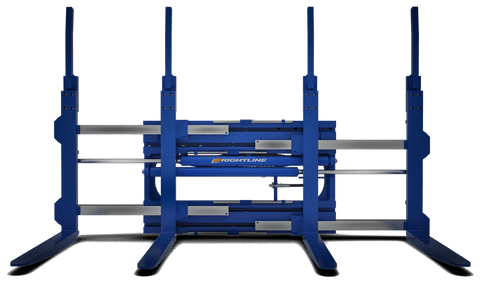
- Multiple load handlers – for transporting two or three pallets simultaneously
- Fork extensions – used for extra-long pallets or loads
- Side shifters – improve maneuverability in tight spaces
- Rotators – transport and rotate drums to mix ingredients and pour material into bins and hoppers
- Slip-sheet push/pulls – allows you to go pallet-free
- Layer Pickers – Efficiently create or break down pallet loads
 |
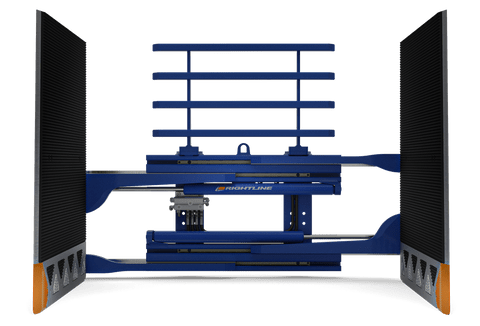 |
| Dual Pallet Handler | Carton Clamp |
Check with your Apex rep for help matching your material handling needs with the most suitable forklift attachment.
How to Install Forklift Attachments
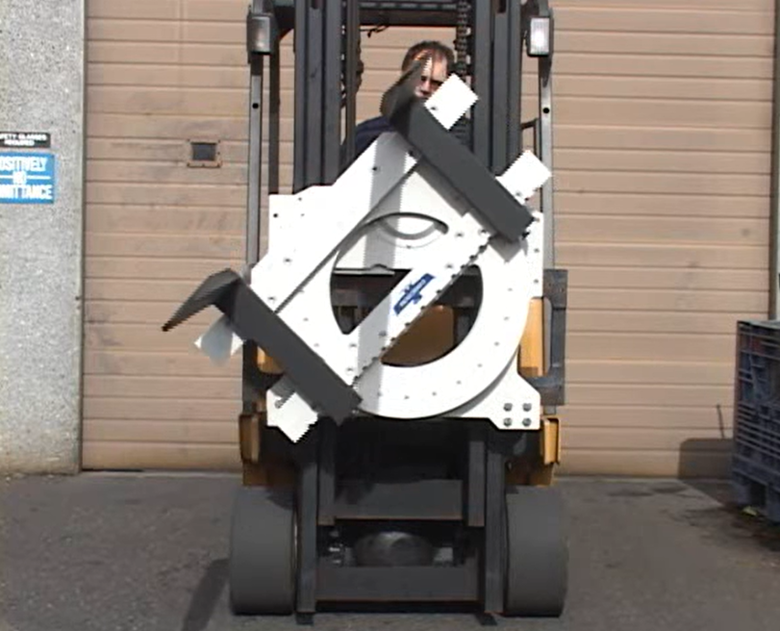
Forklift Rotator Attachment
Even the best attachment can fail if it’s installed incorrectly. Treat installation as a safety-critical task: always follow both the forklift and attachment manufacturers’ instructions, use only qualified technicians for hydraulic and electrical work, and make sure you have the proper tools and any required personal protective equipment (PPE). Finally, document the installation process for maintenance and safety compliance.
7 General Guidelines
- Pre-Installation Inspection: Carefully look over the attachment to ensure that it has no loose, worn-out, or missing parts, and is free of cracks and leaks.
- Compatibility Check: Verify hydraulic and electrical requirements against forklift specifications.
- Secure Connections: Fasten bolts and pins firmly.
- Hydraulic Prep: Flush lines, check fluid levels, and install pressure valves if needed. Ensure that all connections are tight.
- Electrical Setup: Confirm that wiring is secure for powered attachments.
- Update Capacity Label: Replace decals to reflect new load limits.
- Test Run: Operate without a load to confirm smooth functionality.
What Are the Inspection Steps Before Using a Forklift Attachment?
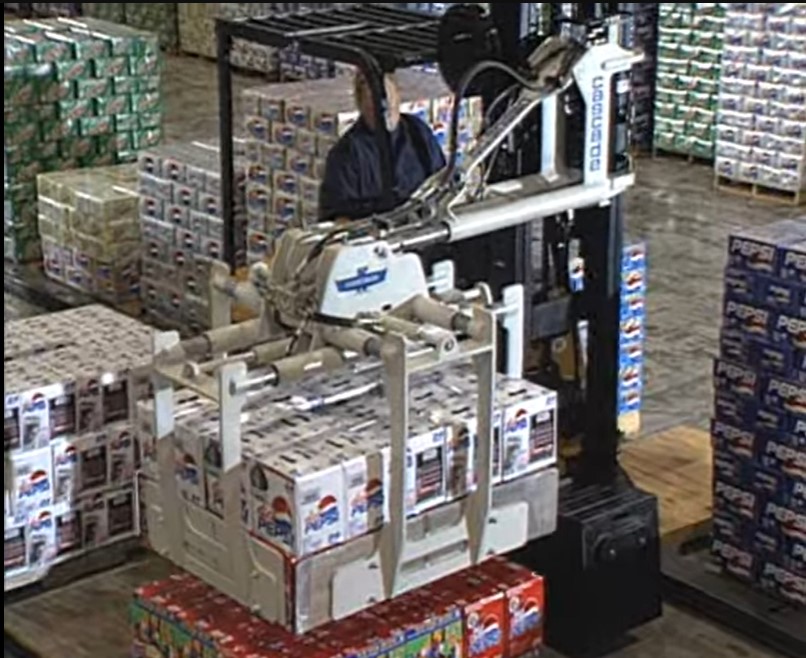
Layer Pick Forklift Attachment
Remember, inspection and shakedown are the frontline defenses against accidents and downtime. OSHA mandates daily pre-operation checks, not only of the forklift, but also of the attachment.
Daily Pre-Operation Checks
- Visual Inspection: Look for cracks, bends, leaks, or missing or worn parts
- Hydraulic Systems: Check connections, hoses, seals, and cylinders for leaks
- Fasteners: Ensure bolts and pins are tight
- Operational Test: Run the attachment without a load to confirm smooth performance
Download Daily Checklist: Electric Forklift IC Forklift
Be sure to document inspection findings in accordance with OSHA guidelines and maintain records for audits. Where possible, use digital checklists or apps to streamline the process. Always update and record any capacity changes caused by the attachment.
How Do I Use a Forklift Attachment Safely and Efficiently?
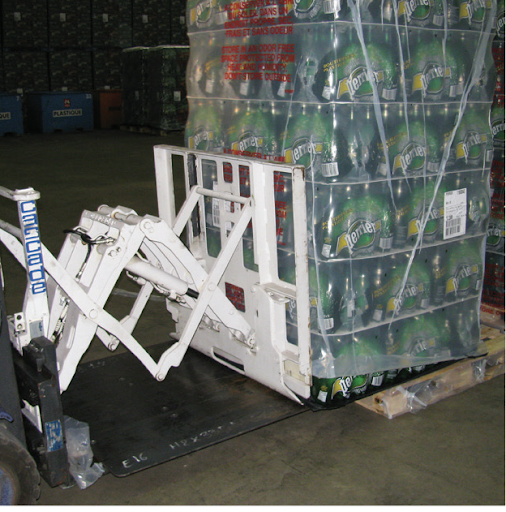
Push & Pull Slip Sheeter Forklift Attachment
Forklift attachments change how a truck handles, brakes, and lifts, which introduces new risks such as overloading, tip-overs, falling loads, and hydraulic failures. Because attachments alter forklift performance, operators need updated safety practices and refresher training. The right training builds knowledge, confidence, and awareness—and helps prevent injuries and product damage.
Operator Training
OSHA requires retraining when new attachments are added. Operators must understand changes in visibility, stability, and capacity.
Safe Practices
- Respect Capacity Limits: Never exceed rated capacity of forklift/attachment combination.
- Respect Load Stability: Attachments shift the load center—either forward or laterally—increasing the risk of tip-over.
- Avoid side-loading or pushing with the attachment unless specifically designed and approved for that use.
- Maintain Visibility: Attachments may obstruct views; operators must adjust their driving habits accordingly.
- Drive Carefully: A forklift with a heavy load in an attachment requires extra attention.
- Treat Unloaded Forklifts as Partially Loaded: Attachments add weight even without a load.
- Follow Manufacturer Guidelines: Each attachment has unique operational limits.
What Are the Protocols for Proper Forklift Attachment Maintenance?
Attachments endure heavy use. Neglecting maintenance leads to breakdowns and unsafe conditions. Preventive maintenance costs far less than emergency repairs, injuries, or downtime
Routine Practices
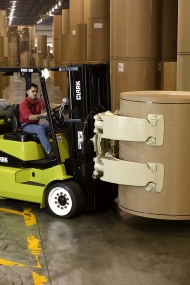
Forklift Drum Attachment
These tasks should be performed on an ongoing basis while the forklift attachment is in service. And don’t neglect the forklift. Remember that attachments put an extra strain on the truck.
- Lubrication: Keep moving parts lubricated.
- Hydraulic Checks: Inspect connections, hoses, seals, and cylinders regularly.
- Cleaning: Remove debris to prevent unsafe conditions.
- Ensure All Fasteners Are Tightened: Loose bolts or missing pins can spell disaster.
- No-load Testing: Run attachments periodically without loads.
Preventive Maintenance Schedule
- Daily: Visual checks and cleaning.
- Weekly: Lubrication and hydraulic inspection.
- Monthly: Detailed inspection of wear points.
- Quarterly: Comprehensive service including hydraulic flush and electrical checks.
Training and Documentation
- Train operators to recognize early signs of wear.
- Keep logs of inspections and repairs.
- Create a maintenance schedule that aligns with manufacturer recommendations.
Want More Information About Forklift Attachments?
Your Apex rep should be your first call when you are faced with the task of handling a non-standard load. Apex offers a wide range of attachments designed for nearly every application, from drums to cartons to recycling bales. We can help identify the right attachment for the job. We can also assist you with training operators, locating spare parts, and establishing a maintenance schedule that extends the life of your layer picker or side shifter.
Call Apex today for a more efficient tomorrow.