Game-Changing MEWP Fall Protection & Safety Tips You Should Know
Mobile Elevating Work Platforms (MEWPS) have been a game-changer in terms of convenience and productivity in working at elevated heights. They are widely used in construction, maintenance, utility installation, and repair, as well as a myriad of other applications. Their convenience, however, comes with a caution: used improperly, MEWPs can pose a safety challenge that can lead to serious injury or death. Thus, a careful MEWP fall protection plan must be in place for every application.
As with most industrial equipment, proper operation of a MEWP begins with training and thorough knowledge of the equipment. In the case of MEWPs, this includes strictly adhering to the operating limits–platform height, weight, horizontal reach, and vehicle speed when elevated– that the manufacturer has specified.
Pre-operation Checklist
Before a MEWP is put into service for the day, it’s recommended to conduct a careful vehicle inspection. This includes the fall restraints built into the platform and any fall restraint and fall arrest accessories that might be put into use. Here’s a checklist of items to be aware of:
Railings, Gates, and Doors – Check all platform railings for damage. Don’t use a MEWP if the railings have become compromised by collision or age. Railings should be in place and not in a stowed position. Gates and doors should close properly.
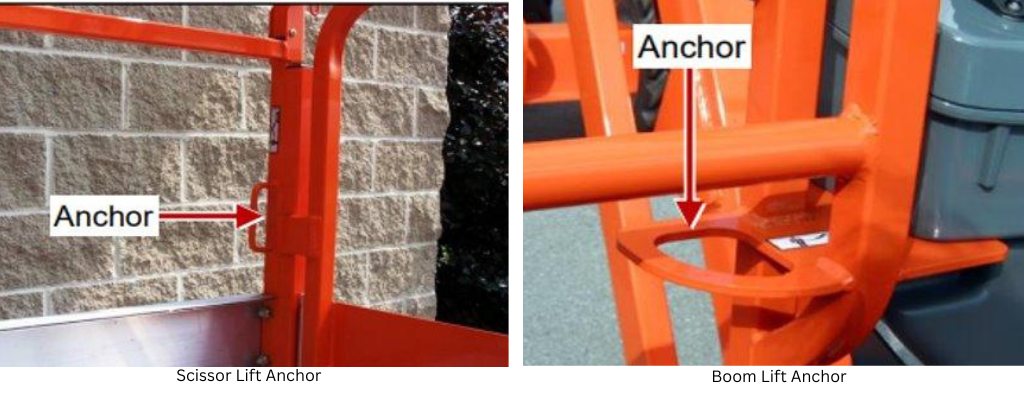
Anchors – Personal fall restraint and fall arrest lanyards are connected to the platform by anchors. Inspect all anchors to make sure they can securely restrain a falling worker. Look out for cracks in welds and distorted or damaged anchors.
Working surface – The platform floor should be clean and dry. Any mud, grease, or oil on the floor is an invitation to a slip that could lead to a dangerous fall.

Body Harnesses–Inspect to verify that all clamps, rings, and buckles work correctly. Check that the harness strap material is not frayed, worn, or cut. Make sure you understand how body harnesses are supposed to be used and follow those instructions carefully.

Use Common Sense Working on a MEWP
Always use a Fall Restraint or Fall Arrest System–Ensure the lanyard is correctly fitted to your body and securely anchored to the designed anchor point on the platform. Never have two workers hooked up to the same anchor. See the section below to distinguish between these two systems.
Work within the MEWP’s Limits – While it’s tempting to climb on the railing to increase your reach. Don’t do it! Move the platform to reach those areas. Don’t use a plank on the railings to increase height.
Don’t use ladders, boxes, or stools–Again, if you can’t reach the work area from the platform, move the platform or use a different device that will safely reach the area you need to work on.
Use caution entering or exiting the MEWP – If you’re using the lift to reach a work surface such as a roof, position the platform so that you can safely step from the platform to the work area. Use three points of contact when exiting or entering the platform.
MEWP Fall Protection and Fall Arrests

Understanding the difference between these two methods of assuring the safety of people working at elevated heights is essential.
A fall restraint has a relatively short lanyard that the worker hooks to the anchor to prevent a fall if the worker slips while on the platform. The worker uses these MEWP fall protection restraints within the confines of the elevated work platform.
A fall arrest system is used when workers exit the MEWP to work on a scaffold, deck, roof, or other surfaces. It is imperative when working in a fall-hazard area, such as on an unstable structure or at the edge of an elevated surface. The fall arrest system engages when a worker falls from an elevated work height and limits the length of the fall. The system must be calculated so that the fall height is less than the height of the work area, plus a safety cushion. Provisions must also be made to minimize the amount of time the fallen worker is suspended in the harness. A well-rehearsed rescue plan must be put into place.
Be sure to inspect the fall restraint and fall protection systems regularly.
To help you ensure that your MEWP is optimized for safety and efficiency, APEX has put together a useful Daily Operator Checklist. Download it and keep it on hand at the beginning of your shift.

Apex now features an on-staff certified fall-protection specialist. We can set up a safety training program at your location or our Smoke Tree location. In the Chicagoland area, APEX is your MEWP and forklift operator training headquarters. Contact us at (833) 226-4573 to learn more.