
Minimize Costly Product Loss with Proven Forklift Operator Best Practices
Every forklift operator plays a vital role in maintaining inventory integrity. Even minor handling errors can lead to significant product loss, damaged racking, or injury. Whether you’re an experienced operator or just getting started, adopting a few smart techniques can dramatically reduce costly incidents.
When these best practices become part of your regular training and operator evaluations, you’ll see fewer equipment mishaps, less inventory damage, and a safer, more efficient warehouse environment.
Understand the True Cost of Inventory Damage
Even small mistakes with forklift handling can have expensive consequences. Damaged inventory isn’t just a warehouse nuisance — it’s a business problem with ripple effects:
- Lost revenue from unsellable products
- Disruption to fulfillment schedules and delivery commitments
- Potential facility or equipment damage from mishandling
- Brand reputation concerns if damaged goods reach customers
The good news? With the right operational habits, these losses are preventable.
1. Master Load Handling Techniques
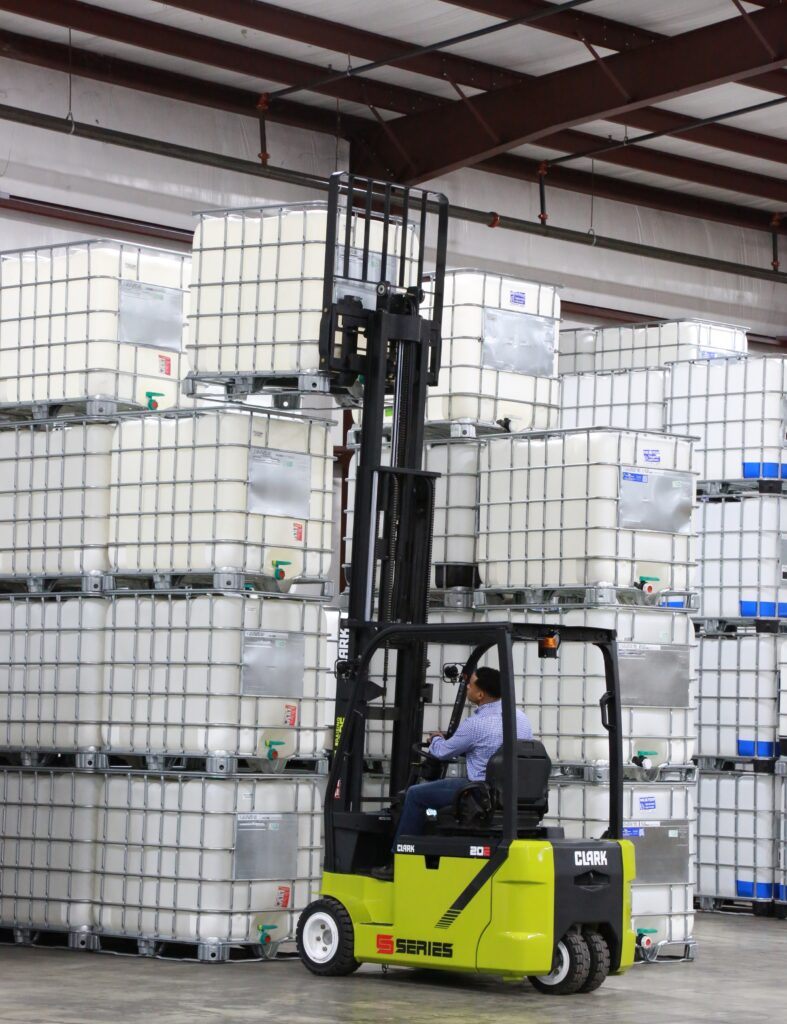
The way a load is picked up and transported determines whether it arrives safely or ends up damaged. Incorrect load handling can cause spills, product breakage, and pallet collapse.
Before You Lift: Key Prep Steps
- Know your load. Confirm that the load’s weight doesn’t exceed your forklift’s rated capacity.
- Inspect the pallet. Only use intact and structurally sound pallets—damaged pallets increase the risk of spills or collapse.
- Secure the product. Make sure items are properly wrapped or banded to the pallet to prevent shifting during transport.
Safe Handling Tips
- Center the load on the forks to maintain balance. Place heavier items toward the front drive wheels to enhance stability.
- Fully insert forks into the pallet—aim for at least 80% penetration—so the pallet sits flush against the backrest. Never lift with just the fork tips.
- Tilt slightly back during travel to secure the load and improve control.
- Watch your visibility. If the load obstructs your view, drive in reverse with caution.
2. Know Your Surroundings
Situational awareness keeps both operators and products safe from unplanned impacts. Blind corners, overhead hazards, and uneven floors can all cause damage if you’re not alert.
- Use spotters in tight spaces.
- Watch for overhead obstructions like sprinklers or lights.
- Stay alert to uneven flooring and debris that can jolt loads.
3. Maintain Proper Fork Height
Fork height control is one of the simplest yet most overlooked ways to prevent racking and product damage. Traveling with forks too high reduces visibility and stability; too low, and you risk scraping or puncturing pallets.
- Keep forks low while traveling to maintain a stable center of gravity and improve forward visibility.
- Adjust fork height before entering or exiting racking to avoid catching beams or racking components.
- Lower the load only after coming to a complete stop. Operators in a rush may lower while moving, which can cause the load to shift or slide off the pallet.
For more rack system-specific pallet handling tips, visit our Apex video library.
4. Follow Aisle Clearance Rules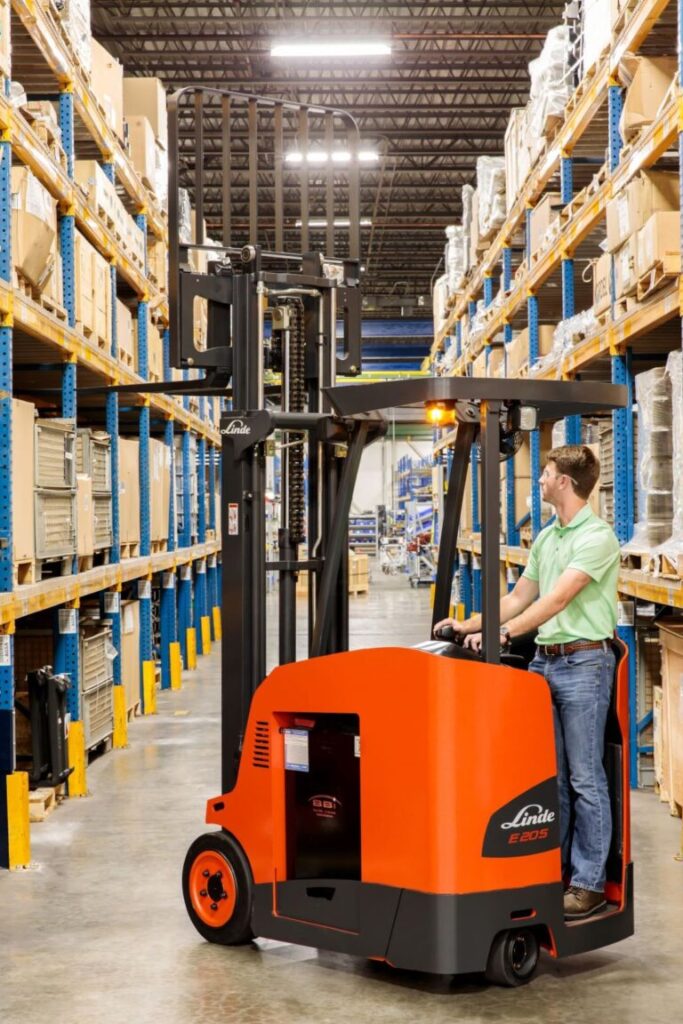
Narrow aisles demand precise maneuvering to protect your racking, inventory, and equipment. A wrong turn or misjudged clearance can cause expensive damage and safety risks.
- Choose the right equipment — narrow-aisle forklifts operate within a tighter turning radius.
- Reposition instead of forcing turns to avoid impacts with racking or stored goods.
- Maintain slow, deliberate movements for maximum control and accuracy.
- Clear aisles of debris or obstructions before entering to reduce collision risks.
- Leverage safety technology such as rear-view cameras, proximity sensors, and audible alarms to improve visibility and provide early hazard warnings.
5. Conduct Pre-Shift Equipment Checks
Well-maintained forklifts are safer, more reliable, and far less likely to cause accidental damage. Small mechanical issues can quickly lead to big problems if left unchecked.
That’s why daily inspections are a must—before every shift and any time something feels off during operation.
Apex makes it easy to stay compliant with our downloadable forklift inspection checklists for both internal combustion and electric vehicles.
Key Inspection Points:
- Test brakes, steering, and hydraulics before beginning work.
- Inspect the forks for cracks, bends, or excessive wear. Just 10% fork wear can reduce lifting capacity by 20%.
- Check the load backrest to ensure it’s secure and undamaged.
- Verify fluid levels, tires, and warning devices are all in working order.
- Document and report any issues immediately—never operate equipment that’s potentially unsafe.
Taking just a few minutes to perform these pre-shift checks can help you avoid costly damage, extend equipment life, and keep your warehouse running safely and efficiently.
6. Slow Down in High-Risk Zones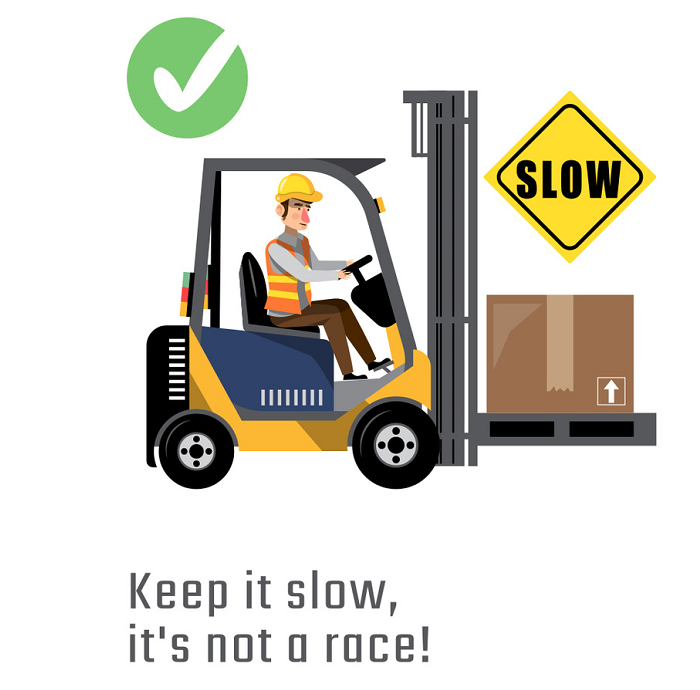
Speed may save seconds, but it can cost thousands in damaged goods — and worse, put people at risk. Maintaining a controlled pace in busy or obstructed areas gives operators more time to react to sudden changes.
- Reduce speed at aisle ends, dock doors, intersections, and pedestrian crossings.
- Approach blind corners slowly, sounding the horn to alert others.
- Adjust speed for load type and condition — heavier or unstable loads require extra caution.
- Be prepared for sudden stops due to equipment, people, or obstacles in your path.
- Avoid quick accelerations or abrupt turns that can shift or tip loads.
7. Report Damage Immediately
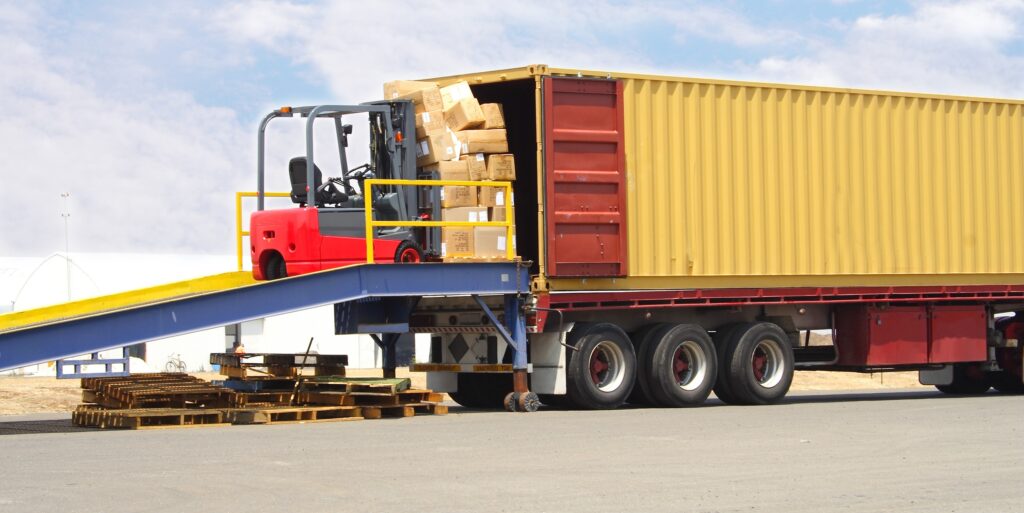
Addressing damage right away helps prevent minor issues from becoming major safety or cost concerns. This includes both inventory damage and potential racking damage, which can compromise structural integrity.
- Report any signs of damage — from broken pallets or product packaging to upright strikes and broken or loose rack components — as soon as they’re spotted.
- Tag damaged rack sections to prevent use until repairs are made.
- Schedule regular Apex rack inspections to address structural issues early.
Use Apex rack repair services to restore safety and extend system life.
8. Stack and Unstack Safely
Stacking and unstacking pallets may seem routine, but doing it carelessly can damage goods, destabilize loads, or cause serious injuries. Whether placing pallets on racks or floor stacks, it’s critical to handle every move with precision and awareness.
- Know your racking capacity. Always verify that the rack or shelving system can safely support the load weight.
- Place loads squarely. Ensure each pallet sits evenly on the rack or stack to prevent tipping or shifting.
- Stack only as high as is safe. Never exceed height limits or stack higher than what’s stable for the load type.
- Use extreme caution when unstacking from high racks. Be alert to potential falling items and maintain a clear area below.
Practicing these stacking fundamentals protects both your inventory and your team. For help with rack inspections or system upgrades, reach out to the Apex team
Preventing Damage with the Help of the Apex Team!
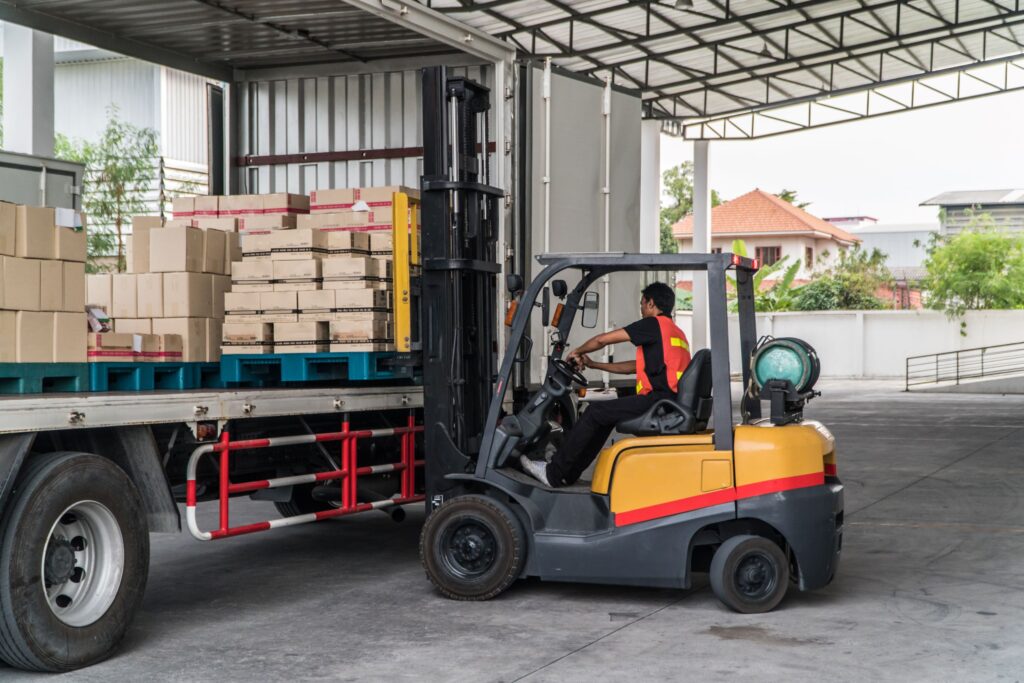
Skill and safety awareness don’t happen by accident — they’re built through consistent training and evaluation. Refresher programs reinforce best practices and help operators stay sharp.
Apex offers certified forklift operator training to improve handling skills, reduce incidents, and keep operations OSHA-compliant. Choose from on-site group training at your facility or individual training (book online) in our Smoke Tree Plaza location in North Aurora, Illinois.
Safety + skill = fewer mistakes and better productivity.
From customized operator training and quality forklift equipment to full-service warehouse safety solutions, Apex delivers the tools and expertise you need to protect your inventory and your people.
Let’s reduce damage, improve safety, and increase efficiency — together.
Schedule Operator Training | Contact Apex for Forklift Parts, Equipment, and Repairs