
Forklift Operator Comfort Leads to Lower Turnover, Fewer Accidents
Driving a forklift for a full eight-hour shift can be a grueling experience, especially when your forklift operators are asked to step up and meet productivity targets. Between the mental stress of meeting goals and maneuvering through obstacles, and the physical stress of coping with bumpy floors, vibration, noise, and ambient conditions, operating a forklift can take a toll on a person. Forklift operator comfort should be a priority if you want to run a productive, efficient warehouse, distribution center, or manufacturing facility.
Why Prioritize Forklift Operator Comfort?
You don’t want to replace forklift operators every six months, so making their job as palatable as possible makes sense, especially if you’re running a fast-moving facility. A driver who is comfortable behind the wheel and isn’t completely worn out after their shift will look forward to coming to work every day. Operators who aren’t thinking about their discomfort will be more alert and pay more attention to a safe process and meeting goals. This mindset leads to fewer accidents and higher productivity.
Creating an atmosphere of forklift operator comfort involves several considerations. Let’s take a look at them.
Operational Parameters
Limit Forklift Speed
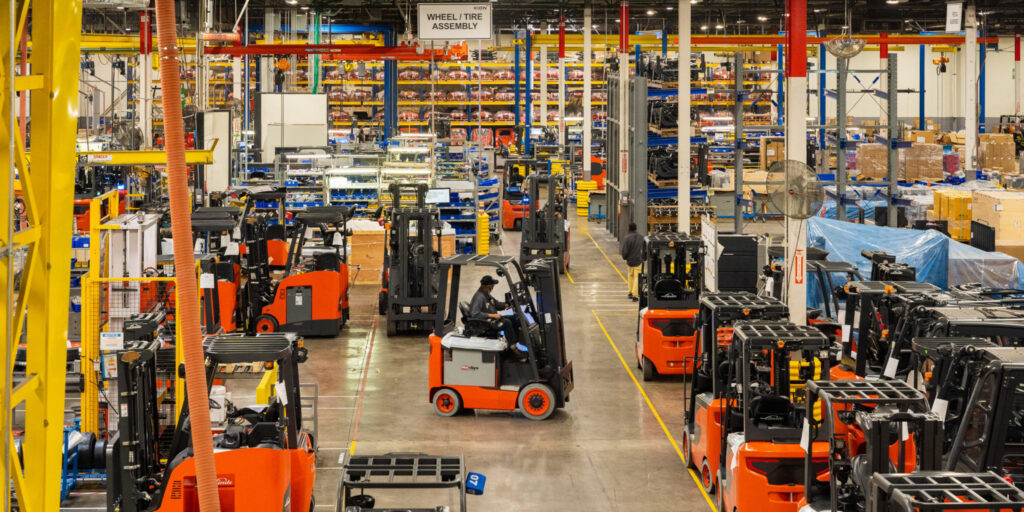
Driving a forklift too fast with jackrabbit starts and sudden stops over an eight-hour shift can take a toll on your body. Limiting forklift top speed or modulating acceleration and deceleration can avoid injuries resulting from sudden starts and stops, especially for drivers with a heavy foot.
Implement Mandatory Breaks
Stepping down from the forklift and stretching for a few minutes can ease mental and physical fatigue. Having water and snacks available nearby can help forklift drivers refuel during their shifts.
Use the Right Vehicle for the Job
Make sure your forklifts can adequately maneuver in your warehouse’s aisles and docks, and can safely lift and lower loads in a reasonable amount of time. Instruct your drivers to operate within the forklift’s load capacity. Don’t ask your forklift to do tasks it’s not designed for. Use the proper forklift attachments to move non-palletized or other bulk items.
Provide Essential Personal Protection Equipment (PPE)
Proper footwear reduces fatigue for operators needing to mount and dismount the forklift throughout the day. Gloves, proper outerwear, eye protection, and hearing protection are essential for allowing operators working in harsh conditions to provide their best performance.
Forklift Design Parameters
It’s All About The Seat
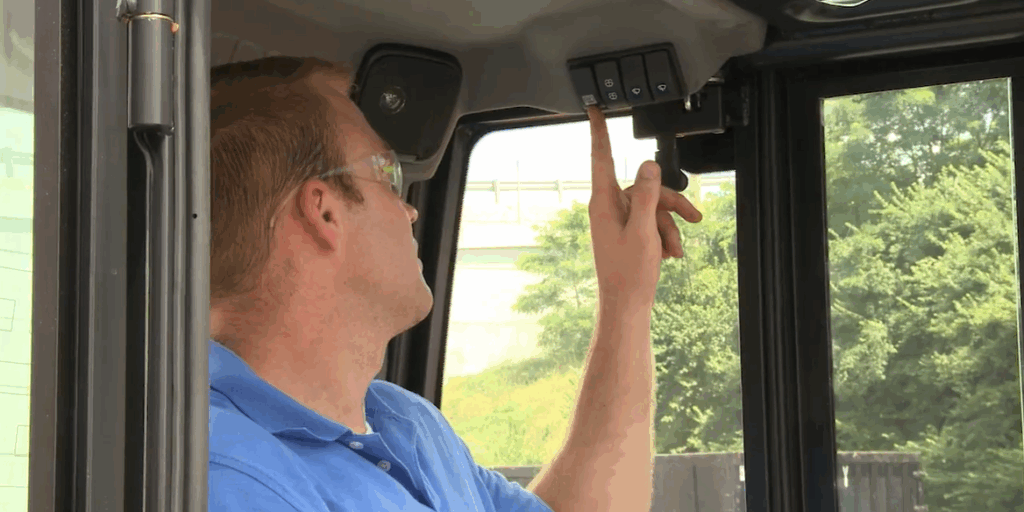
Your forklift’s seat is the single most important element to ensuring forklift operator comfort. Don’t skimp on investing in hi-tech forklift seats. State-of-the-art forklift seats feature shock absorbers, air cushioning, seat fans, multiple angle and position adjustments, and lumbar support.
Operator Compartment
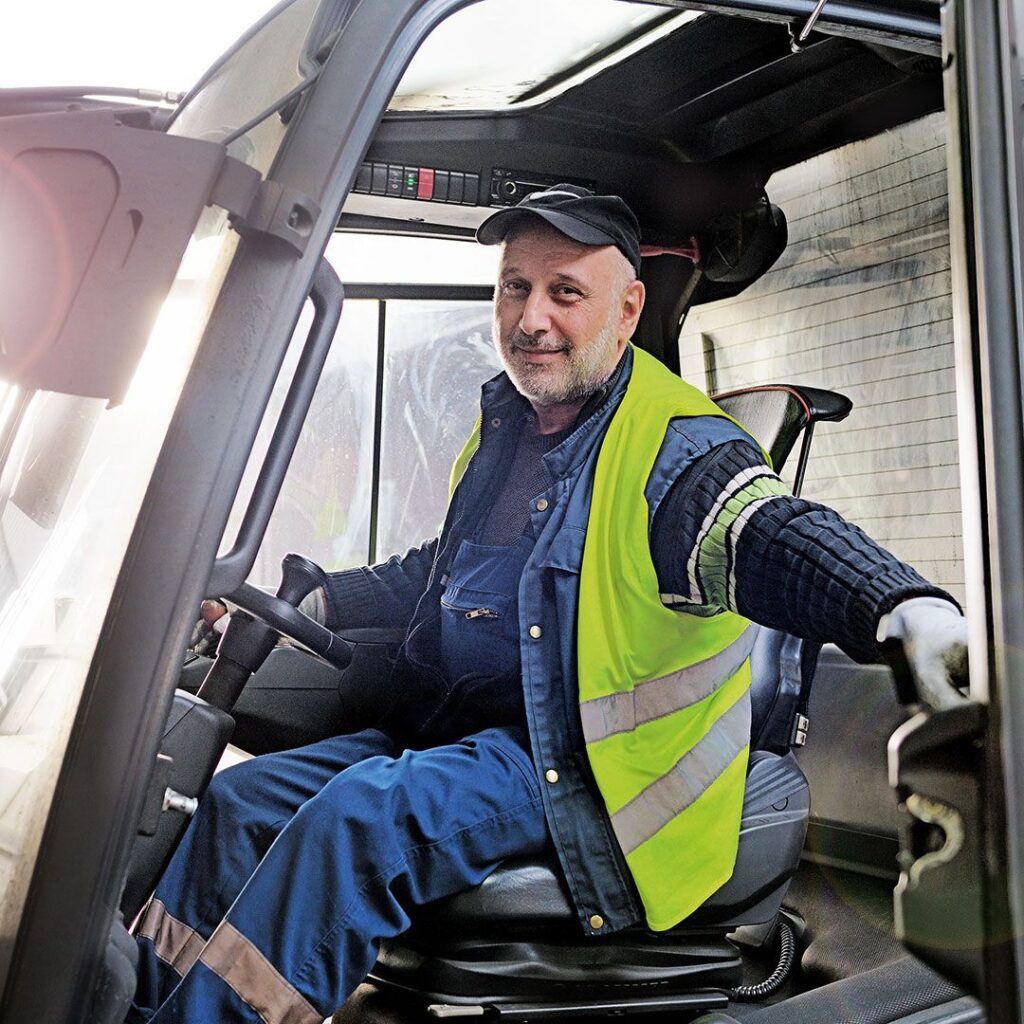
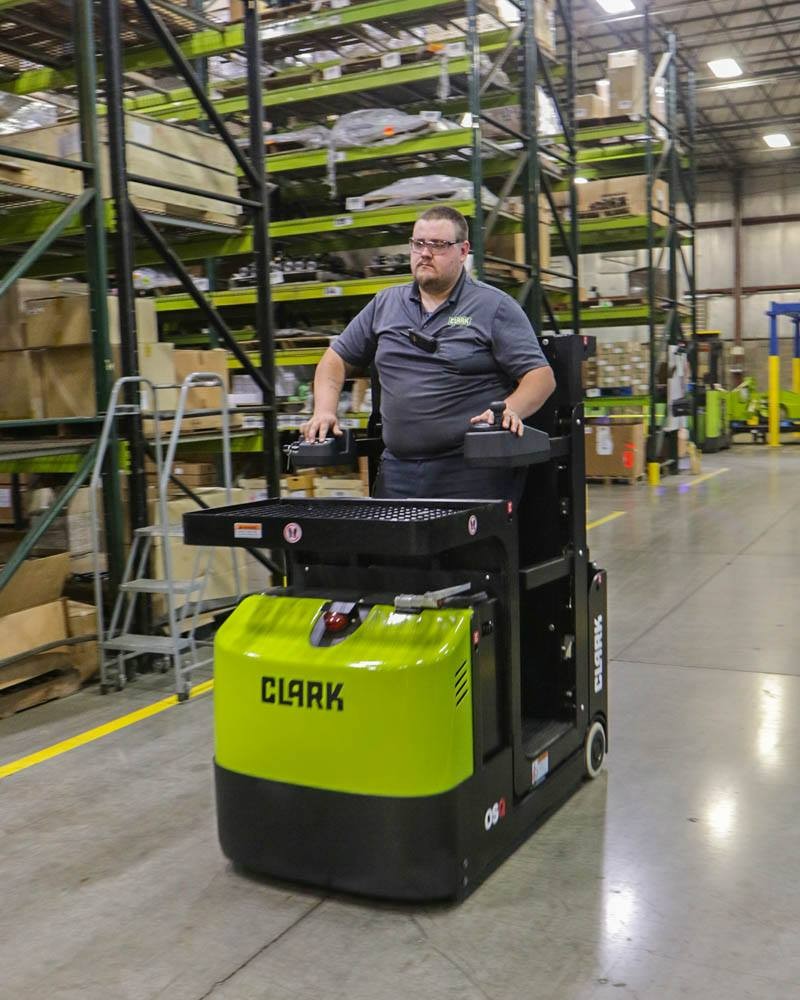
Your operators will vary in height and girth. Make sure the space between the seat and the pedals is comfortable and the controls are easily accessible. A low step-up forklift reduces fatigue if an operator is required to exit the forklift multiple times during a shift.
Steering Wheel
Investing in a telescoping and tilting steering wheel will help accommodate a range of body sizes and make dismounting from the forklift a much easier task. Power-assisted steering takes the effort out of turning a fully loaded forklift.
Ergonomic Design
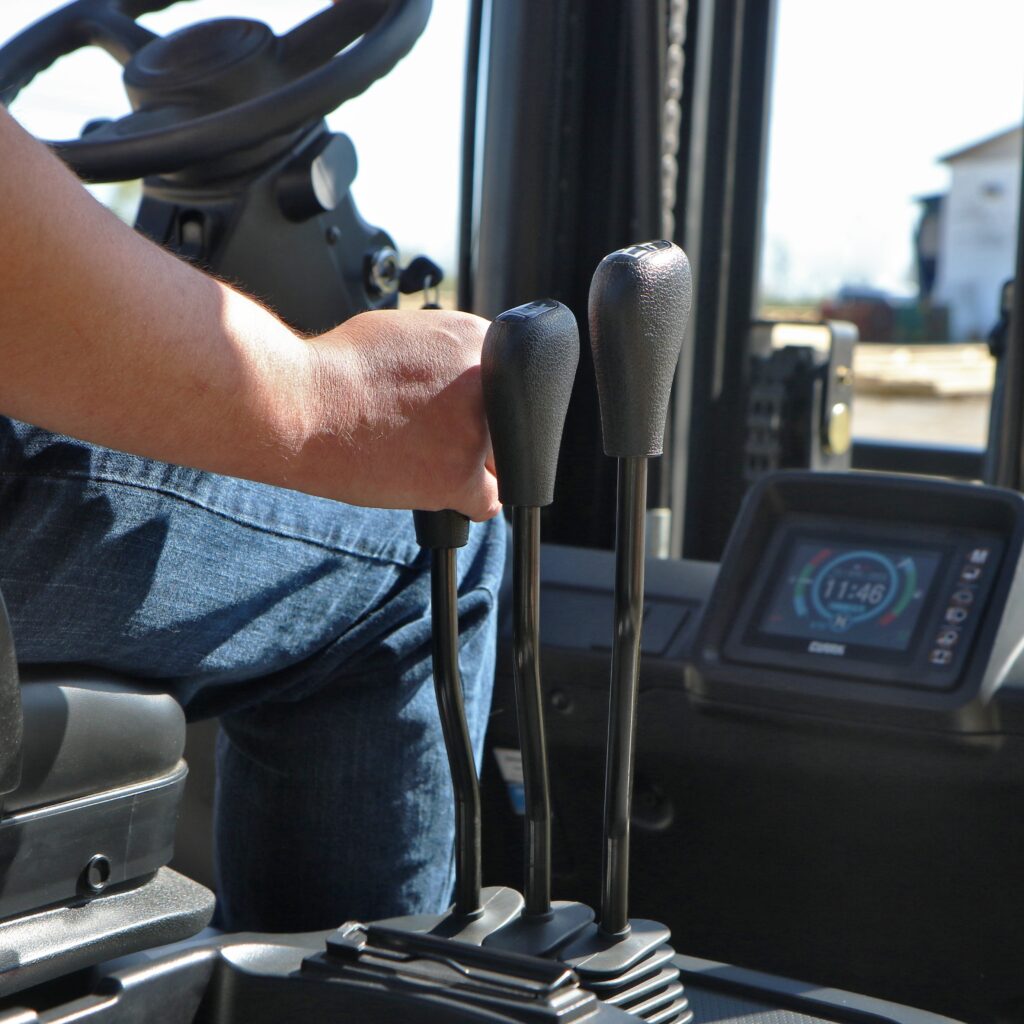
Not having to extend too far to reach the forklift’s controls really helps reduce fatigue. Backup cameras with warning beeps reduce the need for the operator to twist to view what’s behind. The same goes for a forklift with good 360° visibility, avoiding stretching or twisting to see what’s around the mast or frame. Anti-glare control screens reduce eye fatigue. To take a deeper dive into forklift operator ergonomics, take a look at our blog on this topic.
 Cushioned Platform
For stand-up forklifts, the most important element is the cushioning of the platform. Standing for a long period of time on a hard surface can cause back and leg fatigue rather quickly.
Tires and Operator’s Comfort
Tires play a key role in forklift operator comfort. High-quality, well-maintained tires absorb shocks and reduce vibrations caused by uneven surfaces, which in turn helps prevent operator fatigue and strain on the back and joints. Choosing the right tire type—cushion vs. pneumatic—based on your facility’s floor conditions can also improve traction and stability, contributing to both comfort and safety. Not sure if your tires are the right fit? Our experts can help evaluate your current setup and recommend tire types that enhance operator experience.
Climate-controlled Operator Compartment
For jobs where forklifts must be operated in extreme temperature environments or in conditions of rain or snow precipitation, an enclosed, climate-controlled operator cabin is the way to go to ensure productive, happy forklift operators. Air filters for conditions of high levels of airborne particulates improve operator health and comfort.
Comfort Starts with Maintenance
Routine maintenance doesn’t just extend the life of your equipment — it plays a big role in operator comfort. A well-maintained forklift runs more smoothly. There are fewer jerky movements, reduced vibration, and less downtime due to mechanical issues. Key areas like seat suspension, tires, steering components, and brakes should be inspected regularly to prevent discomfort or fatigue during shifts. Proactive maintenance helps create a safer, more pleasant working environment for your team.
Facility Design Considerations
Smooth Floors
Poorly maintained floors with potholes, bumps, and debris can make your forklift operator’s job a nightmare. Enforce good housekeeping and address floor irregularities immediately. Use ergonomically designed floor levelers to prevent sudden jolts, aka “dock shock,” that can cause back pain and injuries.
Avoid Obstacle Courses
A carefully laid-out warehouse, with designated lanes for forklifts and pedestrians, makes your forklift operators’ job easier and less stressful.
Design for Employee Wellbeing
For warehouses and production facilities, ensure that the ambient conditions create a comfortable working atmosphere. Facilities that are too hot, too cold, too dark, or excessively damp or dry impede worker concentration. High noise levels also affect worker attentiveness and health. Enclose noisy equipment with soundproofing or provide forklift operators with noise-canceling hearing protection. Provide adequate lighting to ensure that forklift operators have good visibility of obstacles and pedestrians.
Why Electric Forklifts Are a Smart Choice for Comfort
Electric forklifts can significantly improve operator comfort across several dimensions. Here’s how:
- Quieter Operation: Electric forklifts run much more quietly than internal combustion models, reducing noise fatigue and creating a more pleasant work environment.
- Lower Vibration: Without a combustion engine, electric forklifts produce less vibration, which helps reduce strain on the operator’s body over long shifts.
- Smoother Acceleration and Braking: Electric models often have more responsive controls, allowing for smoother operation and less physical stress.
- Ergonomic Design: Because they don’t require as much space for an engine or fuel tank, electric forklifts often offer more legroom and better visibility—contributing to a more ergonomic and comfortable experience.
- Zero Emissions: Electric forklifts do not emit carbon monoxide (CO), which improves air quality and overall comfort for everyone in the facility.
Overall, electric forklifts offer a cleaner, quieter, and smoother ride. This makes them an excellent choice for operator comfort, especially in indoor or high-cycle environments.
Apex has a wide range of electric forklift models to suit your operation. Visit our product pages or call our team for personalized support.
Let Apex Help You Elevate Operator Comfort
Apex can help improve your material handling efficiency in a wide variety of ways – from providing the right forklifts, attachments, spare parts, and PPE. These can keep your operators safe and comfortable while designing your warehouse for speed, efficiency, safety, and operator job satisfaction. And don’t give short shrift to operator training. An educated forklift driver will understand how to make his/her working conditions more comfortable and productive.
Contact Apex today to find the best equipment suited to your operational needs. Let us help you create a safer, more efficient workplace.
Related Information:
To take a deeper dive into Forklift Operator Ergonomics, take a look at our blog on this topic – Forklift Ergonomics.