
Learn How Automated Forklifts Deliver Results for Your Team…
The concept of the forklift jockey may be going the way of the cowboy. Technological advancements in sensors and navigation systems have heralded an era of autonomous material-handling vehicles untethered to wire or floor-based guidance. Today’s automated forklifts can maneuver through a warehouse or manufacturing facility with the ease, confidence, and safety of an experienced forklift driver, even amidst warehouse workers, pedestrians, and other material-handling vehicles.
By definition, an automated forklift is a manual lift truck modified to function without a human operator. You may also hear the term automated guided forklift (AGF). AGFs are purpose-built for autonomous operation from the outset. Both vehicle types operate using sensors, software, and navigation systems that allow them to lift, transport, and place loads.
Automated forklifts and AGFs outperform human operators in terms of accuracy, safety, and reliability. While forklift operators can tire after long shifts, losing focus and accuracy, autonomous forklifts are ideal for routine, repetitive tasks that do not require high-level decision-making. Additionally, when considering the real cost of hiring, training, and retaining forklift operators, the leap to automation seems more like a small step. Lastly, as a leading cause of industrial accidents, forklifts pose a risk of causing personal harm and operational slowdowns—risks that are minimized by using automated vehicles.
For these reasons and more, it’s worth taking a closer look at automated forklifts and their ideal applications to see how your operation can benefit from making the switch.
5 Smart Applications for Your Automated Forklifts
1. Loading and Unloading Trailers
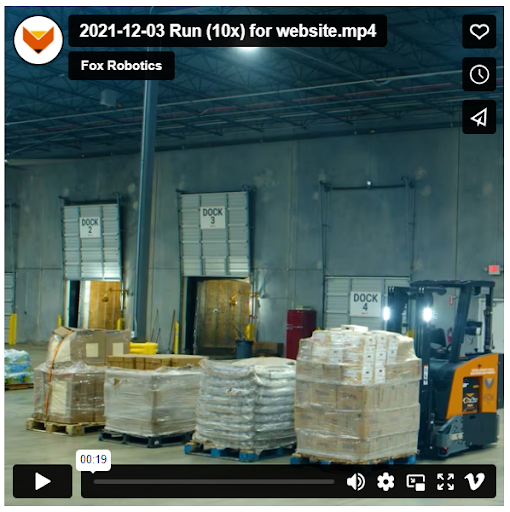 Program your automated forklifts to remove pallets from trailers at the dock and store them in a staging area for scanning, inspection, and labeling. They can also do the operation in reverse –loading trailers from a staging area. The process reaches peak efficiency when trailers carrying identical materials are delivered daily. Similarly, efficiency improves when palletized material is consistently picked up from a designated staging area and loaded onto trailers in a specific pattern over the long term.
2. Automated Storage and Retrieval
Deliver pallets from a staging area directly to a predetermined rack location without forklift operators – a game changer! Both the horizontal and vertical coordinates of the rack location can be programmed to guide the forklift to the correct location. Automated vehicles can also be directed to move a load to the next available storage location if the first one is full. The process works in reverse to retrieve pallets from specific locations and drop them off at a staging location or load them onto a trailer.
3. Moving Raw Materials and Finished Goods To or From a Production Line
Your facility’s WMS (warehouse management system) can automatically signal the automated vehicles into action when the production line is running low on raw materials. When goods come off the line and are palletized, the WMS can also alert an autonomous forklift to pick up the pallet and move it to a storage or staging area for loading onto a truck. If goods are individual items rather than palletized, autonomous tuggers can move bins or racks of product to and from production lines.
4. Picking Station Replenishment and Takeaway
Warehouse workers can assemble pallet orders while the WMS triggers a vehicle when the inventory of specific items is low. The vehicle can then retrieve the items from storage and deliver them to the picking station, ensuring no pause in the picking operation. Once a pick is assembled, an automated forklift can carry it to a packing area.
5. Empty Pallet Management
Pulling empty pallets from a storage area and delivering them to a picking, packing, shipping, or loading area is seamless with an automated forklift. They can also transport empty pallets between different production or assembly lines, ensuring smooth workflow across various operations. When pallets are no longer needed, the forklift can return them to storage or move them to designated holding areas for maintenance or inspection. Additionally, forklifts can be programmed to operate around the clock, increasing overall productivity and reducing downtime.
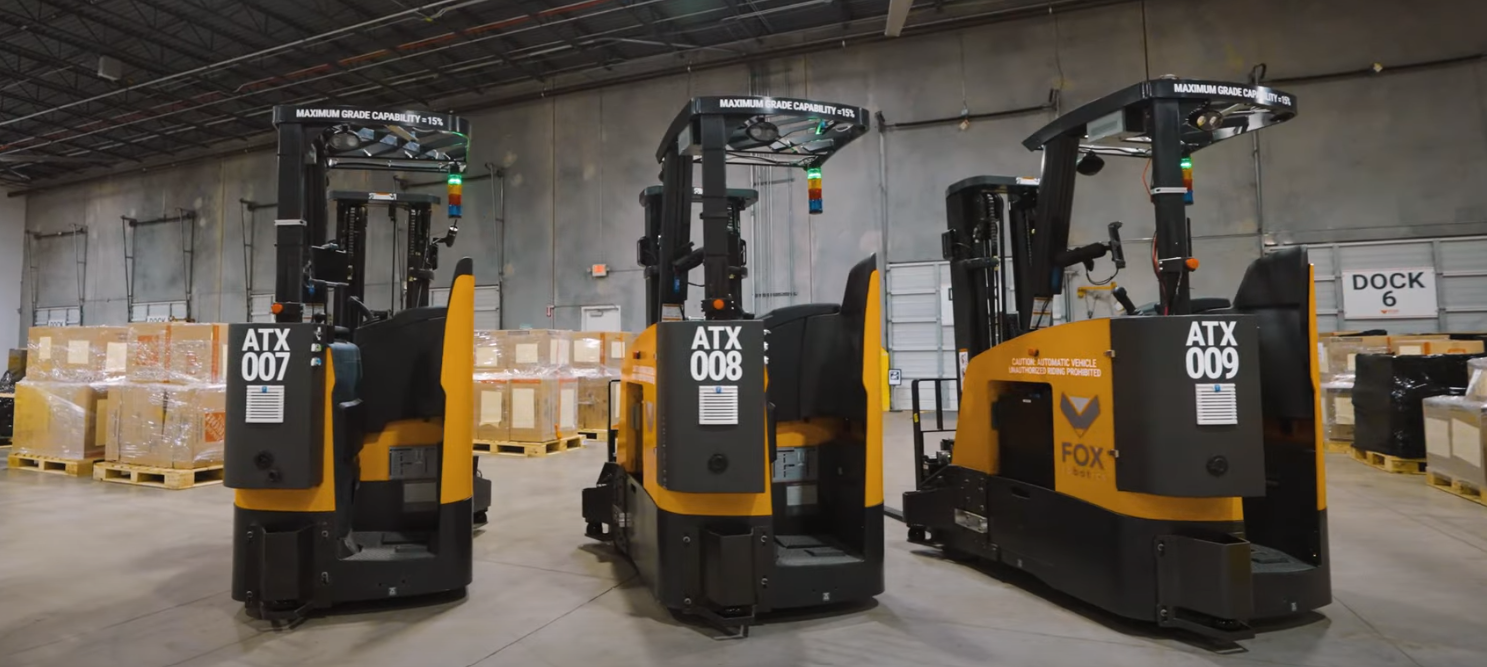
Automated forklifts offer numerous advantages over manual operation in routine material handling tasks, from improving efficiency and accuracy to enhancing safety and reducing operational costs. If you’re ready to make the switch, Apex is here to help. We carry a range of autonomous material-handling vehicles from Linde Material Handling and Fox Robotics. Contact our team for more information and support to find the best vehicles for your needs.