
Forklift Safety Day – The Ideal Time To Review The Principles Of Safe Forklift Operation
The statistics are sobering: between 2018 and 2020, there were 23,370 non-fatal and 227 fatal forklift accidents in the US–a sobering scenario highlighting the need to double down and enforce forklift safety procedures.
With National Forklift Safety Day approaching on June 13, it’s a great time to go over the basic principles of forklift safety. You may think you know them, but it never hurts to step back and review the fundamentals to bring your game up to speed.
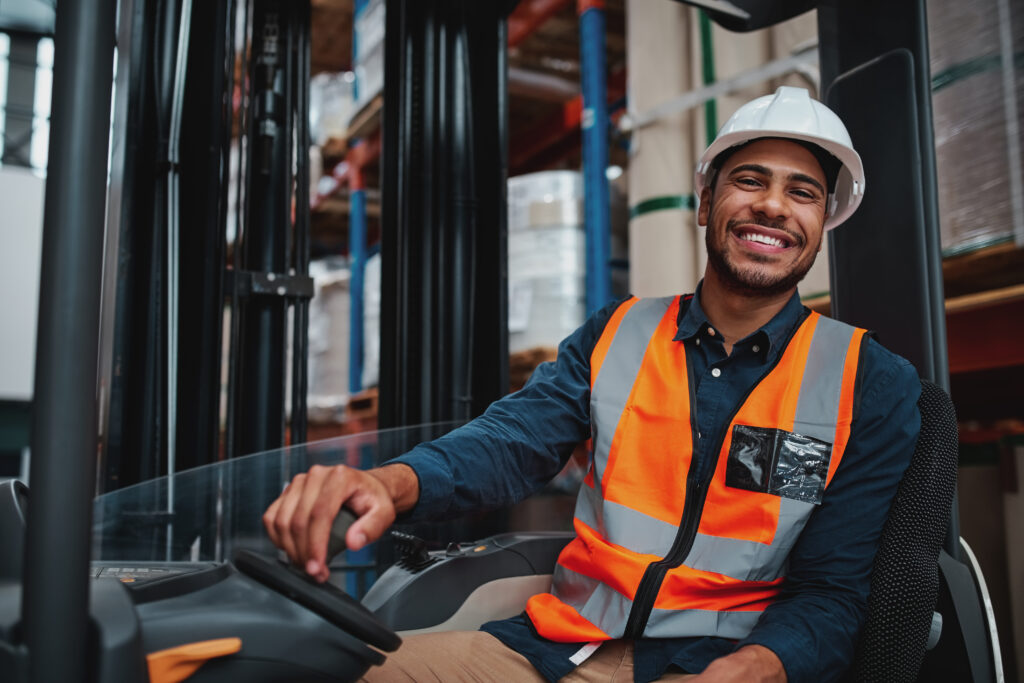
1.Get Certified! – Only trained and certified forklift operators should operate a forklift. As a manager, it’s your responsibility to ensure all forklift operators are certified for the vehicle types they are operating. Take advantage of Apex’s thorough operator training and certification programs for comprehensive, on-site group sessions –new & recertifications.
 2.Prep Your Ride – Perform a thorough inspection of your forklift before you start your shift. Check steering, tires, brakes, battery condition, safety devices, mechanical parts, and more before lifting that first load. Confirm that your forklift is equipped with the appropriate safety devices such as lights, horn, back-up alarms, mirrors and a fire extinguisher, if applicable. And, if your forklift has a safety belt, click it! Tipovers do happen. Best to be buckled in. Download detailed daily checklists for electric and I.C. vehicles —Daily Forklift Checklists.
3.Know Your Limits, Part 1 – Don’t exceed your machine’s load and height specifications. Reaching for the stars or taking on too much weight can result in a disastrous tip-over. Ensure the load is properly centered laterally and that its center of gravity is far enough back on the forks to prevent it from tipping over. Remember that attachments can drastically alter the capacity of a forklift. Know what those restrictions are. For more information on attachments, see: Multiply Your Forklift’s Capability With Forklift Attachments.
4.Know Your Limits, Part 2 – As the operator, you also have capacity limitations. Operating a forklift is a potentially dangerous undertaking that is hard work and requires the driver’s full attention. If you’re fatigued or feel you’re losing concentration, don’t be a hero; alert your manager or take a break.
5.Dress for the Occasion – Loose-fitting clothing can get caught up in the forklift’s mechanism with ugly results. Protect hands and feet with rugged work gloves and sturdy safety shoes. Wear a hard hat and high-visibility work clothes. If you are operating a forklift in cold, wet, or snowy weather, ensure you’re dressed comfortably. An uncomfortable forklift operator takes shortcuts that could have dire consequences. If your forklift has a seat belt, use it.
6.Drive Defensively – If your load prevents you from seeing what’s in front of you, enlist a coworker to help direct you. Be aware of pedestrians, other forklifts, and immovable objects. Use your horn at intersections. If your facility has floor-marked vehicle lanes, respect them. Look out for road hazards–debris, spilled liquids, water, snow, and ice.
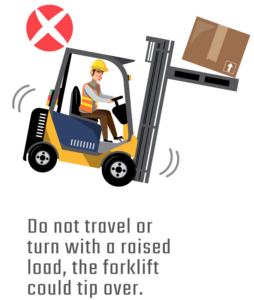
7.Slow Down! – Don’t be a forklift cowboy or cowgirl. Be careful making turns with a loaded forklift. Don’t drive with an elevated load or raise or lower the load while the forklift is in motion. Be extra careful driving over wet or slippery surfaces.
8.Practice Dock Sense – Loading and unloading trucks at the dock is one of the most potentially dangerous operations a forklift driver will encounter. Make sure the truck or trailer is securely connected to the dock. For full details on this topic, see our blog Mind The Gap–Forklift Safety Tips for Loading and Unloading Tractor Trailers.
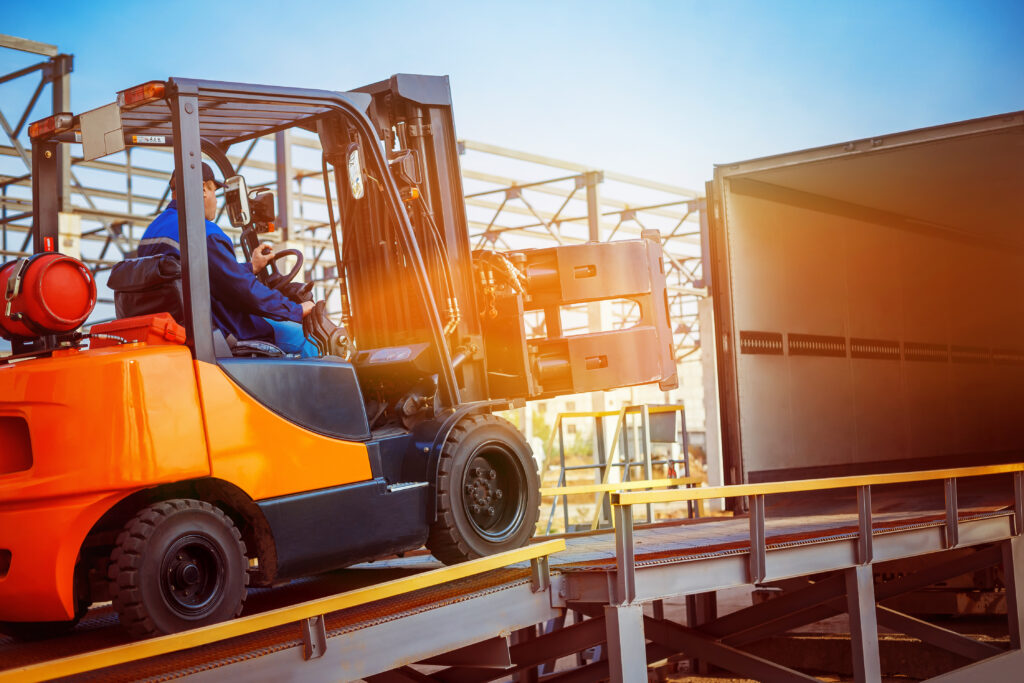
9.Know the Angles – Moving a load up or down a ramp can be tricky. Always have your cab on the downside of the load – and never turn on a ramp. For full details on how to drive forklifts on ramps, see our blog: Forklift Safety Tips For Driving on Ramps and Inclines.
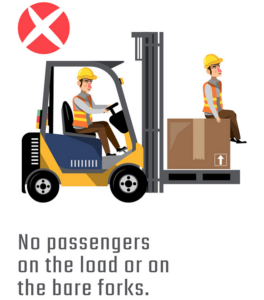 10.Pallets are Not for People – And vice versa. Don’t let coworkers use the forklift’s forks as an elevated work platform. Use a dedicated attachment for elevating workers. Never drive with people on the load or forks.
11.The Ins and Outs – Use care getting in or out of your forklift. Be aware of wet, oily, or slippery surfaces. Look out for debris on the floor. Use the ‘three points of contact’ method when mounting or dismounting your forklift.
12.Make a Strong Finish – At the end of your shift, note any operational or maintenance issues with the forklift. Park it in a safe place, lower the forks, engage the parking brake, turn it off, and give the key to the next operator or your manager.
13.Stay Up To Speed – Periodic retraining and recertification help to keep operators in tune with the latest advances in forklift technology and safety devices. Take advantage of opportunities to broaden your knowledge of forklifts and all the bells and whistles that are being incorporated into new machines.
14.Take Pride in Your Work – Forklift operation is a skilled position. Respect the Ride.
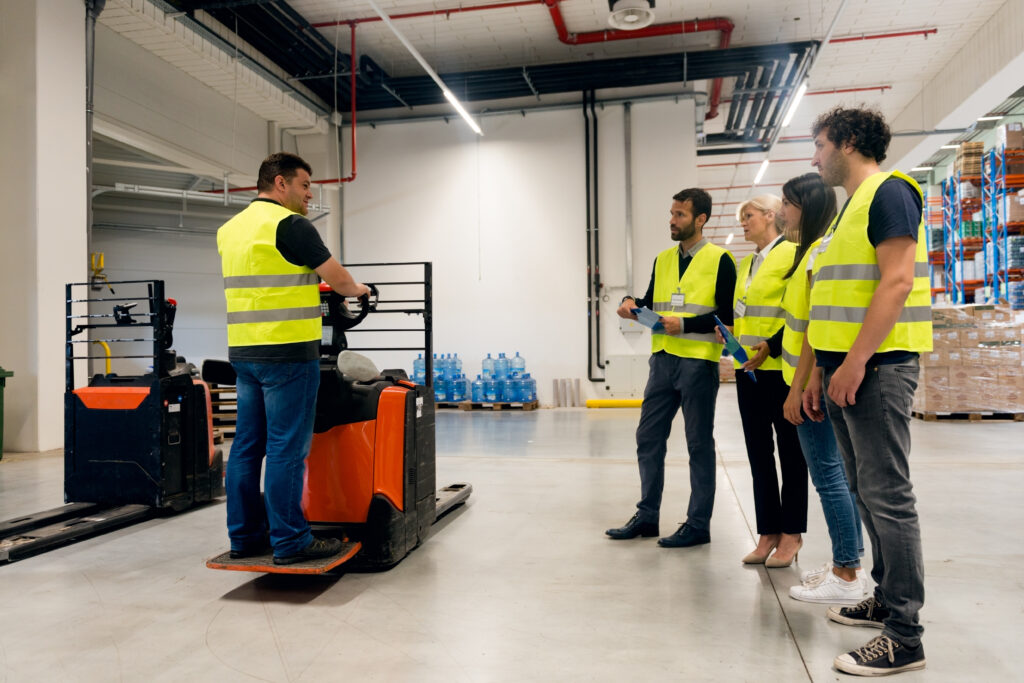
Apex can help you keep your forklift fleet operating in a safe and efficient manner. We offer training for forklift operators and warehouse workers who have to coexist with forklifts. We can also outfit your fleet with safety devices such as alarms, lights, and sounds to decrease the chances of a forklift accident. If there’s a question about material handling in the Greater Chicago Area, Apex has the answer. Give us a call today!