
Lithium-Ion Forklift Batteries Keep Your Team Moving in the Cold
Many perishable products, including pharmaceuticals, food and beverage, and raw materials, must be maintained at refrigerator or freezer temperatures throughout their supply-chain journey. Although cold environments are ideal for storing and safekeeping these products, but they can strain your forklift batteries and perfomance. So what’s the best choice for cold storage – lithium-ion forklift batteries or lead-acid?
As the temperature decreases, the power level of lead-acid batteries decreases considerably. At 30°F, a lead-acid battery operates at 75% efficiency. At 10°F, efficiency plunges to 56%, and when you get down to 0°, you get a paltry 45% efficiency.
What’s more, charging a lead-acid battery used in cold storage presents an even greater challenge: the forklift must be taken out of the cold to change or recharge the battery, reducing its availability and creating condensation that will shorten the life of the forklift and its mechanical parts.
The solution? Li-ion forklift batteries. While the upfront cost of a Li-ion battery is higher, the investment is rapidly paid back in higher efficiency, greater uptime, and a longer lifespan of the forklift.
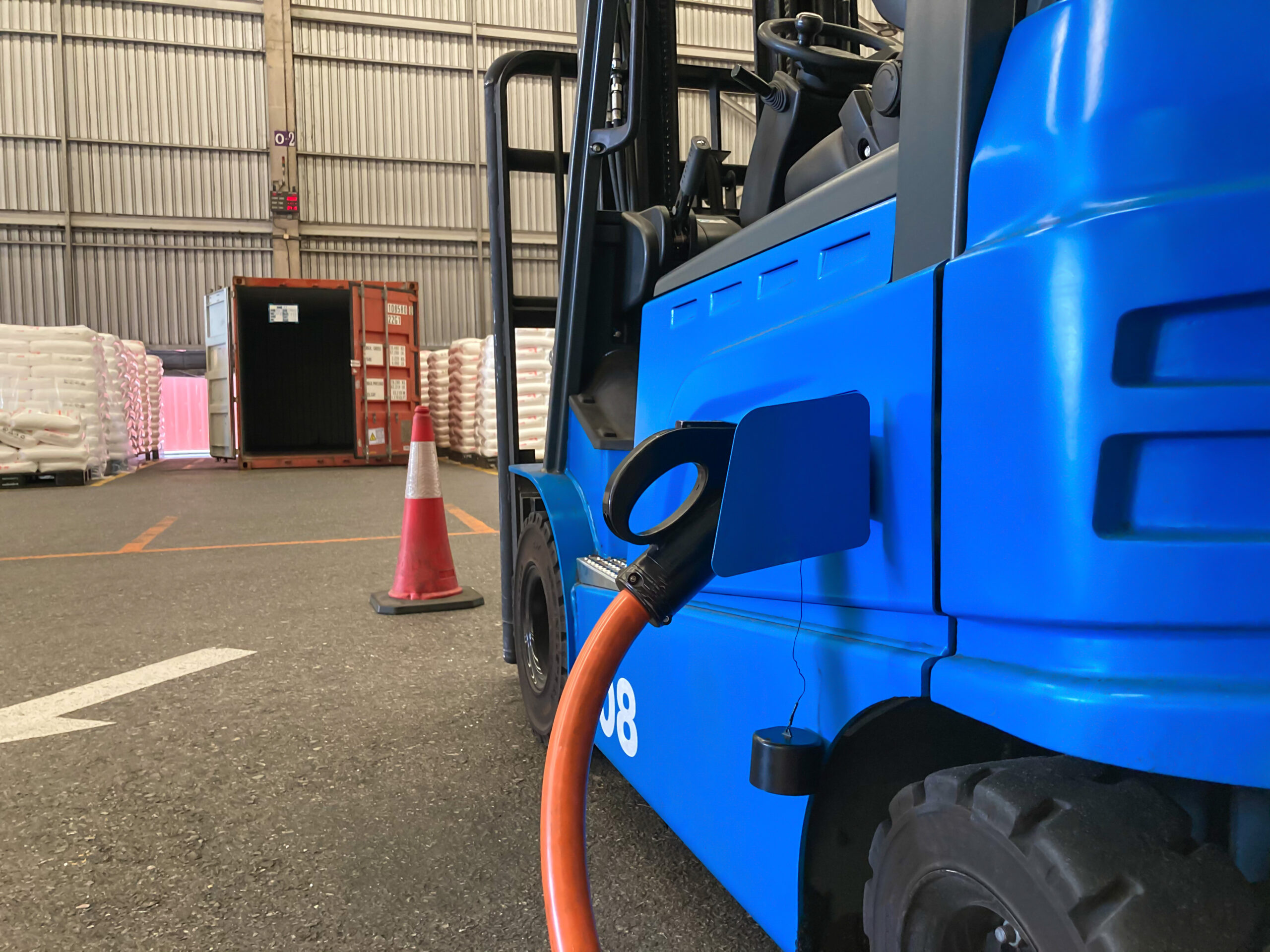
Advantages of Li-ion forklift batteries in cold storage applications
- No Power Loss – Li-ion batteries lose very little power as the temperature drops. They maintain constant voltage throughout their operation cycle.
- Longer Battery Life – Using a Li-ion battery in a cold environment does not shorten its usable life. In contrast, a lead-acid battery’s lifespan is severely shortened by use in a refrigerated environment.
- Improved Technology – Li-ion battery manufacturers are now including integral heaters and battery management systems that help maintain the battery at optimal temperature for both usage and recharge.
- Quick Charging – Forklifts powered by Li-ion batteries can take advantage of opportunity charging. A forklift’s Li-ion battery can be charged in less than 90 minutes, greatly increasing the forklift’s availability in the cold warehouse. This makes Li-ion-powered forklifts particularly suited for multi-shift and 24/7 operation.
- Cold Charging – A forklift with a Li-ion battery can be charged right in the cold storage area. The charging system can be installed directly in the refrigerated warehouse. This avoids the cumbersome and life-shortening process of removing the forklift from the warehouse, subjecting it to the problems associated with condensation.
- Safer Charging – Li-ion batteries do not emit any gasses when charging. A lead-acid battery, in contrast, gives off hydrogen, which can accumulate in a sealed freezer, risking the danger of ignition. Acid spills are another potential downside of lead-acid batteries. That becomes especially troublesome in a refrigerated warehouse storing perishable items, where the risk of contamination is present. Li-ion batteries also eliminate the need for battery changing stations, cranes or hoists to change batteries – freeing up space in your warehouse and improving fleet efficiency.
- Don’t Forget Pallet Jacks – Pallet jacks and walkies that are used to load and unload refrigerated trucks enjoy the same benefits from using Li-ion batteries. With lead-acid batteries, the jack would have to be removed from the refrigerated environment for recharging, thus reducing its availability and subjecting it to the problems caused by condensation. Pallet jacks can be charged right in the refrigerated truck.
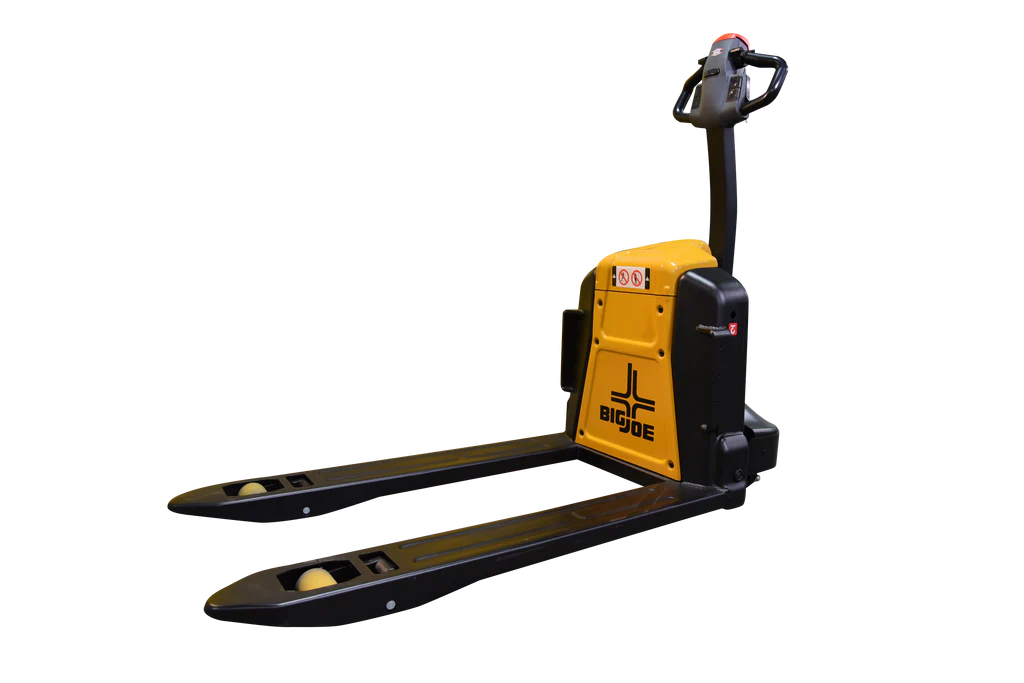
Clearly, a forklift or pallet jack powered by a Li-ion battery offers major advantages in refrigerated or freezer-temperature warehouses. Apex offers a line of Li-ion-powered forklifts from Clark, BYD and Big Joe.
Got a refrigerated warehouse? Talk to your Apex representative to pick out the material handling vehicle that best suits your application. In the Chicago area, it’s Apex for all your warehouse and material handling needs.