When Should You Use an IC Forklift Indoors?
In general, electric-powered forklifts are recommended for indoor use, but there are situations when you either have to or want to use an internal-combustion forklift indoors. In these cases, special attention should be paid to the safety and environmental factors related to the indoor use of an IC forklift.
Here are some of the factors that might impact the decision to use an IC forklift indoors:
- High Electricity Costs – If your facility is located in an area of very high electricity costs, it may make economic sense to use an IC forklift. The same logic holds if you are in a region of abundant and inexpensive natural gas.
- Lack of charging infrastructure – Swapping out a lead-acid battery is a cumbersome task requiring a dedicated space. If you only employ a small number of forklifts and they are spread out across a large area, investing in the installation of a battery charging station may not be a good allocation of available capital.
- Need for Power – While electric forklifts are increasingly capable of handling heavier loads and lifting them to greater heights, IC forklifts still offer greater instantaneous power. This is especially true if you have to move heavy loads up a relatively steep ramp.
- Need for Quick Recharging – While you can get relatively quick recharging from a Li-ion battery-powered forklift, let’s face it: There’s almost nothing easier than quickly swapping out a propane tank and getting back to work. For more information about safe refueling, check out the OSHA etool here.
- Up-front Cost – Electric forklifts have a higher initial cost than IC forklifts. Your budget may not have the room to allow you to invest in a lead-acid or Li-ion forklift. Be aware, however, that IC-powered forklifts require more maintenance, which can offset some of their advantage in total cost of ownership.
Guidelines for Indoor Use of an IC Forklift
Once you’ve decided that you have to go with an IC-powered forklift for your indoor application, there are some guidelines for using these vehicles indoors.
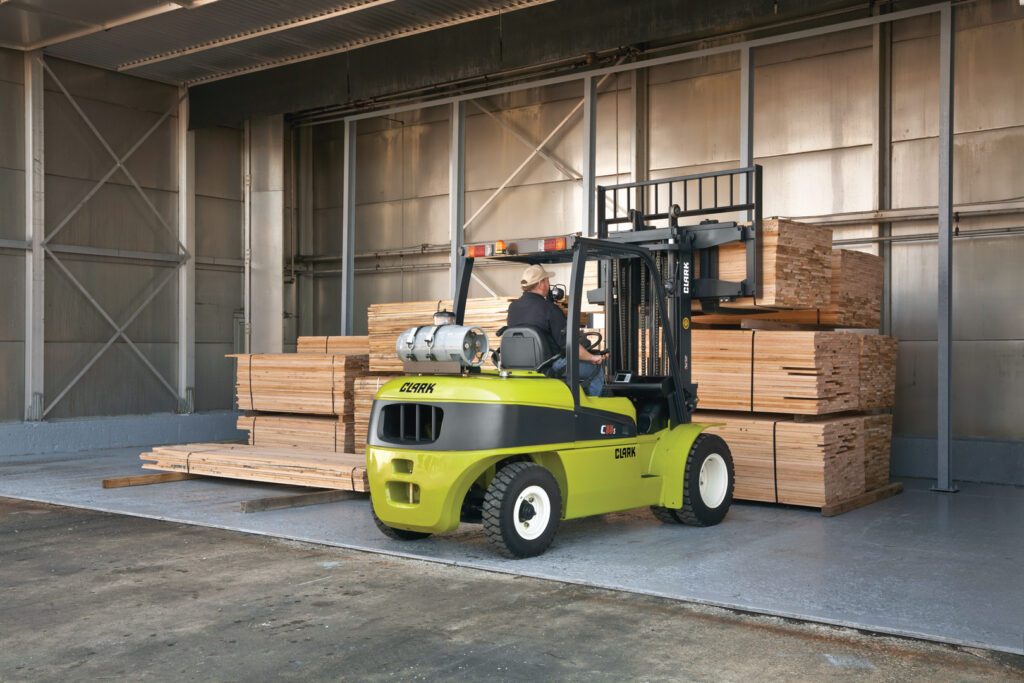
- Avoid using gas- or diesel-powered forklifts indoors – Unless you have a warehouse that’s open to the outside, avoid using these types of forklifts. They produce toxic levels of carbon monoxide (CO) and nitrous oxides (NOx). If your warehouse is more of a shed that’s storing building materials, a gas- or diesel-powered forklift is probably OK. For any other indoor application, stick with propane or LPG-powered forklifts. They burn cleaner and produce lower levels of toxic combustion products.
- Ensure that your warehouse has adequate ventilation – Even with cleaner burning propane or LPG-powered forklifts, unhealthy levels of CO or NOx can accumulate. If your warehouse is located in a region of extreme climate conditions, either very cold (like that of a Chicago winter!) or very hot, it may not be practical to use an IC forklift because of the energy loss of heating or cooling your facility. In that case, opt for an electric forklift.
- Install toxic gas sensors – CO is an odorless and dangerous gas. It can accumulate in a building without being noticed. Building codes require that CO detectors be installed in residences. Likewise, your facility should have CO and NOx detectors that set off an alarm if the concentration of these toxic gasses reaches unsafe levels.
- Don’t scrimp on maintenance – IC-powered forklifts require more maintenance than electric-powered forklifts. Normally, a proactive maintenance program provides a higher fuel efficiency level and is driven by economic considerations. But it’s all the more important if you plan to use the forklift indoors, as it also becomes a safety issue.
- Invest in Training – Make sure your operators are thoroughly trained on the benefits and potential hazards of operating an IC forklift indoors. As we’ve seen in this discussion, there are very specific guidelines that must be followed for using a propane or LPG-powered forklift indoors. Your forklift operators need to be fully aware of them.
Whether you ultimately decide to go with either electric or IC forklifts, remember to contact your Apex representative to help you select the Clark, Big Joe or BYD truck that best suits your needs. We can also provide you with the appropriate refueling infrastructure for your warehouse and the forklift operator training your drivers need to provide you the safest and most efficient operation of your forklifts. In the Chicagoland area, Apex is your best choice for all warehouse and material handling needs.