
Forklift Speed – What’s Safe and What’s Not?
According to the U.S. Bureau of Labor Statistics, from 2011 to 2017, 614 workers lost their lives in forklift-related incidents, and more than 7,000 nonfatal injuries resulted in days away from work and added expenses every year.
Traveling at the speed of light is good for space…not for a forklift. Forklift speed is an important factor in safe operation; therefore, knowing how to get the job done and still meet processing goals safely is important. Proper training and established operating parameters will get your team where they need to go and are the best insurance policy against accidents.
Forklift operator training and certification are required to satisfy OSHA regulations and ensure the safety of forklift operators and other warehouse workers. One small operational mistake can spell chaos for your workers and operation. In this blog, we’ll talk about what OSHA says about forklift speeds, the conditions that affect safe stopping, and how to enable safe forklift operation.
What Does OSHA Say About Forklift Speed?
OSHA mandates that every operator be trained and certified to handle a forklift. It is also illegal for anyone under the age of 18 to operate a forklift.
OSHA does not provide specific forklift speed limits, but rather two main regulations regarding what is deemed a safe forklift speed:
- Forklifts must be operated at a speed limit that enables them to stop safely under all travel conditions.
- When turning a forklift, speed must be decreased to a safe level by turning the hand steering wheel in a smooth, sweeping motion and turning it at a moderate rate when driven at a very low speed.
OHSA allows each employer the autonomy to set their forklift speed limits at their facility based on the guidelines above. Here are some additional factors to consider.
- Type of forklift
- Manufacturer’s recommended speed limitations
- Weight and type of load
- Sufficient stopping distances – always keep at least three truck lengths between you and any vehicle you are following
- Surface conditions
- Pedestrian traffic
- Other safety issues
Note: Speed limits can be set on electric forklifts. If you haven’t already implemented a speed limit on your forklifts, you should consider doing so as another way to ensure the safety of your fleet and it’s operators.
What Conditions Affect Safe Stopping?
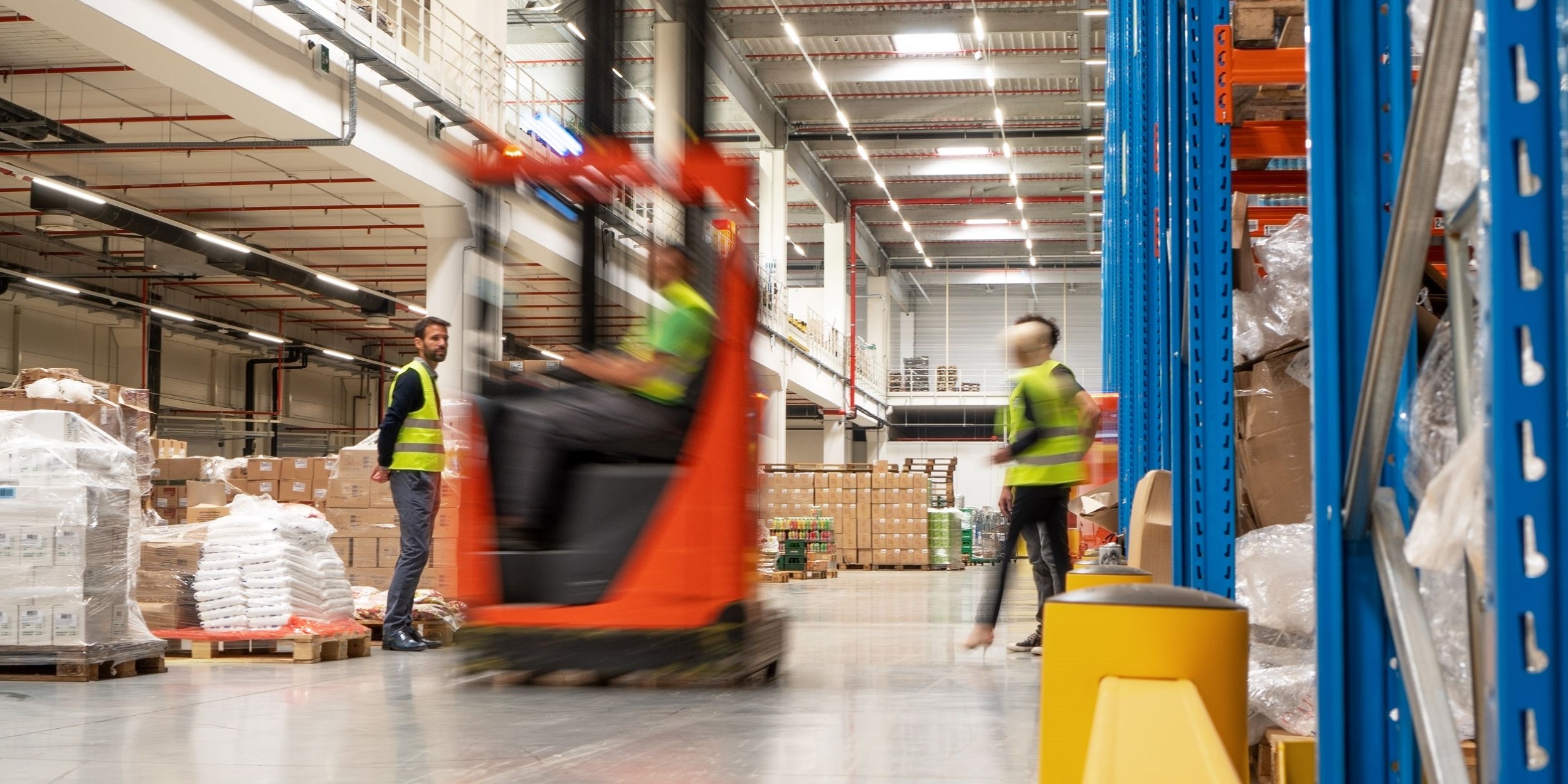 Stopping safely is predicated on:
- Forklift speed – A forklift traveling too fast is an accident waiting to happen. Speed limits should be set according to the facility conditions, equipment operator instructions, and the considerations provided by OHSA.
- Load weight – Forklifts aren’t the fastest machines around, but it doesn’t take much speed for them to become unsafe due to their heavy loads and weight. Know your forklift’s weight capacity, and do not exceed it. This information is found on your forklift’s data plate.
- Floor/ground surface – Pay attention to surface conditions. Drive slowly on wet, slippery, or powder-covered surfaces. Look out for dips, bumps, and loose objects. All of these conditions can cause the loss of control and steering, or bring a forklift to a halt. We have a great selection of sweepers and scrubbers to ensure that your warehouse’s floor remains clean and safe.
- Forklift condition – Keeping your forklifts in tip-top condition will help them operate more efficiently and extend the vehicle’s useful life. Preventative maintenance is more economical than having a component fail and being down a vehicle. This is why adherence to your planned forklift maintenance and inspection schedules is important. Enforcing a pre-shift inspection can go a long way to extending the life of your forklifts. Here’s a link to our downloadable Pre-Shift Inspection Forms to make it easier. Choose one or both — Electric or Internal Combustion. Apex is your local forklift specialist team and we’re here to help you to maintain your forklift fleet.
- Tires – Tires and brakes are checked during the inspection process, but the wear on tires can easily go unnoticed. Ensuring that tires are properly inflated and kept within safe operating parameters have a positive effect on the required stopping distance.
- Safe traveling – Always drive and look in the direction with the best visibility. Ask for assistance if the load or another obstacle is blocking your view. Travel with the load as low to the floor as possible. When traveling in aisles, know the traffic rules for your work area. When possible, drive in the center if there is no traffic. Leave plenty of stopping distance. Always keep at least three truck lengths between you and any vehicle you are following. Approach intersections with caution. Slow down or stop, sound your horn, and proceed when it is safe.
- Ramps and inclines – When traveling with a pallet load, the load should always point up the incline, regardless of the direction of travel. When traveling without a load, the forks should point downgrade, regardless of the direction of travel
- Employees – People are your greatest asset. Ensure that they are properly trained and maintain current training. Take care of and be kind to them. Ensure that they receive (and actually take) proper breaks and are hydrated in the summer.
Tips to Support Safe Forklift Operation
It’s the operator’s responsibility to read and understand the manufacturer’s manual and all safety manuals before operating a forklift. Each operator is responsible for the care, control, and custody of their forklift, as well as the safety of those around them. However, facility managers can support their operators by implementing these helpful recommendations.
Forklift Safety Tips
- Map out forklift paths – Assign drivers to specific areas or designate vehicle vs. pedestrian areas. A lack of signals, alerts, or dedicated forklift and pedestrian lanes can lead to a worker being hit by a forklift.
- Highway guardrails and bollards – Keep vehicles away from pedestrians and sensitive areas with durable guarding. They are highly visible and effective for securing warehouse utilities and equipment, permanent structures, pedestrian spaces, conveyors, doorways, dock areas, and more against accidental forklift strikes. Custom-fit your guardrails with a call to the Apex team to protect people and designated work areas.
- Floor stripping – Use paint or tape to cost-effectively denote pedestrian vs. vehicle traffic. The paint or tape is easy to modify if workflow patterns change and serve to support the tenets of the 5S methodology for maintaining a clean, uncluttered, safe, and organized facility focusing on reducing waste and optimizing productivity. The better your team can navigate the workspace, the more efficient and productive they will be.
- Safety tech – If you’d like to take things to the next level, you can use pedestrian gates, ceiling-mounted alert sensors, lighted floor signs, mirrors, and intersection stop/go lights.
- Signage – Post forklift speed signs that are visible to drivers. There are speed limit signs on our roads for safety, and forklifts should also be driven within posted speed limits.
- Visibility – In addition to forklift speed, lack of visibility is a key cause of forklift accidents. A pedestrian that is in a forklift’s blind spot or one who is standing too close to a forklift or racking can cause forklift accidents when driving too fast. Always drive with caution and at a sensible speed to ensure you see the unexpected. Also use your forklift mirrors – they’re there for a reason.
- OSHA-compliant training – It can’t be emphasized enough that this is the most effective way to prevent forklift accidents. Apex on-site group training will ensure that all forklift operators are thoroughly trained and certified on the specific type of powered industrial vehicle they will be operating. We also provide recertification required every three years for Class 1-5 vehicle operators and every 5 years for Class 7 operators.
Avoid the Caution Flag –Call Apex for All Your Forklift Needs
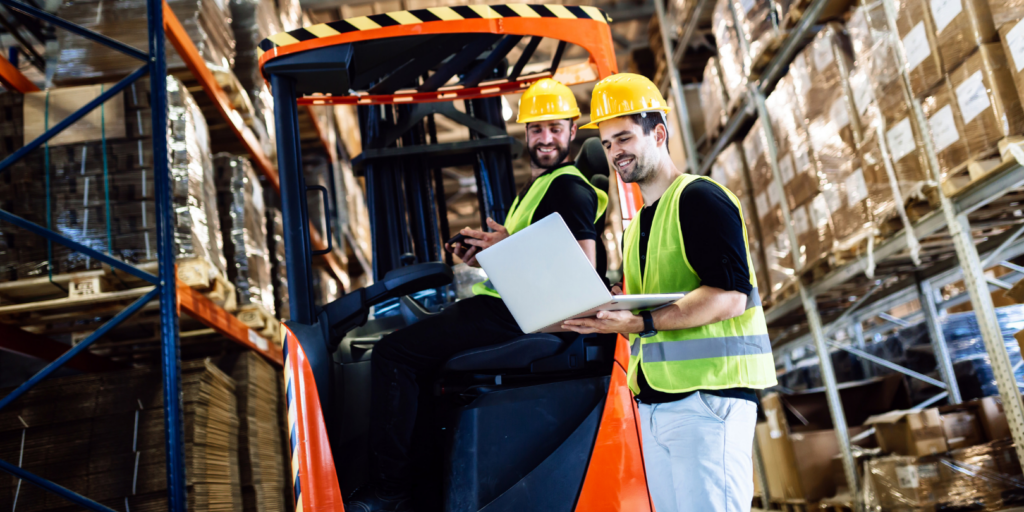
Apex is here to help you to operate the safest and most efficient warehouse operation. Our Forklift Operator Certification Program satisfies all state and federal OSHA requirements and offers comprehensive operator training on Class 1-5 & Class 7 industrial vehicles. Your operators will understand their equipment and learn to be safe, defensive drivers able to recognize and address potential hazards as they arise.
Contact us to schedule your forklift operator training and certifications to optimize your fleet’s productivity. Apex is your material handling headquarters in the Chicagoland area.