
Safety & Efficiency Driven Through Comprehensive Forklift Training
Let’s face it. Winging it rarely produces a good outcome. That’s especially true when it comes to operating a forklift for an extended period of time. There is absolutely no substitute for the benefits of a well-designed forklift training program.
What’s more, OSHA requires that all forklift operators are trained in an OSHA-compliant program and obtain certification that they are qualified to operate the forklifts they’ll be using.
The Apex Forklift Operator Certification Program satisfies all state and federal OSHA requirements. It offers comprehensive operator training on all varieties of powered industrial vehicles–from pallet jacks to telehandlers. This blog will look at the 20 main takeaways you’ll get from the Apex forklift training program.
1. Understanding the reasons for forklift training. It may seem obvious, but there is verifiable data proving that forklift training reduces accidents, improves productivity, and increases job satisfaction. Once you’re sold on the importance of training, you’re more likely to follow the steps you learn in forklift training
2. The Importance of the manufacturer’s operating & safety manual. This document will give you all the information you need to safely and productively operate your forklift. There’s no substitute for spending time thoroughly digesting the material contained within
3. The most common causes of forklift accidents. Operating a forklift in a busy warehouse containing pallet racking, expensive inventory, and populated by workers picking, sorting, and moving goods requires a high level of vigilance and caution. In forklift training, you’ll review the conditions that lead to forklift accidents and how to avoid them. We recommend supplementing your forklift training with our Operator Instruction videos by rack types, such as pallet flow, push-back, and drive-in rack systems. We also offer a free app to use in assessing rack damage should it occur –the Apex Rack Repair App is easy-to-use and connects you with our PRO team to evaluate damage severity and promptly provide repair solutions. Check it out on Google Play or the App Store.
4. How to avoid tip overs and rollovers. These are the #1 cause of forklift accidents. You’ll learn how to balance the load on your forklift, raise and lower the load, and drive the forklift in a manner that will eliminate the possibility of a rollover
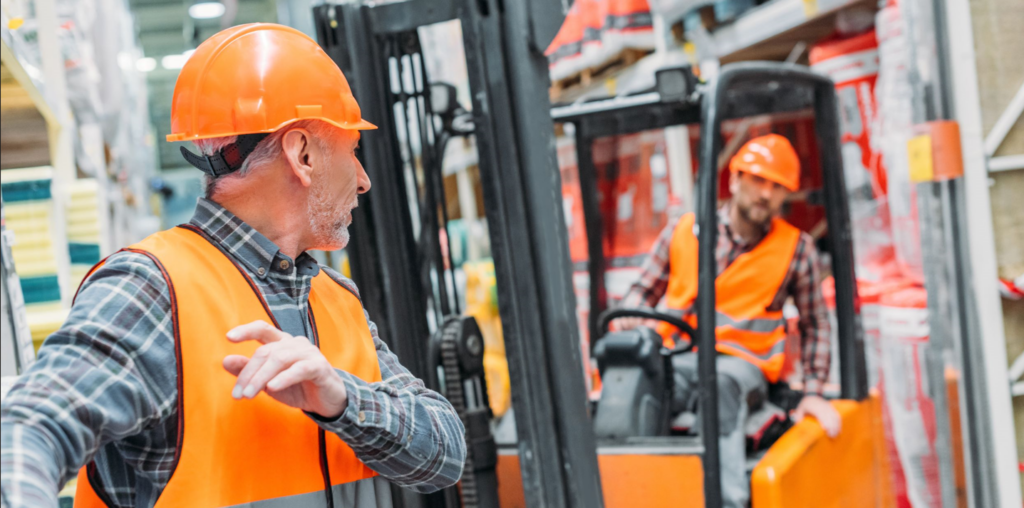
5. Defensive forklift driving. You’ll review all the hazards associated with driving a forklift in a busy plant or warehouse and learn how awareness of your surroundings and mindfulness of pedestrians and workers makes for safe forklift operation.
6. The importance of safety alert symbols. A well-trained forklift operator must understand the implications and differences between danger, warning, and caution symbols
7. The classes of forklifts, the capacities, and operating characteristics. You’ll learn the general guidelines for safely and efficiently operating internal combustion (IC) and battery-powered forklifts, the difference between straddle and counterbalanced forklifts, and how pallet jacks and stock pickers differ from forklifts in their capabilities.
8. The basic components of a forklift and proper terminology. To accurately communicate details about your forklift, you need to be able to identify its parts and what they do.
9. Understanding forklift truck measurements. Learning the difference between collapsed height and free lift height, maximum fork height and extended height, and how these need to be considered in terms of the ceiling, overhead obstacle, and rack heights in your warehouse.
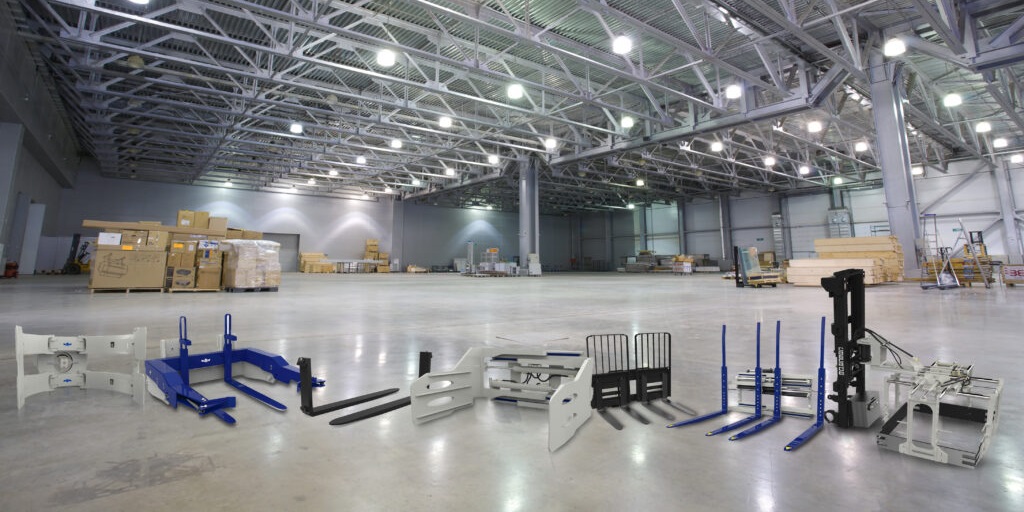
10. How to use forklift attachments. Drum handlers, layer pickers, carton clamps, multiple load handlers, and other attachments drastically change the operating parameters of a forklift. You’ll learn how to safely and productively work with these very useful forklift accessories.
11. Understanding your forklift’s data plate information. The machine’s data plate provides most of the information you need to know about the vehicle, including capacity, lift height, truck weight, and location restrictions. It is incumbent upon forklift operators to be thoroughly knowledgeable about the vehicle they’re operating.
12. Understanding the stability triangle. Ensuring your forklift’s center of gravity is within the stability triangle is vital to safe forklift operation. A fully loaded forklift’s center of gravity must lie within the stability triangle. The center of gravity depends on several factors: the weight and height of the load, the angle of the forks, and the speed of the forklift.
13. Traveling on ramps and inclines. Learn the essential aspects of driving a loaded or unloaded forklift up or down a ramp. Understand the dangers inherent in turning on a ramp or driving too close to the edge of a ramp.
14. Dock and trailer safety. Learn how to make sure a trailer won’t move and how to load or unload a trailer safely. Understand the dangers of the gap between the dock and the trailer.
15. Understanding the implications of forklift speed. How to accelerate and stop a forklift without causing the load to shift—safety precautions to observe at intersections and pedestrian crossings.
16. How to safely use a personnel lift. Never lift a person standing on your forklift forks or on a pallet. Personnel lifts are specifically designed for that purpose. Training will demonstrate how to properly attach and deploy these useful accessories.
17. What to do in the case of an accident. How to ensure personnel and product safety and limit damage after an event. How to report and document an incident. Reviewing past accidents specific to your facility and learning how to avoid them.
18. Forklift power sources. Learn the protocols and differences in operating and recharging IC forklifts, lead-acid battery forklifts, and Li-ion battery forklifts.
19. The importance of the pre-shift inspection. Learn the value of this necessary process and understand why it is vital for safe and productive forklift usage. Download our Daily Forklift Inspection Checklists.
20. Forklift start-up and shutdown procedures. Learn the proper procedure for getting situated and starting up your forklift at the beginning of your shift. Similarly, review the steps in terminating your use of the forklift and handing it over to the next shift.
With all that you get from Apex forklift training, it’s far and away your best option for learning to become a safe, productive forklift operator and achieving your forklift operator’s certification. Call today to schedule your on-site group operator training. Don’t forget! Apex is your full-service material handling and warehouse service and supply center.