
Electric Power Jacks Take the Strain Out of Moving Heavier Loads
Manual pallet jacks are versatile, user-friendly, and inexpensive material handling tools that have a wide variety of applications.
But sometimes, you need something with a bit more oomph! And that something is an electric pallet jack. When the load is particularly heavy or the distance is longer than usual, an electric pallet jack can offer the extra power and support needed to get the job done efficiently. While some team members may be able to move heavier loads with ease, it’s important to provide equipment that ensures safety and reduces strain for everyone on the team.
That’s where electric pallet jacks come in.
Upgrading your warehouse, distribution center, production plant, or retail operation from manual pallet jacks to electric pallet jacks–also dubbed “walkies” pays dividends in increased productivity, fewer potential operator injuries, and reduced operator fatigue.
Another good fit for your electric pallet jack is in tight spaces like delivery trucks, where maneuverability is crucial. Unlike manual pallet jacks, electric models significantly reduce the physical strain on workers by assisting with both lifting and moving heavy loads, which helps prevent injuries and fatigue. Electric pallet jacks also speed up the loading and unloading process, minimizing delivery times and increasing the number of deliveries a driver can complete in a day. Their precise control and braking systems enhance safety when navigating inclines or uneven surfaces during deliveries.
Electric Pallet Jack Advantages
- More efficient for longer travel distances
- Ideal for moving heavy loads
- Maneuverable in tight spaces
- Safer for personnel
Like any material handling vehicle, there are options to consider when specifying a new electric pallet jack, such as lift capacity and power source, as well as transactional decisions: buy, lease, or rent.
And as with all material handling equipment, electric pallet jacks must be properly maintained to give you the highest level of performance over the longest life span. And your operators should be trained in the efficient and safe use of electric pallet jacks.
Let’s break down the electric pallet jack.
The Electric Pallet Jack, Disassembled
The electric pallet jack has essentially the same basic parts as a manual pallet jack, with the addition of two onboard motors to assist with lifting and transporting.
The main elements of an electric pallet jack are the following:
- Forks – Naturally, these are what the pallet rests on.
- Handle – The brains of the truck. The handle contains controls for lifting and lowering the load and driving, steering, and stopping the jack.
- Wheels – Electric pallet jacks have either one or two drive wheels at the position of the handle.
- Rollers – The pallet jack forks have rollers near the tip to stabilize a load.
- Lift Drive Motor – Lifting is accomplished by engaging an electric motor that raises the load. A manual control lowers the load.
- Transport Drive Motor – Also activated by a control on the handle. Can move the pallet truck forward or in reverse.
- Battery – Nearly all electric pallet jacks are powered by maintenance-free lithium-ion (Li-ion) batteries.
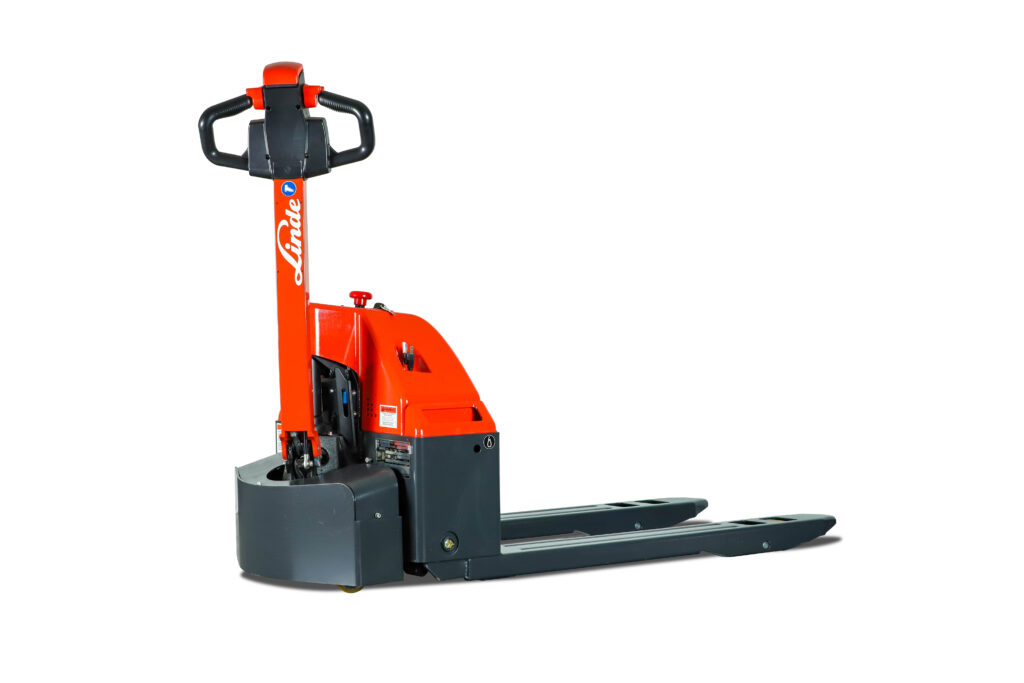
Linde MT15 |
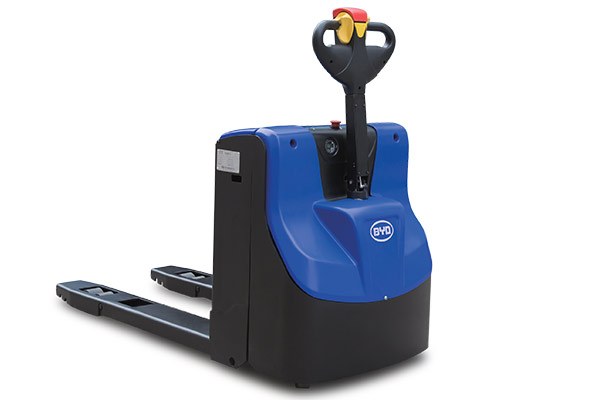
BYD PMW20 |
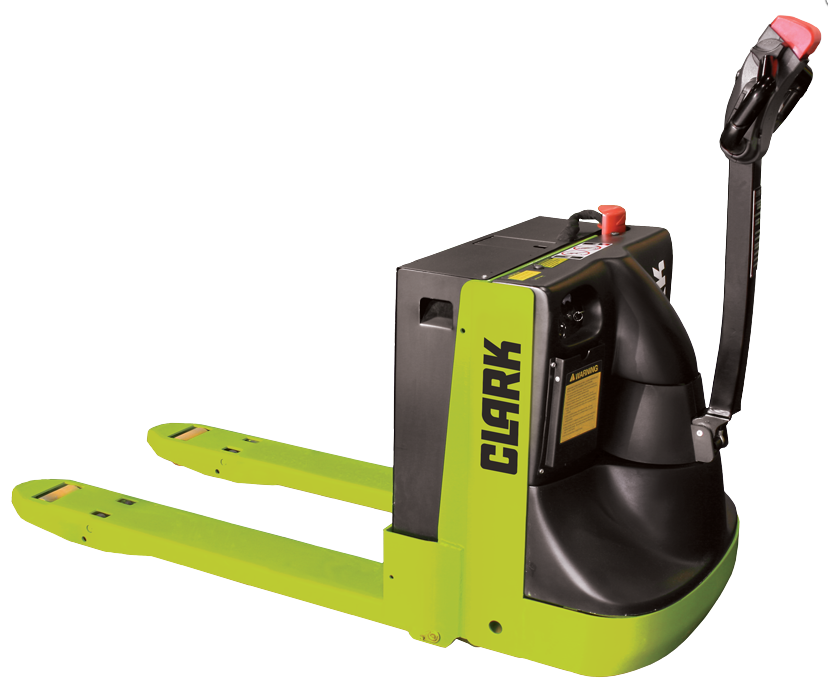
CLARK WPX 45 |
Key Electric Pallet Jack Parameters
When buying or specifying an electric pallet jack, it’s important to ensure it meets your needs. Here are the specs you should consider.
Capacity—Electric pallet jacks generally have a lifting capacity of 2,500 to 8,000 lbs, suitable for a wide range of industrial and warehouse applications.
Fork Length and Width—Electric pallet jacks typically feature 45- to 48-inch long forks and a width of 27 inches edge to edge, with 15 inches between the forks. Optionally, electric pallet trucks can be configured with narrower dimensions, such as 20 inches across the forks and 8 inches between them, or with shorter forks, catering to specific needs.
Wheel Material – Rubber or polyurethane wheels and rollers are available. The choice depends on the surface over which the pallet jack will operate. Electric pallet jacks for higher capacity loads are configured with two drive wheels rather than one, increasing their stability.
Lift and Lower Heights—Most electric pallet jacks are designed to lift a pallet off the floor just enough for transportation. In the lowered position, they feature forks that hug the floor, with the top of the forks generally about 2½ to 3 inches above the floor. When raised, a pallet jack’s forks elevate a load only about 8 inches off the floor.
Power System—Most pallet jacks are equipped with Li-Ion batteries that run for about 3 hours and charge in 2.5 hours. Buying an extra battery allows you to run the electric pallet jack full-time. Electric pallet trucks sporting less expensive Gel or AGM batteries are available.
Electric Pallet Jacks vs. Manual Pallet Jacks
While an electric pallet jack is similar to a manual pallet jack, upgrading has benefits and cautions.
Higher Capacity – Clearly, it is easier to lift and transport a heavier load using a motorized device. The electric pallet jack allows operators to move loads that might be beyond their physical capabilities.
Less Chance of Strain Injuries – Pushing or pulling a pallet jack with a 5,000 lb load takes a considerable amount of physical effort. Pumping the tiller to lift pallets over an eight-hour shift can also cause strain. Electric pallet jacks reduce the danger of back, shoulder, or leg injuries. Electric pallet jacks automatically stop if the tiller is moved to the vertical or horizontal position, avoiding the need for the operator to put in the extra effort to try to stop a moving pallet jack with a heavy load.
Less Operator Fatigue—Electric pallet jacks’ ease of use in lifting and moving palletized loads allows your workers to work a full shift of high-productivity time.
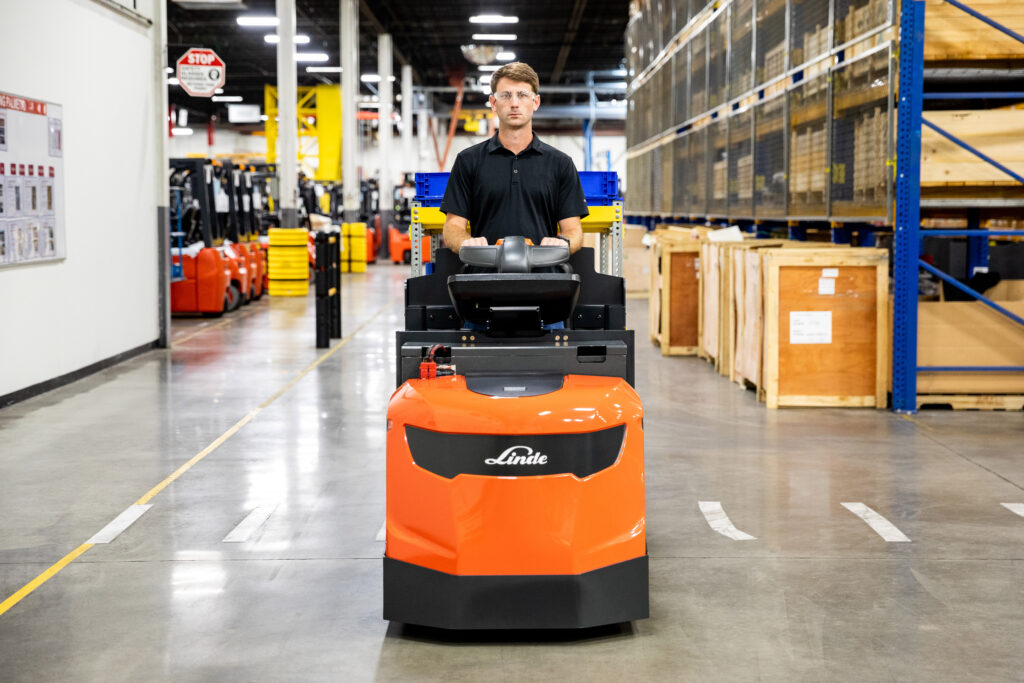
Rider-Walkie: Linde ECR Pallet Truck
Greater Efficiency – With their electrical lifting systems, electric pallet jacks require less time and effort to lift a load compared to manually pumping the tiller. In motion, electric pallet jacks can achieve speeds of up to 3.5 mph and are better for traversing longer distances. Some electric pallet jacks–also called “rider-walkies” feature a platform so that the operator can ride along with the load.
Greater Maneuverability in Narrow Aisles—An electric pallet jack makes it easier to turn, place, or extract a pallet from a storage location in a narrow aisle warehouse. Some electric pallet jacks can maneuver in aisles as narrow as 6 feet.
Electrics Require More Training – Operating an electric pallet jack requires some additional skills and knowledge compared to operating a manual pallet jack.
Cost – Electric pallet jacks cost substantially more than manual pallet jacks. While a manual unit can cost well under $1,000, an electric pallet jack generally runs in the range of $2,000 to $4,000.
Maintain Your Electric Pallet Jack Properly
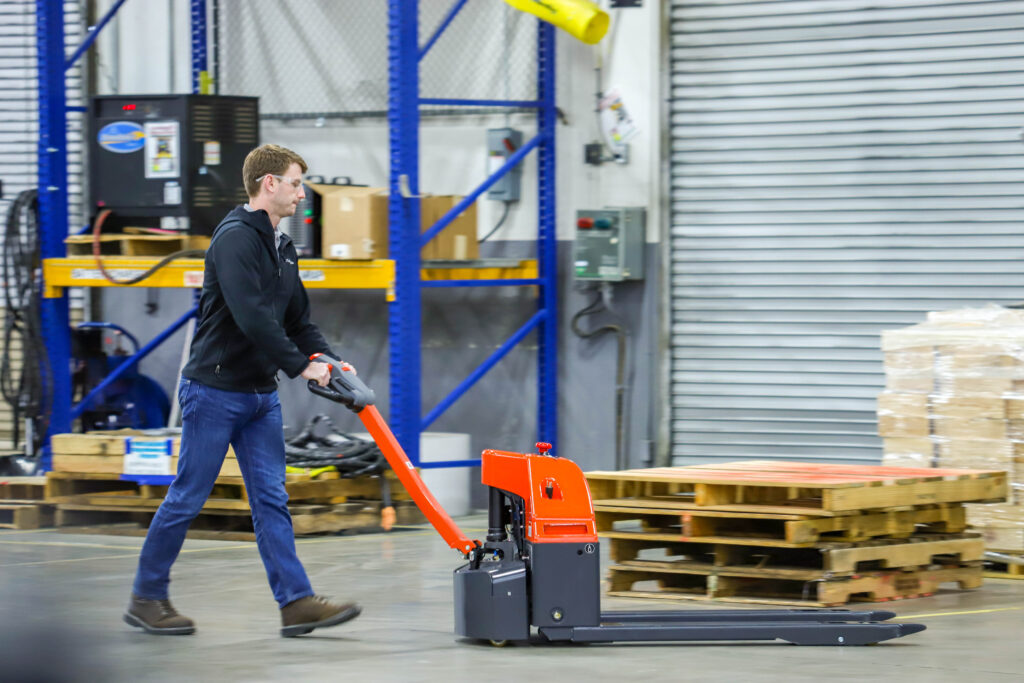
Like any forklift, proper pallet jack maintenance will yield a longer useful life and smoother operation. Check the device at the beginning og each shift to ensure that it is working properly and that there are no maintenance issues. Clean the pallet jack regularly to remove debris and dirt that collects in the transport mechanisms. Wheel shafts and bearings should also be lubricated on a scheduled basis. Motor shafts and bearings should also be lubricated regularly. Hydraulic fluid can evaporate or deteriorate over time. Check the manufacturer’s specs on recommended intervals for performing routine maintenance.. If you have a fleet of pallet jacks, consider hiring Apex to maintain the fleet.
Rent, Lease, or Own?
While pallet jacks are relatively inexpensive compared to forklifts, you should still decide whether your level of usage of these manual pallet movers warrants owning or leasing them. Often, companies need electric pallet jacks for seasonal use, so renting makes the most sense. Apex offers a deal for any of those options.
Ready to Move Forward? Call Apex!
Apex offers a wide variety of forklifts, including manual and electric pallet jacks. We can also work up a financial arrangement–rent, lease, or buy–that fits your specific situation. Apex also offers contract maintenance services, replacement parts, training, and fleet management, all designed to make your material handling operation a breeze! When the question is material handling, the answer is Apex—Contact us today!