
Scissor Lift Safety is No Accident–You Must Plan For It
Scissor lifts are versatile and widely-used elevating work platforms that allow one or more workers to perform a variety of inventory management, installation, maintenance, or construction tasks at heights of up to 60 ft. Even if your scissor lift does not reach that lofty height, many unanticipated “oops” events can occur unless scissor lift safety protocols are strictly enforced and followed.
 According to OSHA, an average of ten people are killed and many more injured each year in accidents involving scissor lifts. The agency reports that most incidents are due to oversights in the following three categories:
- Fall Protection
- Stabilization
- Positioning
Common scissor lift accidents involve tip-overs, falling objects, and overhead hazards. We’ll take a look at these risks and outline ways to promote the safety of your employees working on and around scissor lifts.
As with all industrial vehicles, training your operators on the safe use of scissor lifts is a critical element of safety. Employees operating a scissor lift should be well-versed in the use of the lift and the potential hazards inherent in working on a raised platform. This training is required by both ANSI and its Canadian counterpart, CSA. Under ANSI’s new 2018 guidelines, scissor lifts and aerial work platforms (AWPs) are now collectively referred to as Mobile Elevating Work Platforms, or MEWP’s.
Check out our safety tips below and call us for details regarding our MEWP Training Certification.
ANSI training requirements state that all workers must:
 Understand how the scissor lift works – train and test employees on the manufacturer’s operating manual and recommended protocols operating manual.
- Complete a pre-work inspection – ensure all mechanical elements are functioning correctly. Check that tires, battery and electrical connections are in good condition. Inspect all fluid levels and top up if necessary.
- Inspect the worksite – ensure that the scissor lift will be stable when the platform is raised and that overhead hazards are recognized and planned for.
- Wear the proper personal protection equipment (PPE) – harnesses, gloves, and hardhats are required to prevent worker injuries.
Fall Protection
The greatest inherent danger when using a scissor lift is falling from the elevated platform.
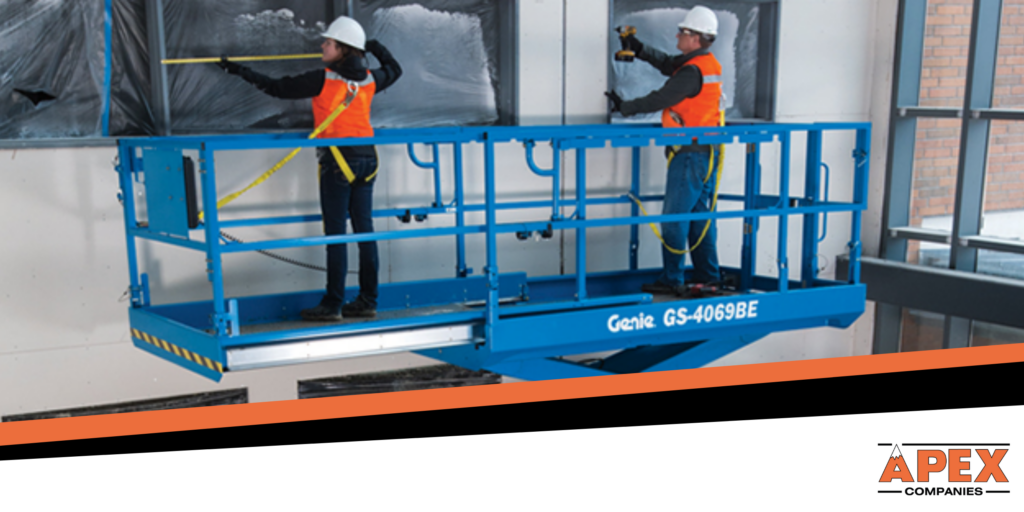
- Use harnesses – attach harnesses to the rails of the lift if workers are going to be reaching out over the rails.
- NOTE: Workers should never climb on the rails to extend their reach, or use ladders or stools on the platform to reach a higher work level.
- Inspect all rails – replace any that are damaged and secure them if they appear to be loose. All safety gates should be closed and locked.
- Check extension platforms – If your scissor lift has one, ensure it is secured and locked before stepping out onto it.
Stabilization
The most disastrous scissor lift accident is a tip-over. To avoid this catastrophic situation:
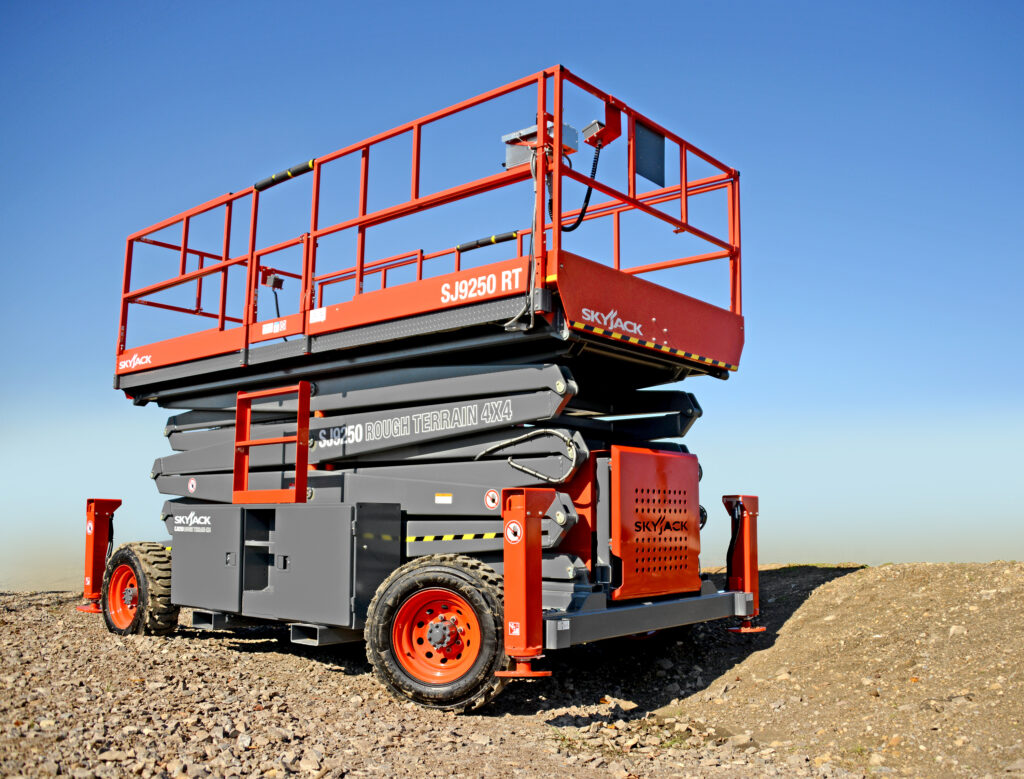
- Ensure that the lift is on a secure and level surface. This is particularly important when scissor lifts are used outdoors on potential uneven ground. If necessary, use stabilizers or outriggers to anchor the scissor lift.
- Be aware of the loading capacity of the scissor lift and do not exceed it. A top-heavy scissor lift at elevation needs just a little nudge to topple over.
- Be very careful driving a scissor lift, especially if the platform is elevated. Be aware of holes, bumps, ditches or other obstacles in the terrain you are driving over, and if you have concerns, lower the platform before driving.
- Isolate the scissor lift from other vehicles that might come in contact with the scissor lift and cause it to become unstable
- Use an outdoor scissor lift only in relatively calm weather. High winds can cause a scissor lift to tip over.
Positioning
Overhead hazards are one of the primary causes of scissor lift accidents. Be aware of the following:
- Overhead objects – beams, piping, ducts and rafters, and power lines. High-voltage current can discharge from electrical lines even if the lift does not make contact with the wires.
- Blind spots – Use caution when driving an elevated scissor lift as visibility of workers or obstacles in your vicinity may be reduced or limited. Engage a ground guide to ensure safe movement of the scissor lift.
- Other vehicles – make sure your scissor lift is out of the way of traffic. Accidentally hitting a raised scissor lift can have devastating consequences. Mark off the area in which the scissor lift is working with cones and high-visibility tape. This marked-off area should also be kept off-limits to warehouse and construction workers to avoid objects like tools and construction materials falling from the lift and injuring someone.
By following prescribed training, use and maintenance procedures, a scissor lift should offer you many years of safe and productive operation. If you plan to rent or lease a scissor lift, be sure to obtain the training for your workers so that they can use the equipment in a safe and hazard-free manner.
Contact Apex to preview the full line of JLG, Terex, Genie, and SkyJack scissor lifts. Whether you’re looking at buying a new or pre-owned scissor lift, or just want to rent or lease one, our knowledgeable account reps can help you pick the right vehicle and the right deal. What’s more, we offer expert training to ensure that your staff enjoys the benefits of using a scissor lift safely and efficiently.
Remember Apex when your looking to add new pallet racking systems to your warehouse —we offer attractive leasing agreements that help you stretch your capital expenditure dollars.
At Apex, we strive to be your full-service material handling supplier in the Chicagoland area.