
Stand-up Forklift Operators Must Be Aware of Forklift Underride—Their Lives Could Depend On It
|
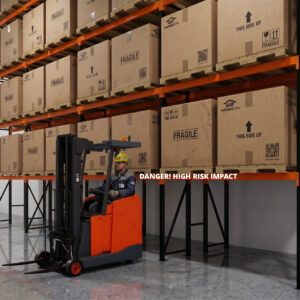
Generally, the safety protocols for sit-down and stand-up forklifts are pretty similar, with one major exception. The open-back design common to a stand-up forklift can pose a deadly risk when traveling in reverse with the forks trailing and near storage racking. The risk is that the operator could accidentally back into the rack and become pinned in the operator compartment. This condition is known as forklift underride. Forklift underride is a serious safety concern for operations using stand-up forklifts and reach trucks near pallet racks, especially when a horizontal beam or obstruction is positioned near the open operator compartment (see illustration on the right). While these trucks are widely used because they support efficient movement in space-constrained warehouses, operators, supervisors, and warehouse management should understand how underride can occur and what steps can help reduce the risk. Let’s take a look at several practical ways your operation can improve awareness, evaluate equipment and rack conditions, and help protect forklift operators. |
 |
7 Steps to Prevent Forklift Underride
1. Look In The Direction Of Travel
The most important safety precaution in preventing forklift underride is to always look in the direction the forklift is traveling. This can not be emphasized strongly enough! Not only will it avoid underride, but it also prevents the forklift from hitting a rack, thereby damaging the rack and the product stored on it, or worse, causing products to tumble down onto workers.
2. Adjust Rack Beam Heights Where Appropriate
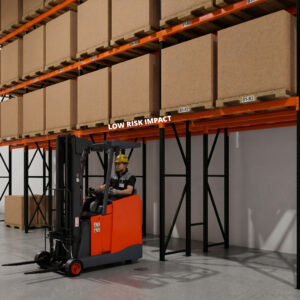
If you have a fleet of open-back stand-up forklifts, it may be simpler to adjust the height of your racks so that the rack beam first encounters either the body of the forklift or the overhead guard should the operator inadvertently back into the rack, helping reduce the risk of the operator compartment entering beneath the beam. As shown in the illustrations below, the safest beam position is typically one in which the first rack beam is well above the operator compartment/overhead guard. A lower, floor-level beam may also help prevent underride by acting as a physical stop before the forklift can travel too far beneath the rack. NOTE: Do not adjust rack shelves without first consulting a licensed racking systems engineer. See our blog on safe pallet rack reconfiguring.
 |
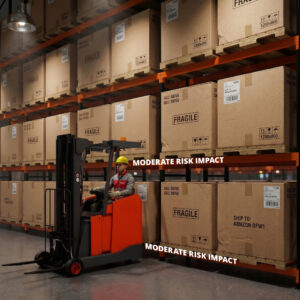 |
These examples are intended to illustrate the relationship between stand-up forklift geometry and rack beam position. Any rack modification should be reviewed by a qualified rack professional or licensed engineer to confirm capacity, configuration, anchoring, clearances, and code compliance.
3. Install A Rack Barrier
Install a floor barrier at the face of the rack to prevent the forklift from underriding.
4. Install A Post Guard on the Forklift
Manufacturer-supplied and aftermarket vertical post guards are available to protect the operator if the forklift is backed up into a rack. Ask your Apex Parts Rep for a recommendation.

5. Purchase Forklifts with Pre-installed Post Guards
As manufacturers are now aware of this issue, many are incorporating a rear guard post in the new stand-up forklift models.
6. Operator Training
All stand-up forklift operators should be appropriately trained and made aware of the hazards of forklift operation, including specific training for stand-up forklift operators. Apex offers on-site group training that fully complies with OSHA training regulations. This training is tailored to your workspace and its setup for your particular forklift fleet.
7. Operator Fatigue
Almost all of the safety rules for operating a sit-down forklift also apply to stand-up forklifts. However, one safety rule stands out for stand-up forklift operators— fatigue. Standing in a forklift compartment for an eight-hour shift can be debilitating. Be sure to allow breaks so the operator can walk around, sit down, or otherwise break the monotony and fatigue of standing in one spot with their foot on the dead-man pedal for an extended period.
Use Similar Caution With Class III Rider Pallet Trucks
Operating a Class III rider pallet truck presents a lot of the same hazards as a stand-up forklift, with one glaring exception–you can’t weld a guard on the back. There is no back. Here, the only solution is diligent awareness of your surroundings, especially if you’re operating the pallet jack in a narrow-aisle environment. Thorough operator training is a must to avoid underride and prevent operator injury.
Forklift Equipment, Training, & Service
When it comes to all things forklifts—operator training, parts & service, and buying, leasing, or renting new and used material handling equipment, you only need to make one call. Apex is the place to go in the Chicagoland area. The Apex team members are your trusted, knowledgeable material-handling experts for 20 years and counting. Call our team today for expert, personalized support.